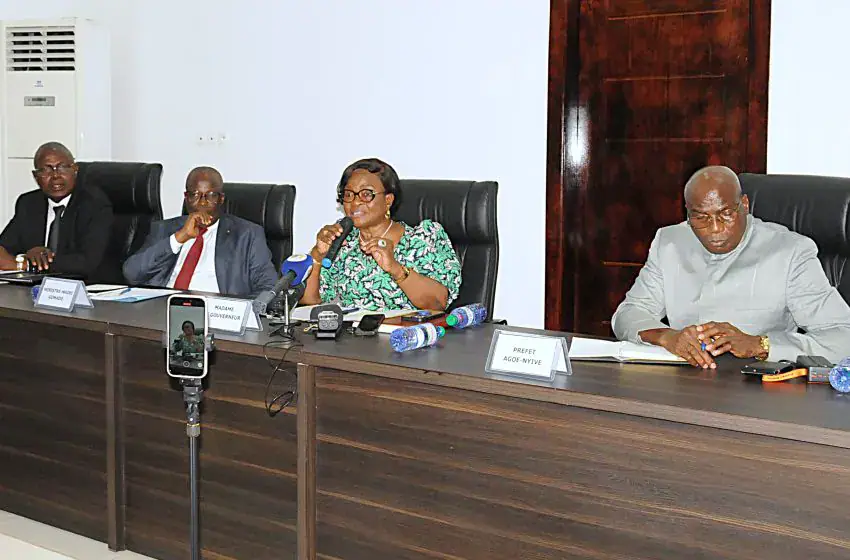
The District Autonome du Grand Lomé (DAGL) has initiated a second phase of its campaign to combat unauthorized occupation of public spaces, focusing on sidewalks and roadside areas along major highways. The operation, running from November 2 to 20, 2026, involves all 13 communes of Greater Lomé. The goal is to enhance safety for users, improve traffic flow, and upgrade the urban environment. This information was disclosed during a press conference held at the DAGL headquarters on November 4, 2026.
The operation aims to restore sidewalks to pedestrians, improve traffic flow, and enhance the image of Togo's capital city. After addressing coastal area preservation, the focus has shifted to sidewalks and roadside areas along major highways in Greater Lomé. According to Zouréhatou Kassah-Traoré, governor of DAGL and president of the ad hoc committee to combat unauthorized occupation of public spaces, unauthorized occupation of public spaces is a significant concern for authorities and residents.
Kassah-Traoré explained that sidewalks, initially designed for pedestrian use, have been converted into sales or commercial activity areas in many neighborhoods. This situation forces users to use the road, exposing them to accident risks and hindering vehicle circulation, especially for emergency, cleaning, and delivery services. Despite previous clearance operations in 2023, the issue persists, contributing to a decline in living conditions.
The authorities intend to intensify efforts to restore order in public space occupation. The committee ad hoc views this as a matter of safety, hygiene, and human dignity. Kassah-Traoré emphasized that returning sidewalks to pedestrians is a matter of life-saving, and a clean and orderly capital city attracts investors and tourists. The goal is to create a city where residents can live comfortably.
The authorities are aware of the role of street commerce in supporting many families and acknowledge the limitations of existing market infrastructure. The objective is to encourage public space occupants to operate in designated areas without compromising free circulation and citizen safety. This involves balancing economic and social imperatives with harmonious urban planning.
The operation is a concerted effort between DAGL, prefectures, and local authorities. A framework for discussion brings together mayors, technical service directors, traditional leaders, and neighborhood development committee presidents to harmonize approaches and address population concerns. A platform has been established for mayors to submit their action plans, and they will lead operations in their respective communes while DAGL coordinates overall efforts.
The DAGL governor highlighted that the ad hoc committee consists of 23 members from seven ministerial departments and extends to four prefectures. The goal of this second phase is to inscribe the fight against unauthorized public space occupation in a dynamic of collective responsibility and concerted governance, aiming to make Lomé a capital city with improved circulation, protected pedestrians, and a preserved living environment.
Key points
- The Togolese authorities aim to improve safety, traffic flow, and urban living conditions through the large-scale sidewalk clearance operation.
- The operation involves all 13 communes of Greater Lomé and focuses on sidewalks and roadside areas along major highways.
- The authorities seek to balance economic and social imperatives with harmonious urban planning.