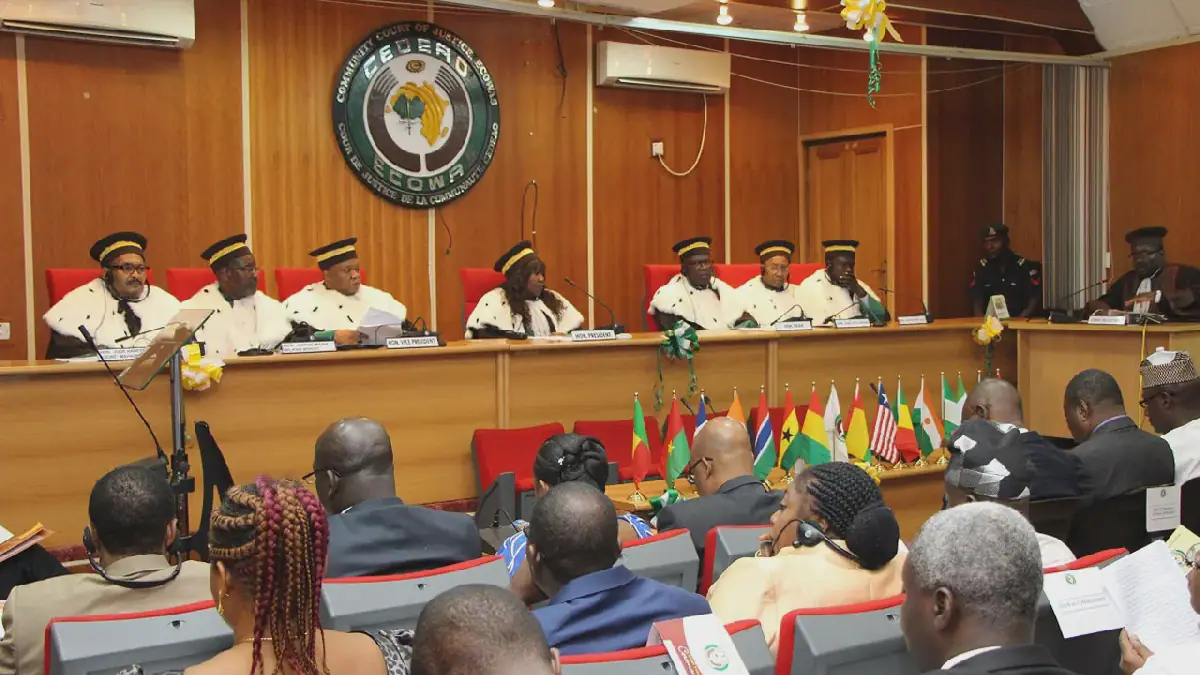
The ECOWAS Court of Justice has taken a significant step in the ongoing debate over Togo's constitutional reform. On October 23, 2026, the court sent a letter to Togo's Minister of Justice, inquiring about the government's actions to implement a January 29, 2026 ruling. The ruling was made in a case brought by the Togolese League of Human Rights and 12 other applicants against the Togolese Republic. The court's decision declared that the Togolese government had violated Article 23 of the African Charter on Democracy, Elections, and Governance.
The ECOWAS Court of Justice had ruled that the Togolese government's constitutional reform, which established a parliamentary system in March 2024, was not in line with the country's international obligations. The court ordered the government to take all necessary measures to ensure that any future constitutional or institutional reforms comply with the African Charter on Democracy, Elections, and Governance and fundamental democratic principles. The ruling was made in response to complaints from various groups, including the Togolese League of Human Rights, who argued that the reform did not meet international standards.
The Togolese government's constitutional reform has been a contentious issue, with the opposition calling for a political transition and the government defending its new institutional architecture. The reform has sparked intense debate, with some arguing that it undermines democratic principles and others seeing it as a necessary step for the country's development. The ECOWAS Court of Justice's ruling has added a new layer of complexity to the issue, as the government must now respond to the court's demands.
The ECOWAS Court of Justice's letter to the Minister of Justice comes at a time when the University of Lomé is hosting an international colloquium on regional jurisdictions, constitutional changes, and state sovereignty. The colloquium, which runs from October 29 to 30, brings together academics, judges, public officials, and experts to discuss the role of regional jurisdictions in protecting human rights and the limits of their intervention in constitutional matters.
The colloquium provides a platform for discussing the complex relationships between regional justice and national sovereignty. However, the ECOWAS Court of Justice's ruling serves as a reminder that scientific debates do not substitute for the obligations that come with a court decision. The Togolese government must now respond to the court's demands and take concrete steps to implement the ruling.
The ECOWAS Court of Justice's ruling has significant implications for the Togolese government and its supporters, who have argued that the court's decision is not binding. The court's letter to the Minister of Justice makes it clear that the government is expected to take action to implement the ruling. The Togolese government's response to the court's demands will be closely watched, as it will indicate the government's commitment to upholding international law and democratic principles.
The key question now is what concrete measures the Togolese government will take to implement the ECOWAS Court of Justice's ruling. The government's response will be crucial in determining the country's future trajectory and its commitment to democratic principles and human rights.
Key points
- The ECOWAS Court of Justice has demanded that the Togolese government implement its January 29 ruling on the country's constitutional reform.
- The Togolese government's constitutional reform has been a contentious issue, with the opposition calling for a political transition and the government defending its new institutional architecture.
- The ECOWAS Court of Justice's ruling has significant implications for the Togolese government and its supporters, who have argued that the court's decision is not binding.