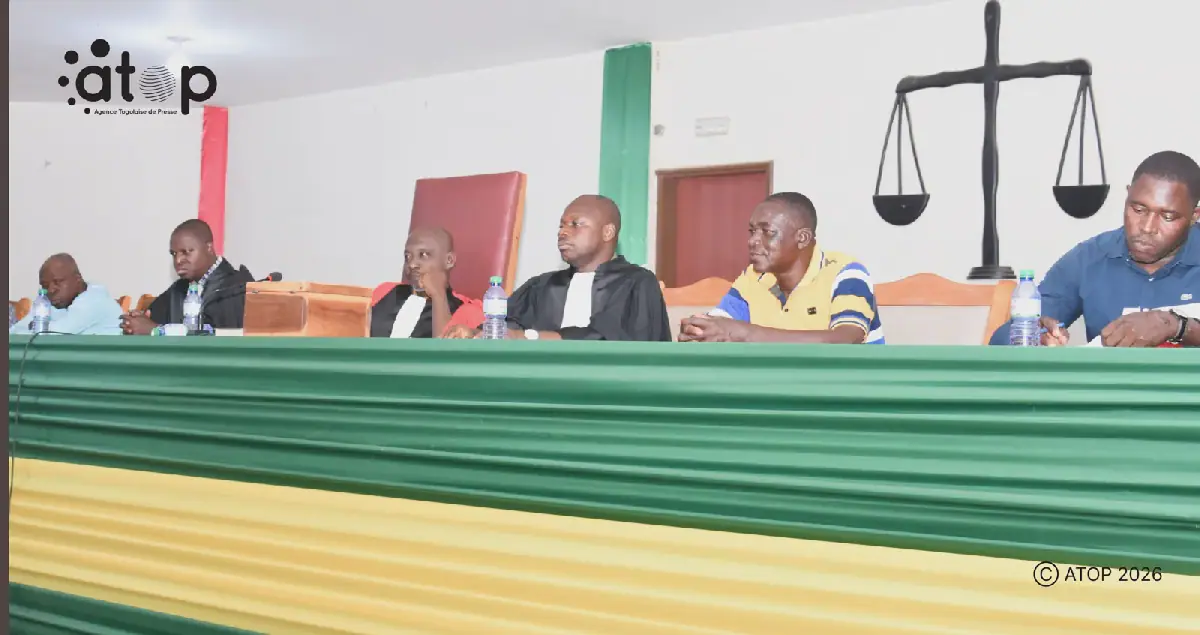
The Assize Court in Kara, Togo, has sentenced Badabou Bada-Etennam to 15 years in prison for parricide, or the killing of his father. The verdict was delivered on November 24, 2026, after a trial that began earlier in the year. According to reports from the Togolese Press Agency, the court found Bada-Etennam guilty of killing his biological father, Badabou Kpatcha, on June 12, 2018, in Koloum Pouwayi, Sotouboua prefecture.
The events leading to the conviction date back to June 12, 2018, when Simtoro Prénam discovered Badabou Kpatcha's body in the courtyard of his concession. She immediately alerted her aunt, Badabou Piyalo, and other family members, who found signs of blood near the body and bleeding from the nose and mouth. Suspicion fell on Bada-Etennam due to his history of conflict with his father. Initially, he claimed not to have seen his father for three days, but later stated that he found him unconscious under a palm tree on June 11, 2018, and moved him to the courtyard with the help of Amaya Kouma.
During the investigation and trial, Bada-Etennam consistently denied any involvement in his father's death, claiming he had only found him unconscious and moved him. However, the prosecution, led by Tasso Oudeï Atcha, argued that several elements pointed to Bada-Etennam's guilt. These included his presence with the victim the day before the death, the use of a witness to move the body at night, a history of threats and accusations of sorcery against his father, and violence he admitted to having inflicted on his father during a family council.
The prosecution cited a psychiatric evaluation that concluded Bada-Etennam was of sound mind and fully aware of his actions at the time of the crime. Based on the severity of the crime and Bada-Etennam's attributed violent behavior, the prosecution sought a 25-year prison sentence, dismissing any mitigating circumstances. The defense, represented by Me Essowa Soba, argued that there was insufficient material evidence to prove Bada-Etennam's guilt and that accusations against him were based more on prejudice than concrete evidence.
The defense maintained that Bada-Etennam's account of finding his father ill and alive under a palm tree and then seeking help to move him to the house was consistent throughout the proceedings. Despite this, the court sided with the prosecution, handing down a 15-year sentence. The case highlights the severity with which Togo's justice system addresses crimes of parricide, reflecting societal values that consider such acts particularly heinous.
Parricide is a serious offense under Togo's penal code, with articles 165, 169, and 170 of the new Penal Code specifically addressing the crime. The legal process in this case demonstrated the system's focus on both material and moral evidence in determining guilt. The Assize Court's decision brings closure to a case that has undoubtedly had a profound impact on the family of Badabou Kpatcha and the community in Sotouboua.
The sentencing of Badabou Bada-Etennam to 15 years in prison for parricide serves as a reminder of the consequences of such crimes under Togo's law. The case also underscores the importance of the judicial process in establishing guilt and determining appropriate punishment. As the Togolese community reflects on this verdict, it also brings to light the complexities and challenges of addressing and preventing family-related violence.
Key points
- Badabou Bada-Etennam was sentenced to 15 years in prison for killing his father, Badabou Kpatcha, in 2018.
- The prosecution argued that Bada-Etennam's history of conflict with his father and his actions on the day of the death implicated him in the crime.
- The defense argued that there was insufficient evidence to prove Bada-Etennam's guilt, but the court sided with the prosecution.