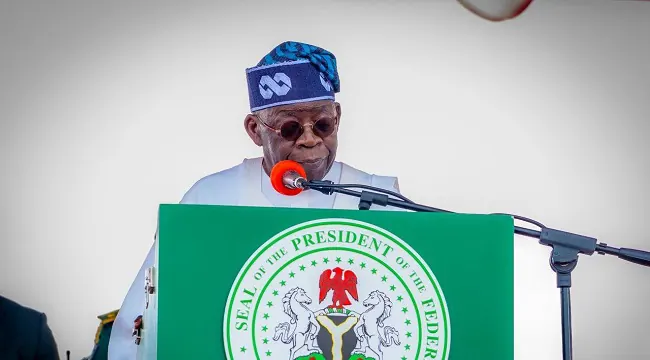
On October 1, 2026, President Bola Ahmed Tinubu addressed the nation on Nigeria's 66th Independence anniversary, promising a new era of economic prosperity. He outlined his administration's plans to transition from economic reforms to an "age of prosperity." Tinubu emphasized the government's commitment to reducing the cost of living by lowering production and transportation costs of goods and services.
To achieve this goal, Tinubu announced plans to expand mechanized irrigation and dry-season farming, improve access to seeds and fertilizers, and increase agricultural mechanization. The government will also invest in storage and transportation infrastructure. Additionally, the administration will focus on building and completing roads, railways, and ports to connect farms and factories to markets, ultimately reducing production and distribution costs.
According to Tinubu, reducing production and distribution costs will translate into lower prices for consumers. He explained that when farmers produce more cheaply, and manufacturers spend less on electricity, the savings will be reflected in the market prices of goods. The President emphasized that job creation, enterprise, and industrial growth will be at the center of government policies, particularly given Nigeria's large and growing youth population.
Tinubu revealed plans to utilize the country's gas resources to power new industries and support businesses seeking to revive factories in major industrial centers. The government will also expand digital connectivity and invest in skills required by employers, while providing Nigerian businesses with infrastructure and financing to support their growth. These initiatives aim to encourage more Nigerians to produce goods for local consumption and international markets.
The President acknowledged that millions of Nigerians continue to struggle with food, education, healthcare, and transportation costs, citing accumulated problems over several decades. To address this, the government will strengthen direct support for poor households and improve the National Social Register to ensure assistance reaches those who genuinely need it. Tinubu also highlighted the Nigerian Education Loan Fund and CREDICORP as part of efforts to expand access to education and consumer credit.
Tinubu emphasized that the government's objective is not to manage poverty more efficiently but to defeat it. He stated that achieving this goal will require sustained economic growth, discipline, and the creation of millions of productive opportunities across the country. The President expressed his desire to see more Nigerians producing goods, with Nigerian farms feeding cities and supplying factories, and Nigerian businesses selling goods globally.
The President's Independence Day address reflects his administration's commitment to addressing the country's economic challenges and promoting prosperity. Tinubu's plans focus on creating a favorable business environment, investing in infrastructure, and supporting vulnerable populations. As Nigeria marks its 66th anniversary, the government's initiatives aim to improve the standard of living for its citizens and drive economic growth.
Key points
- President Tinubu promises to lower living costs by reducing production and transportation costs of goods and services.
- The government will focus on job creation, enterprise, and industrial growth to address Nigeria's economic challenges.
- Tinubu's administration aims to defeat poverty through sustained economic growth and the creation of productive opportunities.