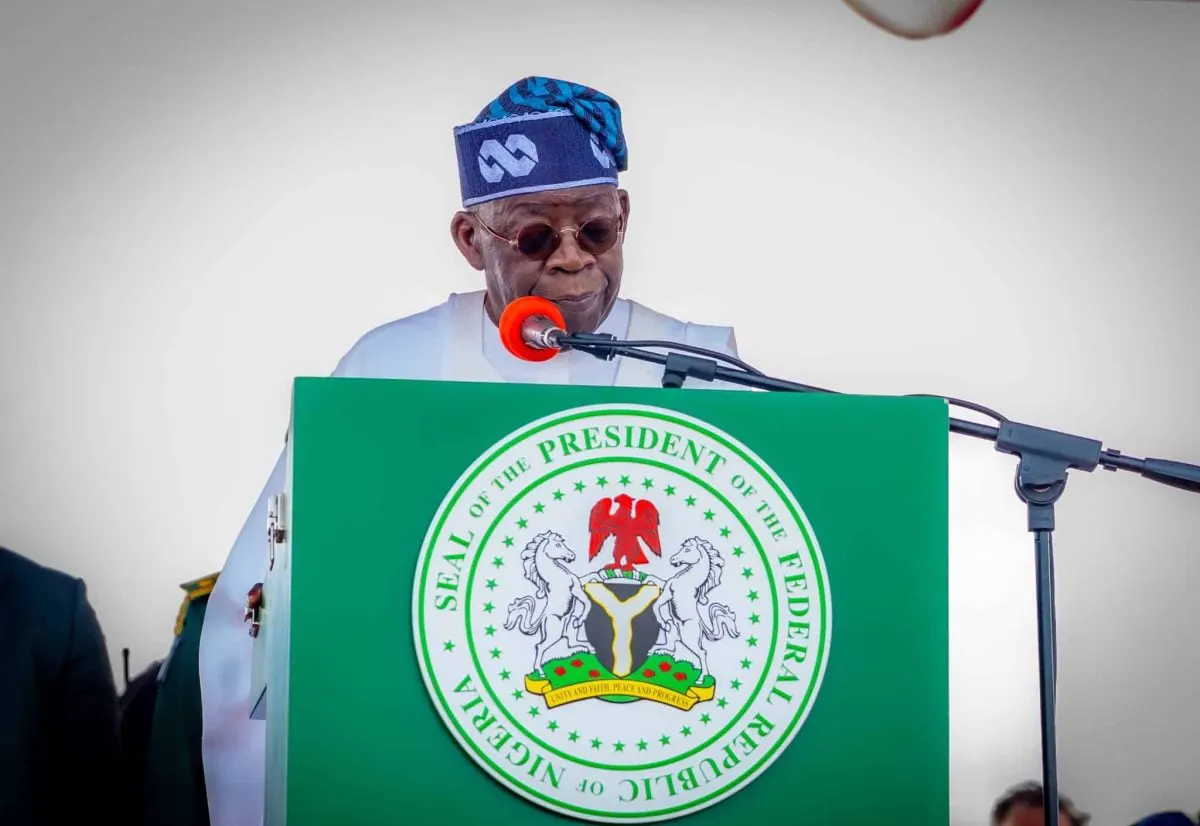
President Bola Tinubu has instructed all 36 state governors to accelerate the implementation of the National Affordable Compressed Natural Gas (CNG) Transit Programme. This move aims to reduce transportation fares across the country using domestic alternative energy. The directive was issued following a meeting with the Nigeria Governors' Forum on August 27. The programme seeks to provide measurable reductions in transportation fares starting October 1.
An implementation committee, chaired by the NGF Chairman and Kwara State Governor, AbdulRahman AbdulRazaq, has been established to oversee the programme's execution. President Tinubu emphasized that Nigeria cannot control international crude prices but can insulate itself by tapping into domestic natural gas. Over the past three years, his administration has built a growing CNG ecosystem with over 120,000 converted vehicles and 400 certified conversion centers nationwide.
The President highlighted several states that have made significant progress in adopting alternative energy transit services. These include Edo, which has deployed 50 buses, and Kano, which has converted over 1,000 commercial vehicles. Other states, such as Delta, Kwara, Lagos, and Akwa Ibom, have also made notable strides, with Akwa Ibom receiving 50 CNG buses. President Tinubu commended these early adopters but stressed that more needs to be done.
To ensure the programme's success, President Tinubu has charged governors to collaborate directly with transport unions and support vehicle conversion. They are also expected to expand refueling infrastructure and strictly monitor commercial operators. This will ensure that cheaper energy costs directly translate into lower daily fares for the public. The President's directive aims to make public transportation more affordable for Nigerians.
President Tinubu's administration has made significant investments in the CNG ecosystem. There are over 90 refueling stations nationwide, and the President is confident that the programme will deliver significant cost savings to commuters. By leveraging domestic natural gas, Nigeria can reduce its reliance on imported fuel and mitigate the impact of rising global energy disruptions.
The implementation of the National Affordable CNG Transit Programme is seen as a critical step towards reducing transportation costs in Nigeria. With the October 1 deadline looming, state governors are under pressure to accelerate the programme's implementation. The President's directive has been welcomed by many, who see it as a move towards making public transportation more affordable and accessible.
As the programme rolls out, Nigerians can expect to see measurable reductions in transportation fares. The President's commitment to leveraging domestic natural gas to drive down costs is seen as a positive step towards insulating the country from global energy shocks. With the right implementation, the programme has the potential to make a significant impact on the lives of millions of Nigerians.
Key points
- President Tinubu directs state governors to accelerate the implementation of the National Affordable Compressed Natural Gas Transit Programme to reduce transportation fares.
- The programme aims to provide measurable reductions in transportation fares starting October 1.
- Over 120,000 vehicles have been converted to run on CNG, with 400 certified conversion centers and over 90 refueling stations nationwide.