President Bola Ahmed Tinubu has submitted a revised 2026 budget of N66.1 trillion to the National Assembly for consideration and approval. The revised budget proposes a reduction of approximately N2.2 trillion in the Federal Government's aggregate expenditure from the initially approved N68.3 trillion. The president's request seeks legislative approval of the 2026 Appropriation Repeal and Re-enactment Bill alongside the revised 2026 Fiscal Framework.
The proposed adjustments aim to realign the national budget with the government's existing financial obligations, available resources, and outstanding commitments. Under the revised framework, total expenditure is projected at N66.1 trillion, compared to the original N68.3 trillion budget approved by the National Assembly. The proposal puts aggregate revenue, including receipts from Government-Owned Enterprises (GOEs), at N33.7 trillion, while capital expenditure is estimated at N26.2 trillion.
Despite the reduction in overall spending, the fiscal deficit remains unchanged at approximately N31.4 trillion, representing 5.6 percent of Nigeria's Gross Domestic Product (GDP). To finance the deficit, the Federal Government is proposing new borrowing of approximately N29.2 trillion, comprising N18.4 trillion from domestic sources and N10.7 trillion from external sources. The revised fiscal proposal also seeks to address outstanding financial obligations and reconcile expenditures already incurred by the Federal Government.
The revised budget includes provisions for regularising certain expenditures undertaken by the Nigerian National Petroleum Company Limited (NNPC Ltd) on behalf of the federation. The framework also makes provision for underfunded debt service obligations, capital warrants already issued, and supplementation commitments made by the Federal Government. Additionally, provisions have been made for refunds to Ministries, Departments, and Agencies (MDAs), as well as special accounts.
President Tinubu urged the National Assembly to accord the proposal expeditious consideration and approval to facilitate the effective implementation of the 2026 budget. The president's request underscores the administration's intention to adjust government expenditure to reflect available resources, regularise outstanding financial commitments, and ensure that previously authorised obligations are adequately accommodated within the fiscal framework.
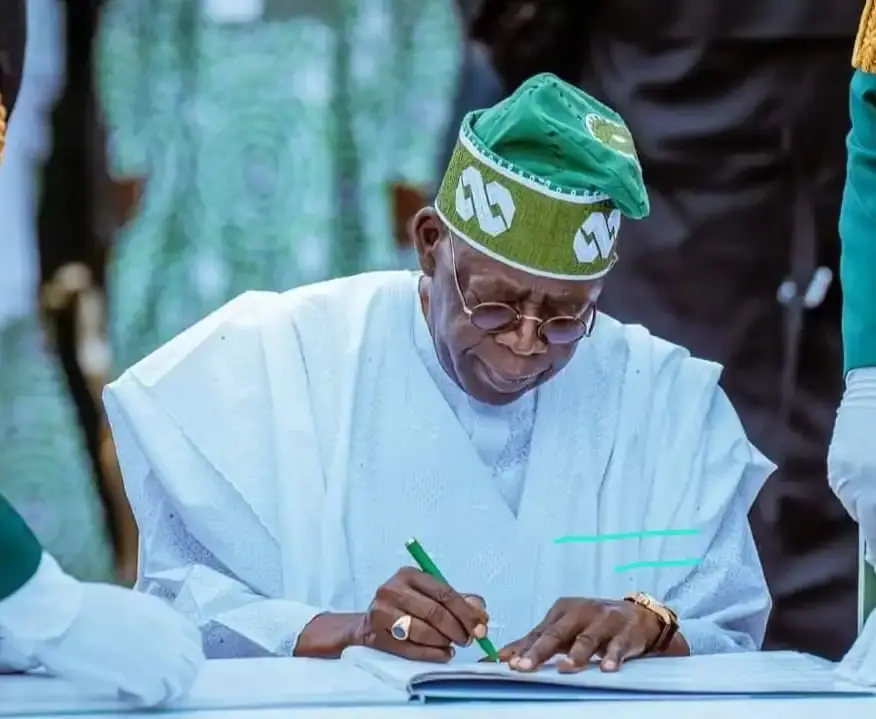
The proposed revision comes after the National Assembly approved the original 2026 Appropriation Bill of approximately N68.32 trillion, which President Tinubu signed into law on April 17, 2026. The revised estimates will require the approval of the National Assembly before the proposed changes to expenditure and the accompanying fiscal adjustments can take effect. The Senate's consideration of the proposal will be particularly significant given the scale of the country's projected fiscal deficit.
With capital expenditure estimated at N26.2 trillion and the fiscal deficit retained at N31.4 trillion, the revised budget places renewed attention on the government's revenue projections, borrowing strategy, and capacity to meet its financial obligations while sustaining capital investments. The Senate Committee on Rules and Business will facilitate the necessary legislative processes towards consideration of the revised appropriation bill by the chamber.
Key points
- The revised 2026 budget proposes a reduction of approximately N2.2 trillion in the Federal Government's aggregate expenditure.
- The fiscal deficit remains unchanged at approximately N31.4 trillion, representing 5.6 percent of Nigeria's Gross Domestic Product (GDP).
- The Federal Government is proposing new borrowing of approximately N29.2 trillion to finance the deficit.
Reporting sources
- Tinubu Seeks NASS Approval For N66.1trn Revised 2026 Budget · Independent Nigeria