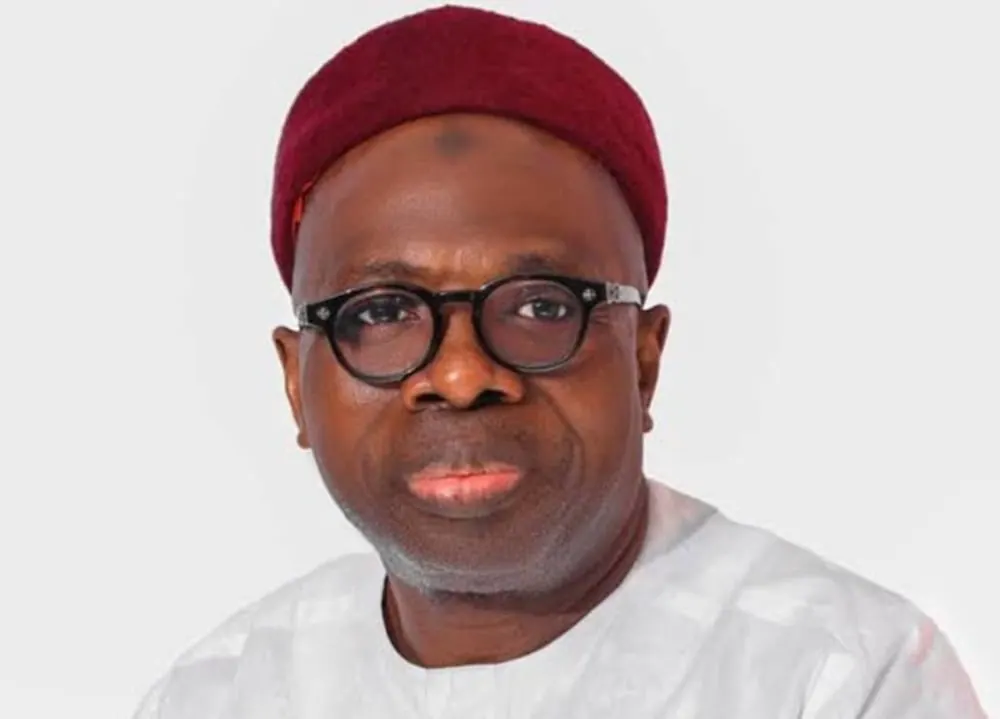
A security expert and All Progressives Congress chieftain, Abayomi Nurain Mumuni, has defended President Bola Ahmed Tinubu's decision to delegate Vice President Kashim Shettima to represent Nigeria at the 81st United Nations General Assembly. Mumuni stated that the debate over the President's absence should be viewed within the broader context of how the UNGA operates and what it can realistically achieve for member states.
Mumuni described the UNGA as an annual international platform where 193 member states present their positions, discuss global issues, and engage in diplomatic activities. The gathering provides countries with opportunities to discuss international peace and security, climate change, trade, economic cooperation, human rights, humanitarian assistance, and development. He emphasized that the General Assembly provides a platform for countries to communicate their positions, while bilateral meetings and other diplomatic engagements take place on the margins of the annual gathering.
Mumuni argued that international forums should not be viewed as substitutes for domestic governance, stressing that the ultimate responsibility of any government is to address the needs of its citizens. He said that the physical presence of a president at the gathering should not become the sole measure of a country's participation or diplomatic engagement. According to him, there is no international law requiring a sitting president to personally attend the General Assembly.
The APC chieftain listed possible reasons why presidents may delegate international engagements, including pressing domestic responsibilities, competing international commitments, and strategic considerations. Mumuni said Vice President Shettima, as a senior member of the Federal Government, was capable of articulating Nigeria's positions and representing the country at the gathering. The Presidency confirmed that Shettima had traveled to New York to attend the 81st UNGA and would present Nigeria's national statement.
Mumuni questioned whether the physical attendance of previous Nigerian presidents at international gatherings had translated into solutions to the country's domestic challenges. He asked if these attendances had solved Nigeria's insecurity crisis, ended poverty, or created jobs for millions of unemployed youth. Mumuni emphasized that international platforms could provide diplomatic opportunities but could not independently resolve Nigeria's domestic problems.
Mumuni urged the government to maintain its focus on issues affecting ordinary Nigerians, including insecurity, the cost of living, unemployment, healthcare, and infrastructure. He argued that the effectiveness of governance should ultimately be reflected in improvements in the lives of citizens. Mumuni also urged Nigerians to look beyond presidential attendance and consider the actual objectives and outcomes of Nigeria's participation in international engagements.
Mumuni called for a broader assessment of Nigeria's participation in UNGA, saying the immediate priority should remain addressing challenges facing Nigerians while the country continues to pursue its interests through international diplomacy. President Tinubu had extended his working vacation by a few days and was expected to return to Nigeria at the weekend.
Key points
- President Tinubu delegates Vice President Shettima to represent Nigeria at the 81st UN General Assembly.
- A security expert defends the President's decision, citing the nature of the UNGA and domestic priorities.
- Mumuni emphasizes that international forums do not solve domestic problems, urging focus on Nigeria's pressing issues.