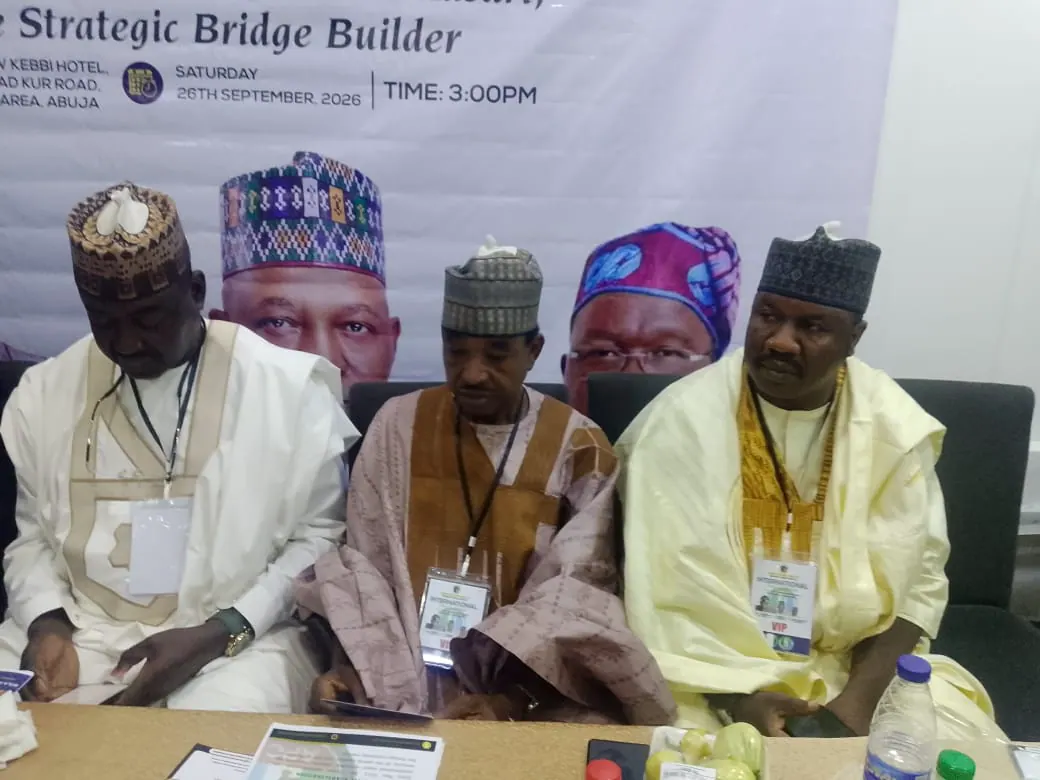
The Forward Bola Ahmed Tinubu 2027 Independent Campaign Group has assessed the administration's reform agenda, highlighting achievements in key sectors. At a press conference in Abuja, the group reviewed the administration's policies and their impact on Nigerians. According to Dr. Sadiq Yusuf, Director-General of the group, the administration has implemented reforms in response to fiscal pressures and exchange-rate distortions. These reforms aim to improve investor confidence and increase fiscal capacity for states and local governments.
The group cited the removal of the petrol subsidy and foreign exchange reforms as significant steps. These measures were introduced to address rising debt-servicing costs and declining government revenues. Additionally, the administration has pursued tax and revenue reforms, as well as financial-sector reforms. These efforts aim to stabilize the economy and promote growth. The group also noted developments in the oil and gas sector, domestic refining, agriculture, housing, healthcare, and digital skills.
Infrastructure development has been a major focus, with over 2,700 kilometers of highways and major roads under construction, reconstruction, or rehabilitation. Notable projects include the Lagos-Calabar Coastal Highway, Sokoto-Badagry Super Highway, Abuja-Kaduna-Zaria-Kano Road, and East-West Road. These projects aim to improve transportation networks and facilitate economic growth. The group also highlighted the Nigerian Education Loan Fund, which has benefited over 1.5 million students, with disbursements exceeding ₦282 billion.
The Renewed Hope Housing Programme has delivered over 10,000 housing units across 14 states and the Federal Capital Territory. This initiative aims to address the country's housing deficit and provide affordable housing options for Nigerians. In the education sector, the administration has made significant investments, including the Nigerian Education Loan Fund. The group acknowledged that challenges persist in the security sector, despite ongoing military and security operations.
The group recognized Ibrahim Kabiru Masari, Special Adviser to the President on Political Affairs, as a "strategic bridge builder" within the administration's political structure. Masari's appointment in March 2026 enabled him to facilitate communication between government institutions and various communities. The group emphasized the importance of political advisers in facilitating engagement with stakeholders across the country, particularly during periods of major economic reforms.
Despite progress in various sectors, significant challenges remain, including the cost of living, food affordability, unemployment, insecurity, electricity supply, healthcare access, infrastructure maintenance, educational quality, and poverty. The group stressed that the benefits of economic reforms must translate into improved living conditions for Nigerians. The administration's policies and programmes must be assessed based on their impact on the lives of citizens.
The press conference was intended to provide Nigerians with information on the administration's policies and programmes, allowing them to form their own views about the country's direction. The group aims to promote informed discourse and engagement on the administration's reforms and their impact on the country. The assessment of the administration's progress and challenges will continue to be a subject of discussion among stakeholders.
Key points
- The administration has made progress in economic reforms, infrastructure development, and education.
- Challenges persist in security, cost of living, and infrastructure maintenance.
- The benefits of economic reforms must translate into improved living conditions for Nigerians.