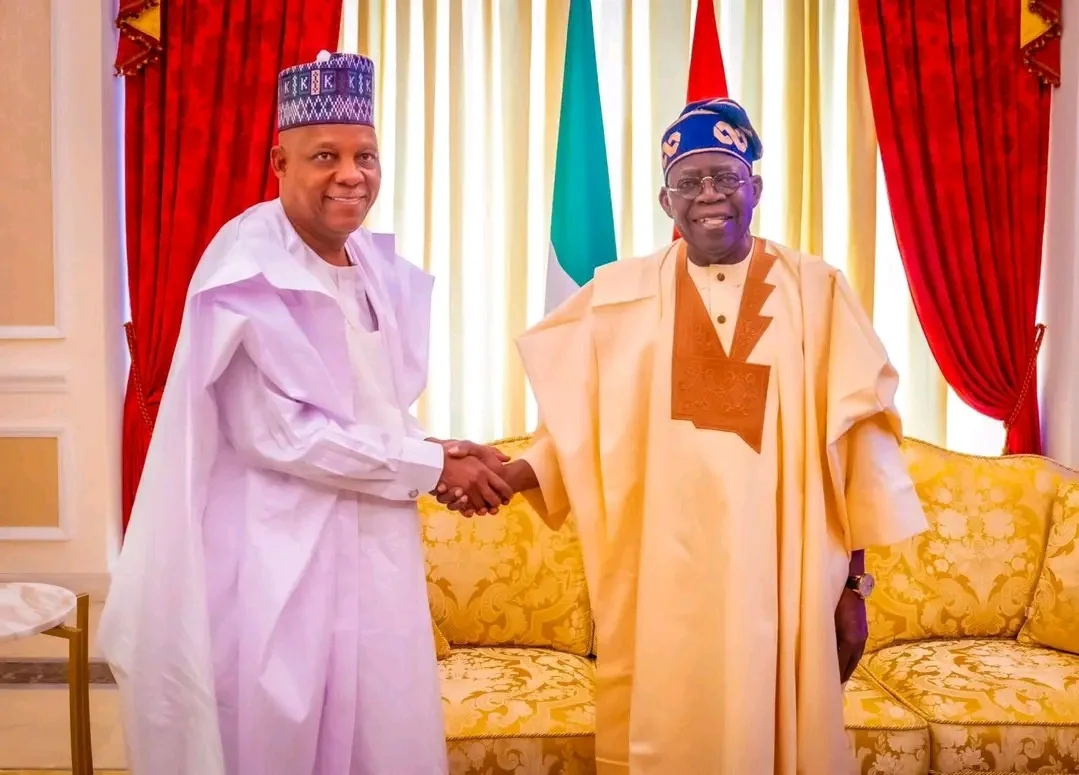
Nigeria's Vice President Kashim Shettima has disclosed that President Bola Tinubu remained in regular contact with his administration during his four-week stay abroad. Shettima made this statement after meeting Tinubu at the president's residence in Lagos, four days after Tinubu returned to Nigeria. According to Shettima, Tinubu and he spoke "almost every other day" throughout the president's stay abroad, with regular updates on developments in the country.
Shettima's statement provides insight into how the administration operated while Tinubu was outside the country. The president's absence had generated public discussion amid his failure to hand over to the Vice-President. The presidency had earlier stated that Tinubu continued to keep in touch with officials at home and directed the affairs of the country while abroad. One notable decision made during this period was Tinubu's directive for an independent panel to investigate the deaths of 37 illegal miners in Minna.
Shettima's account adds that Tinubu was receiving frequent briefings from his administration throughout his absence. This suggests that the president was actively engaged with his administration despite being physically absent from the country. Tinubu left Nigeria on 30 August for a working vacation in London and later travelled to Paris, France, where he met with French President Emmanuel Macron and other business leaders.
During his meeting with Shettima, the vice president also defended the administration's economic policies, particularly the removal of petrol subsidy and the unification of the country's multiple exchange rates. Shettima argued that these decisions were necessary to prevent the economy from collapsing. He cited the country's low foreign reserves of $3.9 billion, which was not enough to import oil for one month, as a reason for the reforms.
Shettima acknowledged the economic difficulties facing Nigerians and stated that the government is working on measures to reduce the impact of the hardship. He announced that the federal government would introduce new transport and logistics initiatives in the North-east, including 10,600 electric tricycles and 300 buses and electric taxis. These initiatives aim to reduce the burden on Nigerians and alleviate suffering in the region.
The vice president also highlighted the Nigeria Education Loan Fund (NELFUND) as a major intervention for students from poor backgrounds. The scheme aims to provide access to higher education for students with limited financial means. Shettima stated that the government would continue to introduce programmes aimed at easing the hardship experienced by Nigerians.
Tinubu returned to Nigeria on 29 September, dismissing concerns about his health as political rumour. He stated that he is healthy and ready to resume duties. The president's four-week trip abroad had sparked speculation about his health, but Shettima's statement suggests that Tinubu was actively engaged with his administration throughout his absence.
Key points
- President Tinubu remained in regular contact with his administration during his four-week stay abroad.
- The administration implemented economic reforms, including the removal of petrol subsidy and unification of exchange rates.
- The government is introducing measures to reduce the impact of economic hardship on Nigerians.