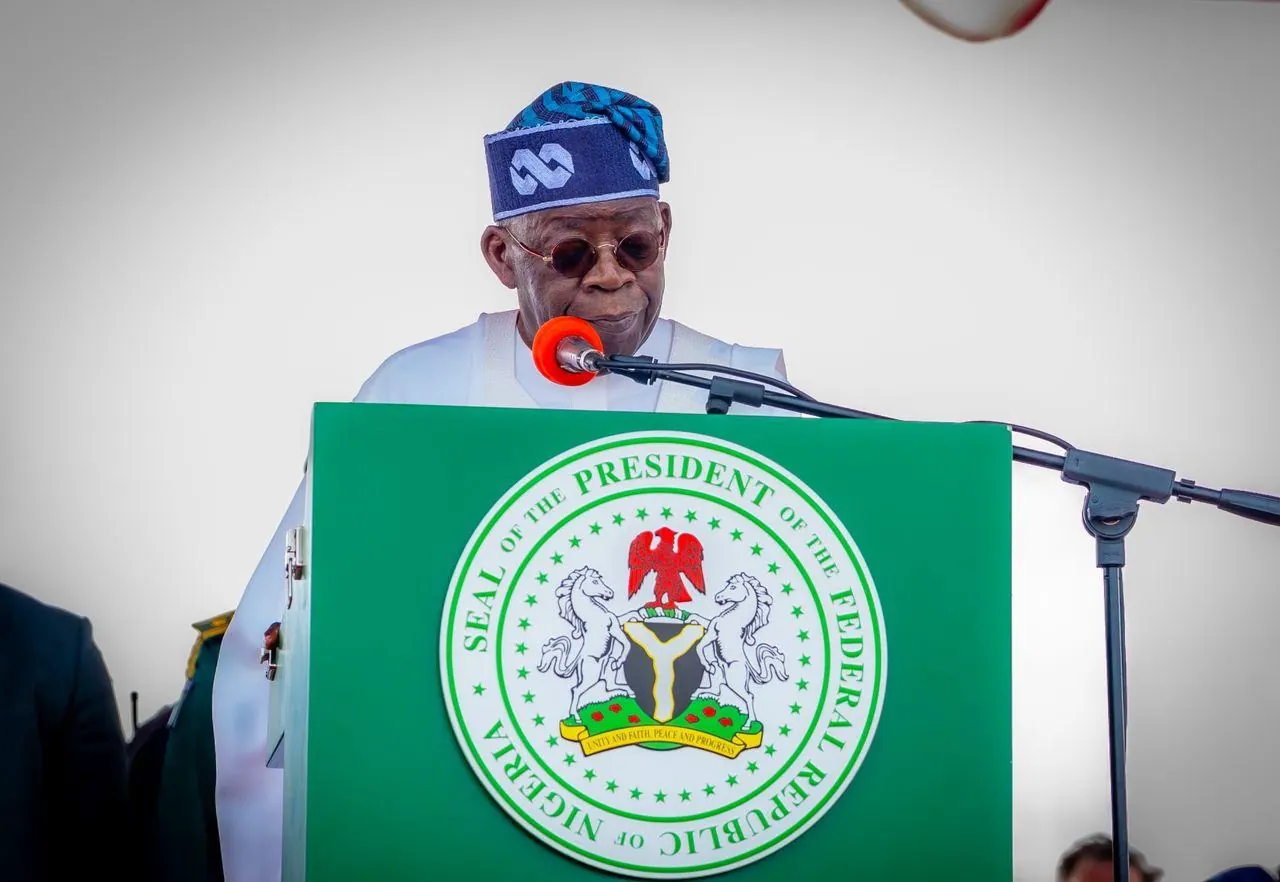
President Bola Tinubu has stated that Nigeria has transitioned from a phase of economic reforms to an "age of prosperity." In his Independence Day address, Tinubu acknowledged the ongoing economic challenges affecting millions of Nigerians and outlined his administration's priorities for the next phase of his tenure. He emphasized the need for Nigerians to look ahead rather than returning to policies that contributed to the country's economic difficulties. The address marked Nigeria's 66th anniversary.
According to Tinubu, Nigeria's economic outlook has improved significantly. The country's economy grew by more than 4% in 2026, with both the oil and non-oil sectors contributing to stable growth. He also noted a decline in oil theft, a substantial decrease in inflation, and rebuilt foreign reserves. The foreign exchange market has stabilized, and Nigeria recorded over $6 billion in non-oil export revenue in 2025, the country's highest ever.
Tinubu defended his administration's economic reforms, comparing the situation to a patient with cancer who must undergo difficult treatment to recover. He stated that successive governments had delayed necessary decisions and maintained inefficient systems. His administration chose to address the underlying economic problems. Tinubu rejected calls to reinstate "addictive subsidies," emphasizing that the country must remember why the reforms were introduced.
The President announced that the focus of his administration has shifted from correcting Nigeria's economic course to achieving "shared and widespread prosperity." He defined prosperity as not only economic statistics but also the ability of farmers to work safely, factories to have reliable power, businesses to access credit, and young Nigerians to find productive jobs. Tinubu stated that the foundation has been repaired and the emergency treatment is over.
Lowering the cost of living remains a priority for Tinubu's administration. He listed measures being implemented, including mechanized irrigation, dry-season farming, improved access to seeds and fertilizer, agricultural mechanization, storage, and transportation. The government is also building and completing roads, railways, and ports to improve connections between farms, factories, and markets.
Tinubu emphasized that job creation, entrepreneurship, and industrial development will remain central to his administration's policies. He wants Nigeria's youthful population to become a driver of production and economic growth rather than a source of despair. The government will leverage gas to power industries, support businesses seeking to revive factories, expand digital connectivity, invest in skills, and provide infrastructure and financing to Nigerian businesses.
The President expressed his desire to see more Nigerian companies producing goods for domestic consumption and export. With a focus on prosperity and economic growth, Tinubu's administration aims to build on the progress made so far. The government's policies will prioritize the needs of Nigerians, ensuring that the country's growth is sustainable and beneficial to its citizens.
Key points
- Tinubu says Nigeria's economic outlook has improved with a growth rate of over 4% in 2026.
- The President emphasizes that his administration's focus has shifted from economic reforms to achieving "shared and widespread prosperity."
- Tinubu prioritizes job creation, entrepreneurship, and industrial development to drive economic growth.