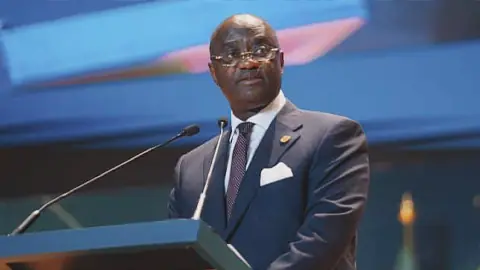
President Bola Ahmed Tinubu has announced that Nigeria's economy is no longer heavily dependent on oil revenue. He made this statement during the fifth anniversary of the Nigerian Upstream Petroleum Regulatory Commission (NUPRC) in Abuja, where he was represented by Vice President Kashim Shettima. According to the President, his administration has successfully built a diversified economy, unlocking the potential of various sectors such as agriculture, manufacturing, and the digital and creative industries.
The President noted that through the joint efforts of security agencies, operators, host communities, and the Commission, oil production in Nigeria is now more stable and robust. This development has led to a significant increase in investor confidence, with many who had previously abandoned the country now returning. As a result, Nigeria has been ranked first among Africa's leading destinations for upstream investment for two consecutive years.
President Tinubu emphasized that the gains made in the oil and gas industry have far-reaching implications beyond the sector itself. He stated that under the Renewed Hope Agenda, the government is committed to building a diversified economy where various sectors contribute to the country's growth. The President also highlighted the importance of the oil and gas industry in supporting a stable economy, citing its role in generating foreign exchange and funding the Federation.
The President revealed that Nigeria has already reduced its dependence on oil revenue and plans to further decrease this reliance. He stressed that a diversified economy still requires energy, foreign exchange, and investment, which the oil and gas sector can provide. President Tinubu also emphasized the potential of Nigeria's gas resources to power homes and factories, as well as the role of petroleum earnings in supporting a stable currency.
President Tinubu promised to pursue an energy transition that is tailored to Nigeria's specific needs and circumstances. He declared that the current decade is a critical period for the country's energy sector, emphasizing the importance of gas development. The President also vowed to ensure that Nigeria becomes a preferred destination for hydrocarbon investment, with a focus on compliance and accountability in the industry.
The President highlighted the job creation potential of a well-run upstream industry, citing opportunities for Nigerian engineers, fabricators, and service companies. He emphasized that his administration plans to utilize petroleum resources to build a broader economy, rather than relying solely on them. President Tinubu also reiterated his commitment to creating a stable and attractive investment environment in the country.
In conclusion, President Tinubu's announcement marks a significant milestone in Nigeria's economic development. The country's shift towards a diversified economy is expected to have a positive impact on its growth and stability. With a focus on compliance, accountability, and job creation, the government aims to build a thriving economy that is less dependent on oil revenue.
Key points
- Nigeria has reduced its dependence on oil revenue and plans to further decrease this reliance.
- The country has been ranked first among Africa's leading destinations for upstream investment for two consecutive years.
- President Tinubu has declared the current decade as the "Decade of Gas" and emphasized the importance of gas development in Nigeria's energy sector.