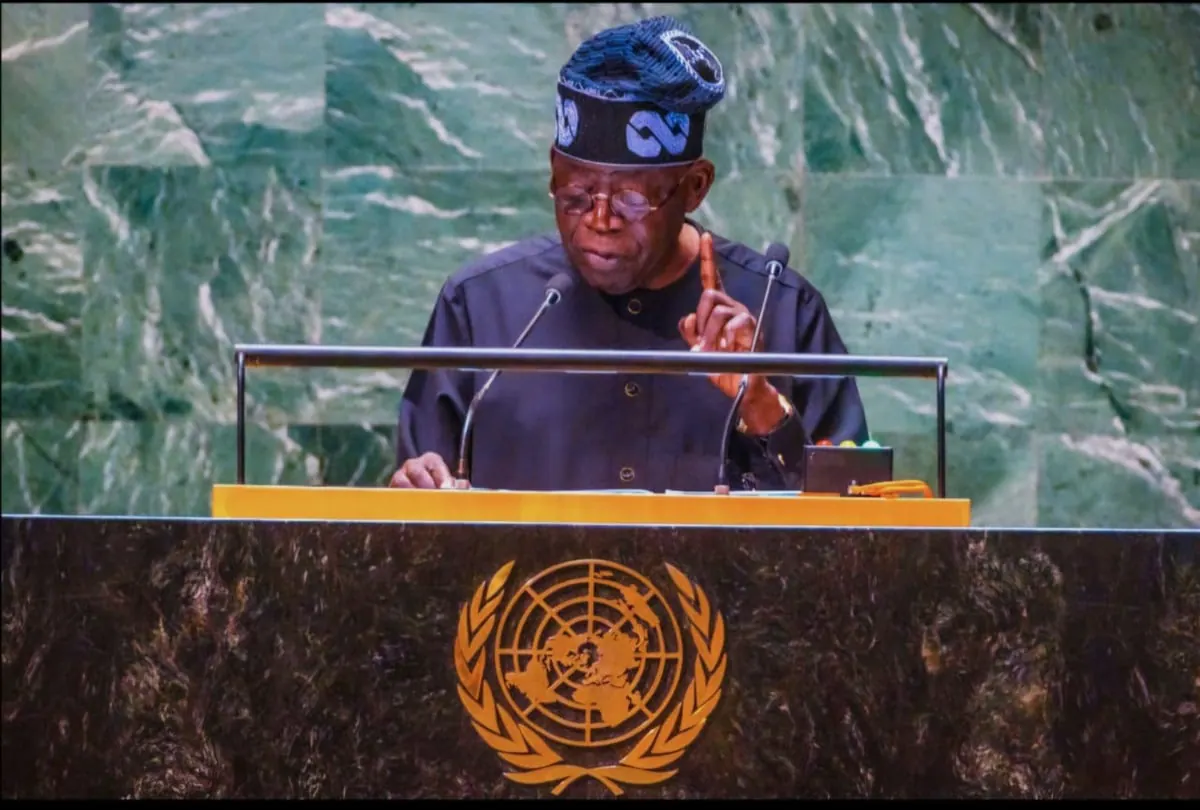
President Bola Ahmed Tinubu has stated that the economic struggles facing some Nigerian families did not begin with his administration. In his Independence Day address, Tinubu acknowledged that millions of citizens still struggle to afford basic necessities like food, school fees, and medical bills. He attributed these difficulties to years of low productivity, inadequate infrastructure, limited opportunities, and institutional weaknesses.
Tinubu emphasized that the government cannot reverse problems that have accumulated over generations in just four years. However, he expressed confidence that the administration can change the country's economic direction and create conditions to lift more Nigerians out of poverty. To achieve this, the government is combining economic reforms with measures to support vulnerable citizens.
The president highlighted several initiatives aimed at supporting low-income families and individuals. These include the Nigerian Education Loan Fund, which helps students from low-income families pursue higher education, and the consumer credit scheme launched by CREDICORP. The scheme enables working Nigerians to acquire essential assets like vehicles, solar systems, and digital devices.
Tinubu also mentioned that the government is working with state and local governments to strengthen primary healthcare, basic education, and other essential public services relied upon by poorer Nigerians. He maintained that the economic reforms introduced since he assumed office in 2023 were necessary to address longstanding weaknesses in the economy.
According to Tinubu, the economic reforms have produced measurable improvements, including economic growth of more than 4% in 2026 and lower inflation. He also cited the rebuilding of foreign reserves and greater stability in the foreign exchange market. Additionally, Nigeria recorded over $6 billion in non-oil export revenue in 2025, the highest in the country's history.
The president identified lowering the cost of living as a major priority for his administration. To achieve this, the government is focusing on reducing production and transportation costs through agricultural mechanization, irrigation, and improved access to seeds and fertilizer. The administration also aims to create jobs and stimulate industrial expansion by using Nigeria's gas resources to power industries.
Tinubu emphasized that the ultimate goal is to create an economy where farmers can earn better incomes, businesses can access reliable power and credit, and young people can find productive employment. He acknowledged that poverty reduction will take time and require sustained economic growth and the creation of millions of productive opportunities.
Key points
- President Tinubu says Nigeria's economic struggles predate his administration.
- The government is implementing measures to support vulnerable citizens, including direct assistance to poorer households.
- Tinubu aims to create an economy with better incomes, reliable power and credit, and productive employment opportunities.