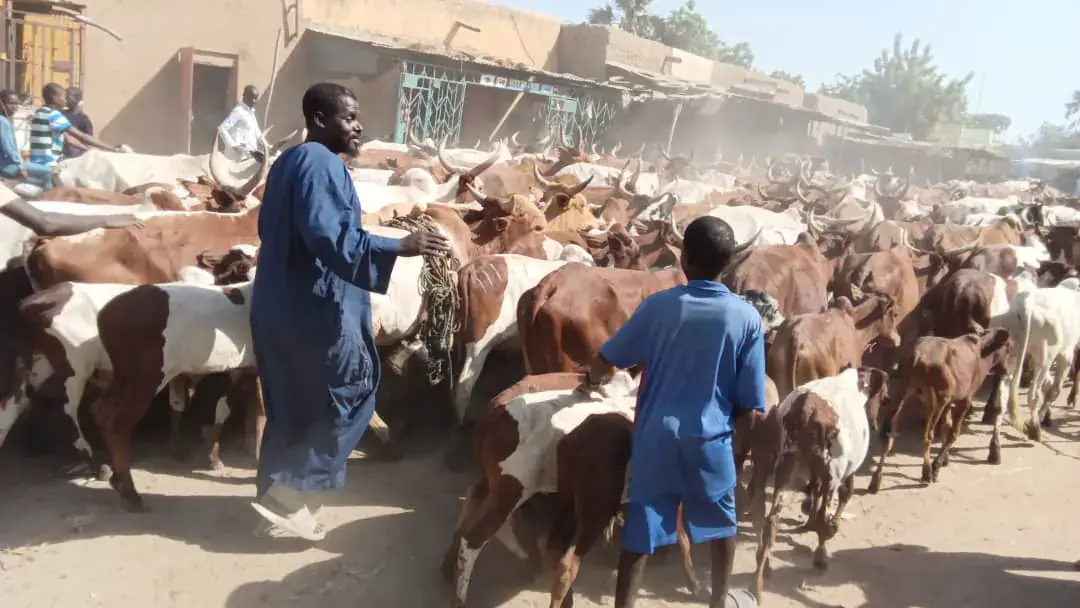
After spending six months in the Sahel region's pastures, thousands of heads of cattle from Tenenkou's district have begun their return journey to the bourgou's prairies in the Niger's inner delta. This annual pastoral and cultural event drew large crowds, administrative authorities, and livestock enthusiasts who gathered to witness the cattle passing through the town. The herds from Thioubi had been waiting in designated areas for several weeks before embarking on their traditional route.
The cattle herds were accompanied by authorities and numerous onlookers as they made their way through the town. After passing through Tenenkou, the animals will head to Penga, a locality five kilometers away, to cross the Diaka River and return to the pastures on the river's other side. This transhumance marks a significant event in the district, where livestock plays a vital role in the local economy and population's activities.
The tradition of cattle migration in Tenenkou follows ancestral rites and practices passed down through generations, dating back to the era of Ardo and the Dina of Sékou Amadou. These customs regulated the cyclical movements of herds. Tenenkou's second deputy prefect, Commissioner Ousmane Diamouténé, praised the herders for their perseverance and dedication in guiding the cattle to and from the Sahel pastures.
Diamouténé expressed satisfaction with the cattle's condition and commended the dioros, traditional leaders, for their leadership in preserving pastoral traditions. He noted that 2026 has been declared the Year of Culture by the country's authorities, making the cattle passage in Tenenkou a valuable cultural heritage to be promoted, preserved, and transmitted to future generations.
Bourama Allaye Diall, speaking on behalf of the dioros, thanked administrative authorities and defense forces for their support. He praised the coordination that enabled the organized passage of the herds. The return of the cattle is facilitated by "egirgol," groupings of herders whose animals belong to the same locality or community and share the same pastures, water points, and tracks.
The migration follows a predetermined order of precedence under the authority of a dioro, a traditional leader. Beyond its economic and pastoral significance, the return of the cattle is a moment of popular rejoicing. Herders whose animals are in the best condition are celebrated and held up as examples. The event was marked by songs and praise from griots, traditional guardians of the culture.
The ceremony took place in the presence of local officials, including the second deputy mayor of the urban commune and the village chief of Tenenkou. The president of the local breeders' cooperative also attended. This event showcases the importance of preserving traditional practices and promoting cultural heritage in Mauritania.
Key points
- The cattle migration in Tenenkou is an essential cultural event that highlights the significance of preserving traditional practices and promoting cultural heritage.
- The event demonstrates the importance of livestock in the local economy and population's activities in Tenenkou.
- The tradition of cattle migration in Tenenkou follows ancestral rites and practices passed down through generations.
Reporting sources
- Tenenkou : Le retour des troupeaux, un patrimoine vivant célébré · Agence malienne de presse et de publicité