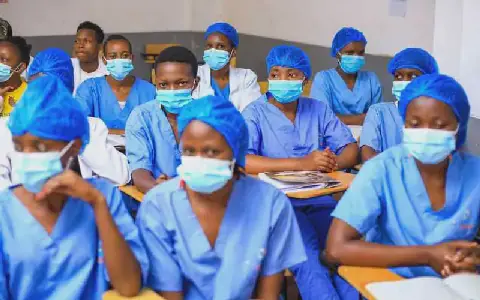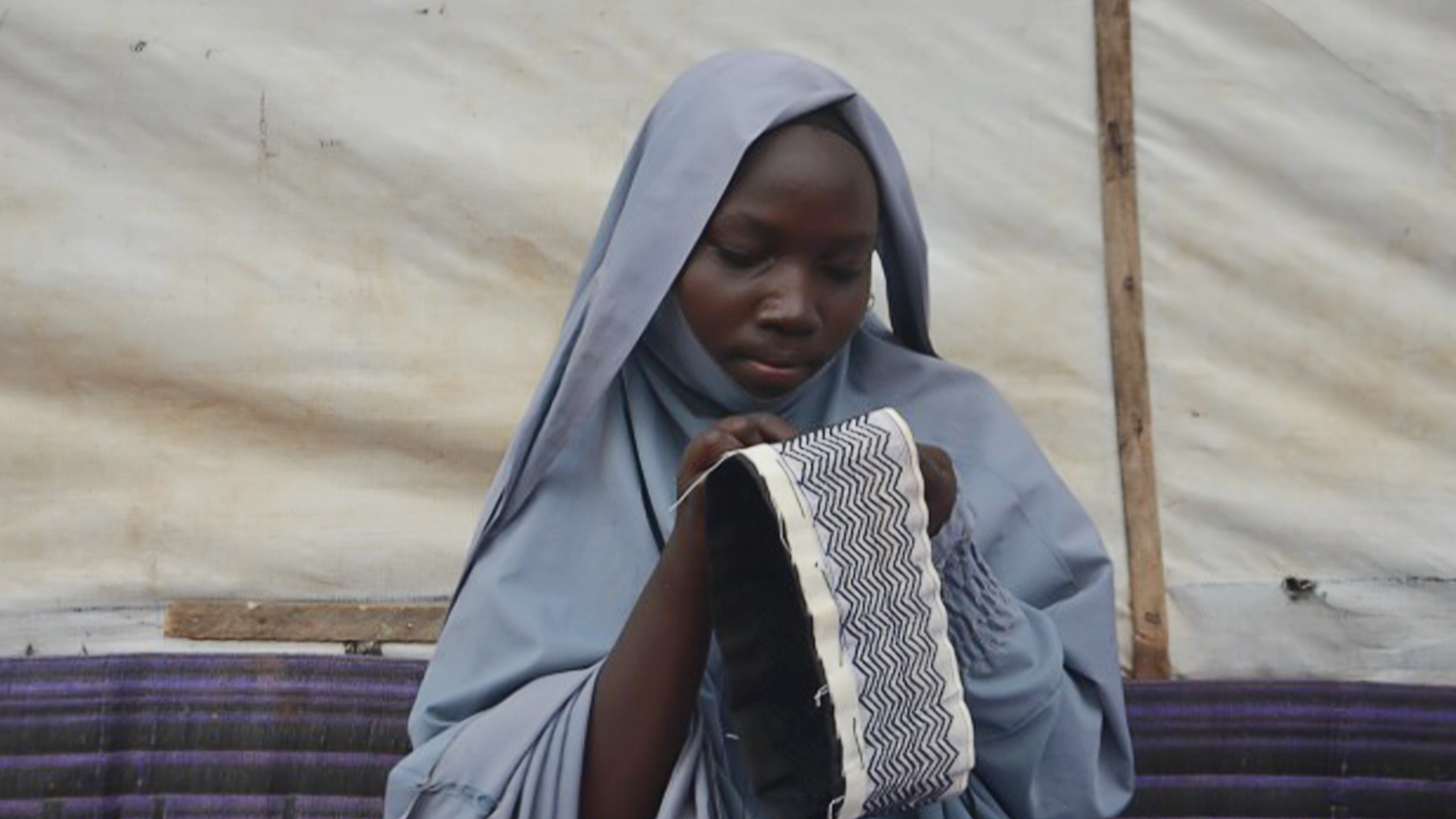
Fourteen years after Boko Haram's insurgency forced thousands of people to flee their homes in Adamawa State, Nigeria, a new crisis has emerged. Many displaced children in the state are struggling to access education, with some having never attended school. Aishat Umaru, a 15-year-old girl living in the Damare displacement camp, is one such child. She has been making embroidered caps to sell since she stopped attending school in Primary 2 due to financial constraints.
Aishat's story is not an isolated incident. Thousands of children in Adamawa's displacement camps face similar challenges. According to the United Nations Children's Fund, approximately 69% of school-age children living in displacement camps across Borno, Adamawa, and Yobe states had no access to education as of 2025. The organization's data also reveals that nearly two million children across the three states are out of school, with 56% of displaced children not attending school.
The Adamawa State government has implemented various initiatives to address the issue. In January, the state's Commissioner for Education and Human Capital Development, Dr. Umar Garba Pella, emphasized the importance of free and compulsory education for all children in the state. The Adamawa State Universal Basic Education Board (ADSUBEB) has also launched a program to provide non-formal learning centers for out-of-school children, with support from the Global Partnership for Education.
Despite these efforts, the reality on the ground remains bleak. In the Damare displacement camp, families report that they have not received adequate support from the government or other organizations. Rukayat Umaru, the mother of Aishat, says that her family has been living in the camp for 11 years without any significant assistance. Her story highlights the challenges faced by many families in the state's displacement camps.
The crisis has long-term implications for the children and the state as a whole. Aishat, who once aspired to become a governor, now feels that her dreams are out of reach. The situation is a stark reminder of the need for sustained efforts to address the education crisis in Adamawa and other affected states. The state's education authorities acknowledge the challenges but dispute the idea that nothing is being done to address them.
To understand the scope of the crisis, it is essential to examine the events that led to the displacement of thousands of people in Adamawa. Rukayat Umaru's family was forced to flee their home in Gwoza after Boko Haram fighters attacked and killed several people. The family spent three weeks in captivity before escaping and eventually settling in the Damare displacement camp.
The Nigerian government has implemented policies to guarantee free and compulsory education for all children. However, the reality in Adamawa and other affected states is that many children continue to face significant barriers to accessing education. The situation requires a coordinated effort from the government, international organizations, and local stakeholders to address the root causes of the crisis and provide sustainable solutions.
Key points
- Thousands of displaced children in Adamawa struggle to access education 14 years after Boko Haram's insurgency.
- The Adamawa State government has launched initiatives to address the issue, but the reality on the ground remains challenging.
- The crisis has long-term implications for the children and the state, emphasizing the need for sustained efforts to address the education crisis.