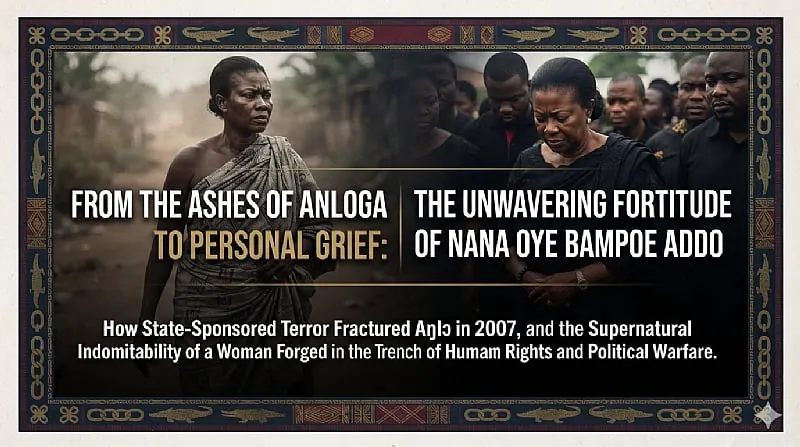
In the realm of Ghanaian politics, a select few possess the strength to navigate the complexities of leadership while confronting personal tragedy. Nana Oye Bampoe Addo, a prominent figure in the National Democratic Congress (NDC), exemplifies this unwavering fortitude. Her recent experience of losing her twin brothers, Dr. Isaac Atteh Bampoe Addo and Sidney Nii Oko Bampoe Addo, within a span of three weeks, showcases her ability to compartmentalize grief and maintain public composure.
The roots of Nana Oye Bampoe Addo's strength can be traced back to her involvement in the human rights crisis in Anloga, Ghana, in 2007. On November 1, 2007, state security forces clashed with local factions and youth groups in Anlo, resulting in bloodshed and trauma. The conflict arose from a chieftaincy dispute, which the John Kufuor-led administration attempted to resolve by imposing an Awɔmefia on the people of Anlo, disregarding local traditional autonomy.
As the Regional Coordinator for the Commonwealth Human Rights Initiative (CHRI) in Africa, Nana Oye Bampoe Addo played a crucial role in responding to the human rights abuses in Anloga. She mobilized a team, including human rights lawyer Tuinese Amuzu and Ken Kpedor, to document the violence and provide support to the victims. Their efforts led to global scrutiny of the Kufuor administration, ultimately forcing a retreat and restoring peace to the area.
The experience in Anloga prepared Nana Oye Bampoe Addo for the challenges she would face in her political career. Her ability to navigate complex situations and maintain emotional discipline has been evident in her response to personal tragedy. Despite being consumed by grief, she stood resolute as Vice President Prof. Naana Jane Opoku-Agyemang and high-ranking NDC members arrived to commiserate.
The contrast between Nana Oye Bampoe Addo's public and private life highlights the difference between a pure advocate and a political statesman. While an advocate can express emotions freely, a politician must possess supernatural emotional intelligence to internalize grief while projecting strength. This unique ability allows her to join in revolutionary chants with her political fraternity, even in the midst of personal heartbreak.
The incident in Anloga and Nana Oye Bampoe Addo's personal experiences underscore the need for institutional reforms in Ghana's chieftaincy and political landscape. Recommendations include strict neutrality of state security in traditional matters, establishment of permanent regional chieftaincy mediation committees, and institutionalized mental health support for public leaders. These reforms aim to protect citizens from state overreach and ensure that the sacrifices of past human rights defenders are not lost.
As Ghana continues to navigate its complex political landscape, leaders like Nana Oye Bampoe Addo serve as pillars of strength. Her unwavering fortitude in the face of personal tragedy and her commitment to human rights and politics demonstrate the ironclad emotional discipline required to stand as a leader. Her story serves as a poignant reminder of the ultimate cost of leadership and the need for emotional intelligence in navigating the challenges of politics.
Key points
- Nana Oye Bampoe Addo's strength in the face of personal tragedy showcases her ability to compartmentalize grief and maintain public composure.
- The 2007 conflict in Anloga highlights the need for strict neutrality of state security in traditional matters.
- Institutional reforms, including mental health support for public leaders, are necessary to protect citizens from state overreach and ensure that the sacrifices of past human rights defenders are not lost.