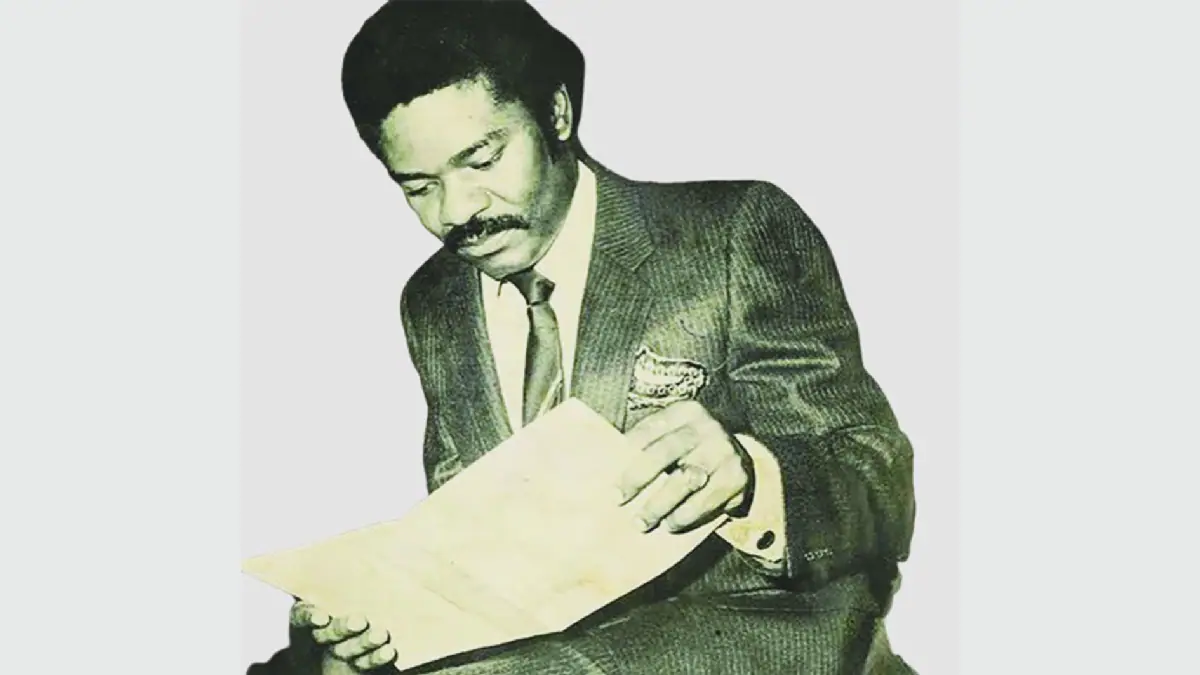
On October 19, 1986, a parcel bomb delivered to Dele Giwa's Ikeja residence killed the 39-year-old journalist, whose work challenged Nigerian journalism conventions. Giwa's death exposed the dangerous relationship between political power and press freedom. Forty years later, Nigeria has yet to establish a definitive judicial account of who orchestrated his killing and why. The case remains a test of the state's capacity to protect the public interest against powerful individuals.
Dele Giwa was a pioneer in Nigerian journalism, co-founding Newswatch magazine in 1984 with Ray Ekpu, Dan Agbese, and Yakubu Mohammed. The magazine aimed to move beyond routine announcements and official statements, investigating public affairs and scrutinizing those in power. Under military government, this approach carried significant risks, and Giwa's work likely attracted unwanted attention from authorities.
General Ibrahim Babangida's administration, which seized power in August 1985, promised political reform but maintained military dominance. The press operated in an environment where independent reporting could be seen as a challenge to authority. Newswatch's emergence asserted that government officials were not beyond scrutiny, and Giwa understood that journalism could not fulfill its democratic purpose if powerful individuals controlled the narrative.
In the days leading up to his death, Giwa had contacts with security officials, including Colonel Halilu Akilu and Lieutenant Colonel A.K. Togun. Their names became central to public controversy, but a responsible examination of the assassination must distinguish unanswered questions from proof of involvement. In February 1988, a Nigerian High Court dismissed murder and conspiracy charges against Akilu and Togun due to insufficient evidence.
The investigation into Giwa's assassination never delivered comprehensive answers, allowing speculation to persist. Nigeria's return to civilian rule in May 1999 presented an opportunity to confront institutional failures, but the case continued to represent the distance between democratic promises and practical justice delivery. A significant development occurred in February 2024, when Justice Inyang Ekwo ordered the Federal Government to reopen the investigation and prosecution.
The court's judgment arose from a suit filed by Media Rights Agenda, which challenged the state's failure to protect journalists and adequately investigate attacks against media practitioners. The court also directed the government to take measures to prevent attacks on journalists and investigate and prosecute those responsible. This development offers hope that the case may finally be resolved, providing closure for Giwa's family and a test of Nigeria's commitment to justice.
The unresolved assassination of Dele Giwa remains a significant concern for Nigeria's justice system and its ability to protect journalists and the public interest. The case highlights the need for a thorough investigation and prosecution, free from political interference or influence. As Nigeria continues to navigate its democratic journey, resolving this case will be crucial in demonstrating the state's capacity to uphold the rule of law and protect its citizens.
Key points
- The assassination of Dele Giwa remains unresolved 40 years on, with Nigeria's justice system facing scrutiny over its handling of the case.
- The case highlights the challenges faced by journalists in Nigeria, particularly during military rule, and the need for a free press to hold those in power accountable.
- A recent court judgment has ordered the reopening of the investigation and prosecution, offering hope that justice may finally be served.