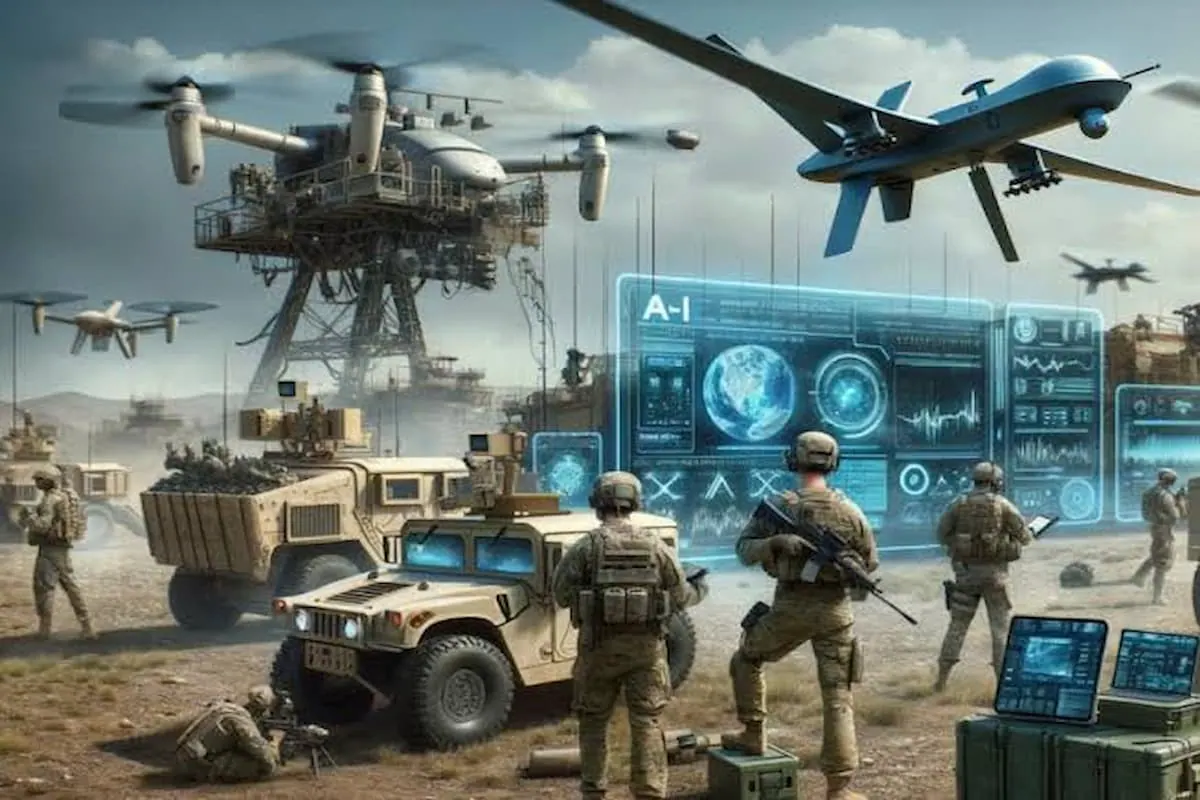
The recent military operations in Gaza have highlighted the devastating effects of artificial intelligence. According to Béligh Nabli, writing for L'Économiste maghrébin, the precision and efficiency of AI have led to a significant increase in casualties. As a major technological innovation, AI has become a double-edged sword, capable of achieving great benefits but also posing significant risks. Its use in military operations raises questions about the regulation of AI and its implications for international law.
The impact of AI extends beyond the military sphere, with far-reaching consequences for the social and economic organization of societies. AI has become a key component of the hard power and soft power of states, influencing the production of norms, standards, and rules. The global competition for AI dominance has led to a redistribution of international power, with some countries gaining an advantage over others. However, AI also has the potential to exacerbate existing inequalities and create new ones.
The potential risks associated with AI have been highlighted by Volker Türk, the UN High Commissioner for Human Rights. He has warned that advanced AI could pose an existential threat to humanity if not properly regulated. In response, the UN Security Council has held a special meeting to discuss the regulation of AI. The main challenge lies in controlling a technology that is advancing faster than our ability to manage its risks.
The use of AI in military operations raises significant ethical and legal questions. As AI becomes increasingly autonomous, it is unclear who would be responsible for any violations of international humanitarian law. The concept of "soldiers augmented" by technology and the use of drones have opened up new possibilities for military action, but also created new challenges for the regulation of conflict.
The international community is struggling to keep pace with the rapid development of AI. The lack of clear regulations and guidelines has led to concerns about the potential misuse of AI. As AI continues to advance, it is essential to establish a framework for its development and use. This will require cooperation and agreement among governments, international organizations, and other stakeholders.
The debate around AI regulation has sparked a wider conversation about the future of humanity. As AI becomes increasingly integrated into our lives, it is essential to consider the potential consequences of its development. The UN has taken a step in the right direction by holding a special meeting to discuss AI regulation. However, more needs to be done to ensure that AI is developed and used in a responsible and sustainable way.
The development of AI is a complex issue that requires a multifaceted approach. It is essential to balance the potential benefits of AI with the potential risks and challenges. This will require ongoing dialogue and cooperation among governments, international organizations, and other stakeholders. As AI continues to evolve, it is crucial to prioritize transparency, accountability, and human rights in its development and use.
Key points
- The use of AI in military operations raises significant ethical and legal questions about accountability and responsibility.
- The international community is struggling to keep pace with the rapid development of AI and the need for regulation.
- The development of AI has the potential to exacerbate existing inequalities and create new ones, highlighting the need for a responsible and sustainable approach.