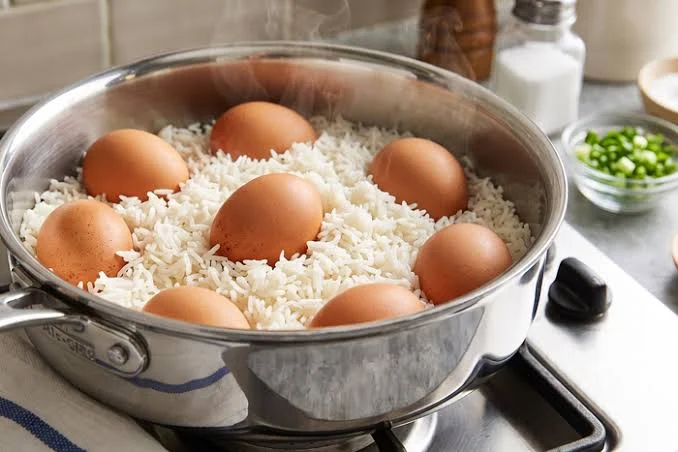
Registered dietitian-nutritionists in Nigeria have issued a warning against cooking eggs and rice together in the same pot. They cite the risk of bacterial cross-contamination, particularly from Salmonella and E. coli, which may be present on eggshells. This practice, increasingly common among Nigerian households, poses a risk to food safety. According to experts, bacteria on the outer surface of an egg could be transferred to the cooking water and subsequently come into contact with the rice.
The concern is not that rice and eggs are unhealthy when eaten together, but that improper handling or washing of eggs can lead to contamination. Rice begins absorbing water as soon as it is placed in the pot, and if contaminated water is absorbed before the cooking process reaches temperatures sufficient to destroy the bacteria, there could be a risk of cross-contamination. This is a significant concern, especially in households where food safety practices are not strictly followed.
Registered Dietitian-Nutritionist James Oloyede, a former Director of Nutrition Services and Health Education at the Osun State Primary Health Care Development Board, explained that cooking egg and rice together in the same pot has been found to be a risk factor in cross-contamination of certain bacteria, especially Salmonella. He added that eggshells could also crack during cooking, allowing egg white or yolk to spill into the rice and alter its taste, appearance, and smell.
The practice of cooking eggs and rice together is often driven by a desire to save cooking gas, water, time, and utensils. Some Nigerians have adopted different methods of preparing rice and eggs together, including placing eggs directly inside the pot or wrapping them in nylon before putting them in the rice. However, Oloyede emphasized that such measures do not replace proper food-safety practices.
According to Oloyede, the safest option is to cook the egg and rice separately. He warned that the small savings in cooking time or gas could be outweighed by the potential cost of treating a foodborne infection. Illness caused by Salmonella could result in medical expenses, time away from work, and reduced productivity, creating additional financial pressure for households.
The warning follows a recent viral discussion on social media, in which some users shared experiences and concerns about consuming rice and eggs prepared in the same pot. The practice remains widespread due to its convenience and the desire to reduce household cooking expenses. Experts stress that food safety should come first and that safe preparation and prevention of cross-contamination are crucial for households that want to continue eating rice and eggs together.
For households that insist on cooking eggs and rice together, experts recommend taking steps to minimize the risk of cross-contamination. This includes properly handling and washing eggs, ensuring that cooking water is clean, and cooking the rice and eggs to sufficient temperatures to destroy bacteria. By prioritizing food safety, Nigerians can enjoy a staple dish while minimizing the risk of foodborne illness.
Key points
- Cooking eggs and rice together poses a risk of bacterial cross-contamination, particularly from Salmonella and E. coli.
- The safest way to cook eggs and rice is to boil them separately.
- Food safety should be prioritized over convenience when preparing meals.