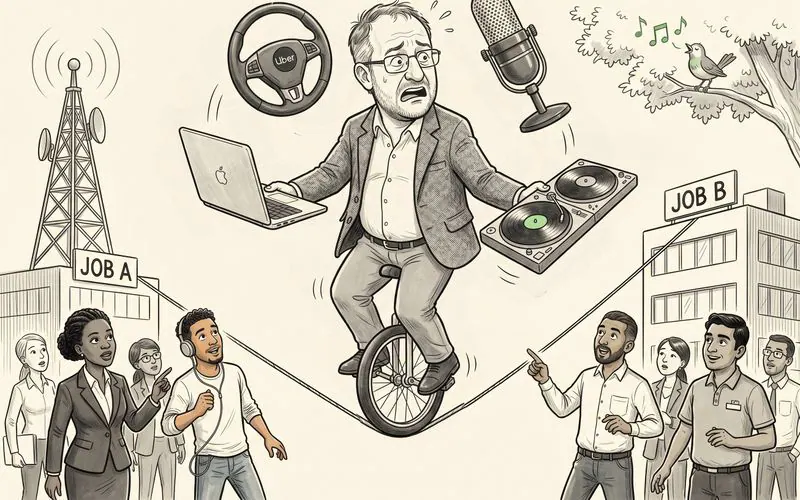
The concept of having a single job is becoming increasingly outdated in South Africa. Many people are now taking on side-hustles to supplement their income, and this trend is being acknowledged by employers. According to Stephen Grootes, a journalist who has experienced this shift firsthand, having multiple jobs has become a norm in today's economy. This change is driven by the ease of manipulating information and the need for additional income.
The rise of side-hustles is not limited to any particular industry. Grootes notes that he has seen this trend in journalism, where people are now working multiple jobs and juggling various tasks. The advancement of technology has made it possible to be more productive and manage multiple tasks simultaneously. However, this shift has also led to a decrease in remuneration for output, as it is cheaper to produce content.
While some employers are accepting of employees having side-hustles, others are not. A recent case highlighted the consequences of not being transparent about multiple jobs. Sibongiseni Thotsejane, a former chief information officer at the V&A Waterfront, was ordered to pay back R2.9-million she was paid while working full-time at the Cape Peninsula University of Technology. Thotsejane had lied about her work commitments and was absent from her job at the V&A Waterfront while working at CPUT.
The case of Thotsejane highlights the importance of transparency when it comes to multiple jobs. Employers are generally okay with employees having side-hustles as long as they are aware of the other commitments and there is no direct conflict. However, lying about work commitments can lead to severe consequences. Employers want employees to be honest about their other work commitments and manage their time effectively.
The trend of having multiple jobs is not limited to those who are struggling financially. Grootes notes that even people who are financially stable are taking on side-hustles to make extra money. This trend is driven by the desire to have more financial security and freedom. The Uber driver Grootes spoke to, who works a nine-to-five job during the week and drives on weekends, is an example of this.
The rise of side-hustles also raises questions about the economy and the job market. Grootes suggests that this trend may be a function of the "insiders and outsiders" economy, where those who are already employed have more opportunities than those who are not. However, employers see this trend as an opportunity to attract employees who are already skilled and experienced.
As the economy continues to evolve, it is likely that the trend of having multiple jobs will continue to grow. Employers will need to adapt to this new reality and find ways to manage employees who have multiple work commitments. By being transparent and honest about side-hustles, employees can maintain a positive relationship with their employers and enjoy the benefits of having multiple jobs.
Key points
- Employers in South Africa are generally accepting of employees having side-hustles as long as they are transparent about their other work commitments.