The election of Johannesburg's mayor is often seen as a straightforward process, but behind the scenes, complex negotiations and alliances play a significant role in determining the outcome. As the city prepares for its mayoral election, the question on everyone's mind is who really chooses the mayor? According to local politics, the answer lies in the intricate web of alliances and negotiations between various parties. This election is crucial, as it will determine the future direction of the country's largest city.
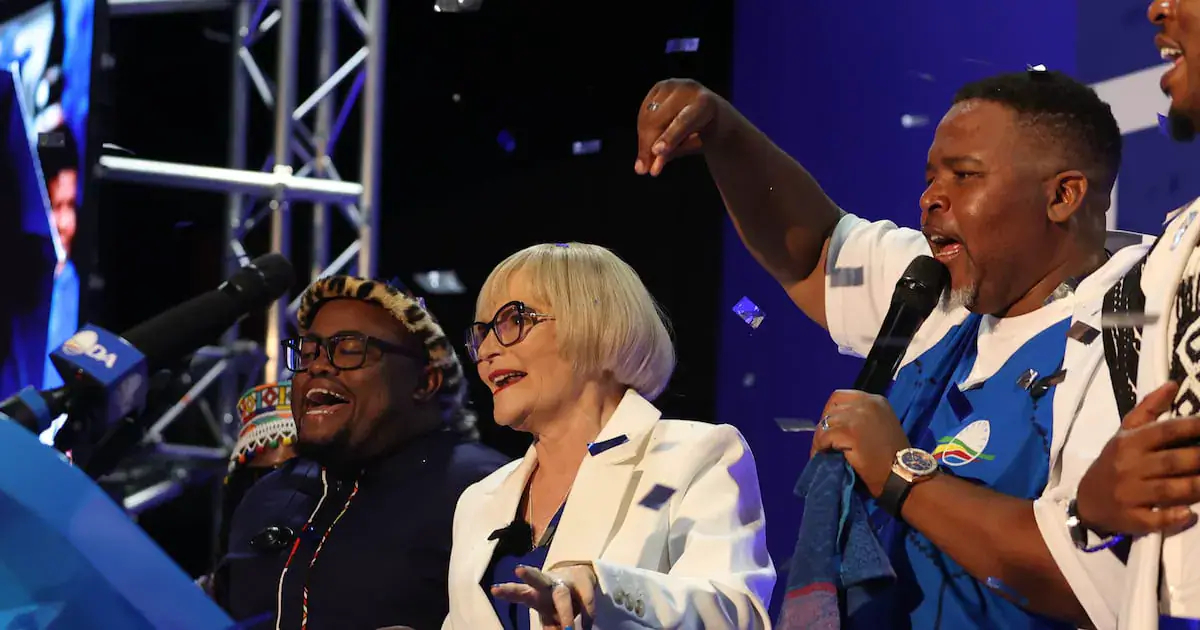
The Democratic Alliance (DA) has put forward Helen Zille as their mayoral candidate for Johannesburg. Zille, a seasoned politician, has previously served as the Premier of the Western Cape and has been a vocal advocate for good governance. Her candidacy has sparked both support and criticism, with some hailing her as a strong leader and others questioning her ability to connect with the city's diverse population. As the DA's candidate, Zille will face stiff competition from other parties, including the African National Congress (ANC).
The ANC, which has historically been a dominant force in South African politics, is also vying for control of the mayoral position. The party has a strong presence in Johannesburg and has previously held the mayoral position. However, with the DA's Zille as a contender, the ANC will need to navigate complex negotiations to secure the position. Other parties, including the Economic Freedom Fighters (EFF) and the Inkatha Freedom Party (IFP), will also play a role in shaping the outcome of the election.
Backroom negotiations and shifting alliances are a hallmark of South African politics, and the mayoral election in Johannesburg is no exception. Parties often form coalitions and make deals to secure positions of power, which can lead to unstable and short-lived administrations. This has significant implications for the city's governance and service delivery, as a stable and effective administration is crucial for addressing the city's many challenges.
The mayoral election in Johannesburg has significant implications for the city and the country as a whole. As the country's largest city, Johannesburg plays a critical role in driving economic growth and providing services to its residents. The election outcome will also have a bearing on national politics, with the ANC and DA vying for control of the narrative. A stable and effective administration in Johannesburg will be a boost to the ANC, while a DA victory would be seen as a significant coup for the opposition party.
Critics have argued that the election process in Johannesburg is often marred by infighting and factionalism, which can undermine the legitimacy of the outcome. This has led to calls for electoral reform and greater transparency in the election process. However, with the election looming, parties are focused on securing the mayoral position and implementing their policies. The city is eagerly awaiting the outcome, which will have a significant impact on its future direction.
As the election draws near, residents of Johannesburg are watching with bated breath. The city's infrastructure and services are under strain, and a stable and effective administration is crucial for addressing these challenges. The mayoral election is a critical moment in the city's history, and the outcome will have far-reaching implications for its residents and the country as a whole.
Key points
- The DA's Helen Zille is the party's mayoral candidate for Johannesburg.
- The ANC and DA are vying for control of the mayoral position in Johannesburg.
- Backroom negotiations and shifting alliances play a significant role in determining the outcome of the mayoral election in Johannesburg.