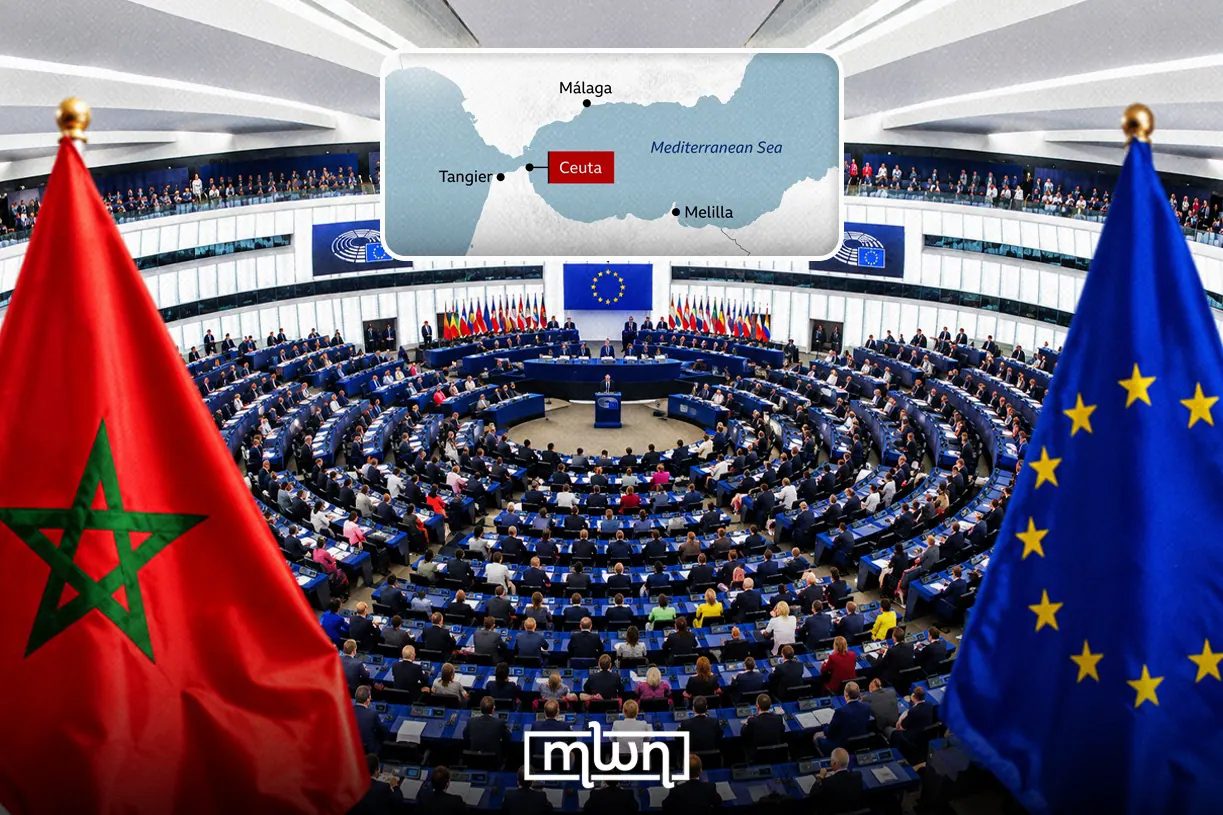
The European Union is Morocco's leading economic partner and investor, with close cooperation in trade, energy, health, and education. The 2022 Green Partnership is a notable example of this cooperation. However, recurring tensions around migration, the Sahara, and funding conditionality have marked the partnership. Since 1969, relations between Morocco and the EU have evolved from a simple trade agreement to a multidimensional strategic partnership.
The 1996 Association Agreement, which came into force in 2000, laid the foundations for Morocco's integration into the European Neighborhood Policy in 2004 and the obtaining of Advanced Status in 2008. This status recognized Morocco as a "privileged partner" and aimed to foster regulatory convergence and strengthen cooperation on security and migration. However, the European Parliament's growing influence in foreign policy has changed the dynamics of Morocco-EU relations.
Since 2000, the European Parliament has become a significant player in the Morocco-EU equation, exercising political influence through non-binding resolutions and recommendations. Although it does not have binding decision-making powers, the European Parliament has established itself as an unavoidable actor thanks to its budgetary, control, and consultation powers. Informal practices such as privileged access to information, parliamentary diplomacy, and political pressure have also contributed to its growing influence.
The European Parliament's role in foreign policy was largely consultative before the adoption of the Lisbon Treaty in 2009. However, since then, it has acquired a power of consent on international agreements that has become a de facto power of co-decision. This shift has had a significant impact on Morocco-EU relations, which have become tumultuous since 2011. The European Parliament blocked bilateral agreements under the pretext of human rights concerns, creating a floor of structural mistrust.
The status of the Moroccan Sahara remains a main sticking point in Morocco-EU relations, while the EU continues to depend on Morocco for migration control and regional security. In September 2026, the European Parliament passed a resolution describing the situation in Ceuta as a "hybrid attack" and demanding the immediate freezing of European funds. This move was seen as an implacable inquisitorial court that persists in its conduct, despite national governments having turned the page.
The diplomatic climate between Morocco and the EU turned into a storm, with the European Parliament's resolution in September 2026. This was not an isolated incident, as previous condemnations, such as the 2011 veto on the fisheries agreement, the dismantling of Gdim Izik in 2010, and the outcry over the "Pegasus" affair in 2021, have created a legacy of mistrust. Each new case is now investigated in the light of previous convictions.
The pivotal moment in the strained Morocco-EU relations was on December 14, 2011, when the European Parliament rejected the extension of the EU-Morocco Fisheries Agreement. This rejection was motivated by concerns about the benefits for the population of the Saharan provinces and the legality of the agreement. The European Parliament's growing influence in foreign policy has significant implications for Morocco-EU relations, which will likely continue to be marked by tensions and negotiations.
Key points
- The European Parliament's growing influence in foreign policy is straining Morocco-EU relations.
- Recurring tensions around migration, the Sahara, and funding conditionality have marked the Morocco-EU partnership.
- The European Parliament's non-binding resolutions and recommendations have become a significant factor in shaping Morocco-EU relations.