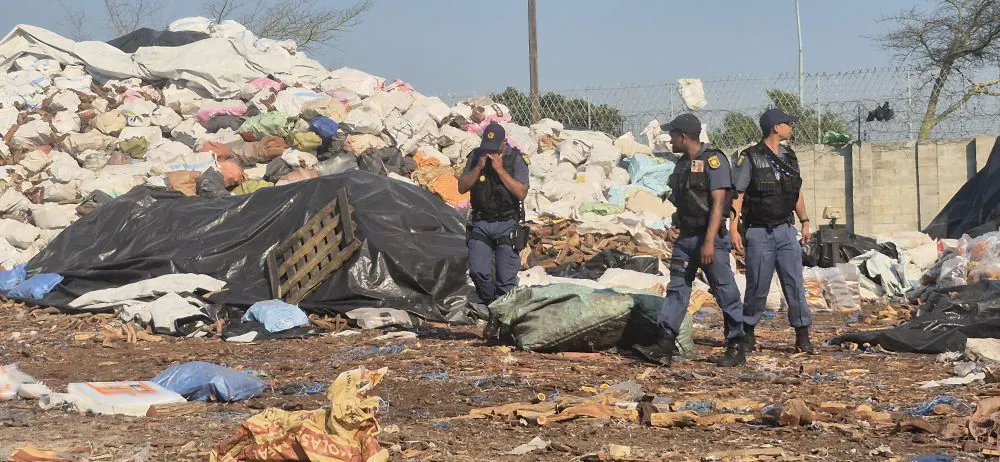
Labour inspectors from the Department of Employment and Labour, along with SAPS, Home Affairs, and other enforcement agencies, conducted an integrated blitz inspection at TJ's Lekka Braai in Blackheath, a factory popular for producing braai wood, charcoal, utensils, and grids. The inspection, which was initially routine, was prompted by concerns about worker safety, alleged wage practices, and employment documentation of foreign nationals.
During the inspection, some workers allegedly ran from the premises and hid in roof spaces, while others were found working in areas covered in charcoal dust without adequate protective equipment. Acting provincial labour department spokesperson Vanessa Cupido said that inspectors had covered escape points before entering the premises, but some workers still managed to hide in the roofs.
According to Fezeka Ngalo, acting provincial chief inspector, officials observed that some workers ran towards the back of the property and climbed into the roof area. SAPS managed to apprehend some of the workers who attempted to flee. A total of 32 people were taken for further verification, with Home Affairs tasked with checking their fingerprints and documentation to establish whether they were legally entitled to work in South Africa.
Inspectors raised concerns about the lack of protective equipment, including masks, gloves, and other safety gear, at the charcoal operation. Cupido stated that none of the workers had PPE, and Ngalo described the rear of the operation as heavily covered in dust, making it a hazardous working environment. Officials also raised concerns about the apparent absence of fire marshals, health and safety representatives, and medical surveillance.
The inspection also uncovered possible contraventions of occupational-health-and-safety legislation. Ngalo stated that inspectors could issue a prohibition notice where they identified an immediate danger, requiring the affected activity to stop until the danger had been addressed. Other enforcement notices could also be issued, with officials returning for follow-up inspections, and matters could be referred for prosecution if an employer remained non-compliant.
Inspectors are also investigating claims about how workers were paid, with some employees alleging that they were paid according to output rather than hours worked. Cupido stated that the arrangement would be assessed against minimum-wage requirements. A manager at TJ's Lekka Braai disputed several of the concerns, claiming that the company was being targeted ahead of National Braai Day and that workers were issued masks and other protective equipment.
The manager acknowledged that the charcoal section contained dark areas and had not been cleaned that morning but maintained that staff had been given masks. He also rejected allegations that workers were paid below the required minimum wage, saying the company complies with the applicable hourly rate. The inspection came during a busy period for the business, with about 120 pallets due to be dispatched to Freshmark ahead of the Heritage Day rush.
Key points
- Workers were found hiding in roof spaces and working without protective equipment at a braai supplier in Blackheath, South Africa.
- Inspectors raised concerns about possible contraventions of occupational-health-and-safety legislation and are investigating claims about how workers were paid.
- The company disputes several of the allegations, claiming that workers were provided with protective equipment and paid according to minimum-wage requirements.