The majority of Nigerians are more concerned with finding competent leaders to address the country's multi-dimensional problems than with the religious affiliations of candidates. This sentiment was evident in the 1993 presidential election, where Chief MKO Abiola, a Muslim, won the hearts of Nigerians despite his running mate, Ambassador Babagana Kingibe, also being a Muslim. The focus was on their ability to provide quality leadership, not their religious backgrounds.
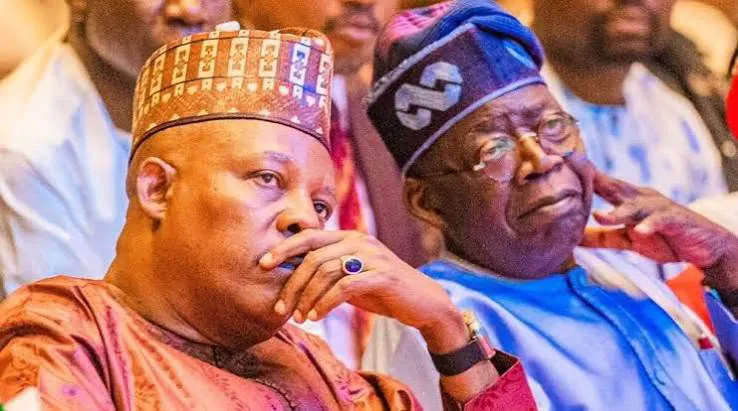
However, in recent years, the narrative has shifted, with some politicians and supporters using religion as a campaign strategy and point of attack against opponents. This trend was exacerbated by some leaders who presented their religion as superior to others and marginalized those with different faiths. The All Progressives Congress (APC) government, which took over in 2015, has been accused of perpetuating this trend, particularly with the Muslim-Muslim ticket championed by Bola Tinubu and his running mate, Kashim Shettima.
The Muslim-Muslim ticket has sparked controversy, with many Christians feeling marginalized and humiliated. In Kaduna State, for instance, the APC government, led by Mallam Nasir El-Rufai, made it clear that only a Muslim-Muslim ticket would win elections in the state. This stance was seen as a threat to the Christian community, who felt that their rights were being ignored. El-Rufai's government was accused of being unjust and humiliating towards Christians.
President Muhammadu Buhari, a core Muslim, maintained a balance by having Prof. Yemi Osinbajo, a Christian, as his Vice President. However, his administration was criticized for turning a blind eye to the rantings and shenanigans of Governor El-Rufai. The Tinubu-Shettima ticket has reignited the debate, with many Nigerians expressing concerns about the implications of a same-faith ticket on the country's unity.
The use of religious slogans and tickets has been accused of dividing the country along religious and ethnic lines, causing unnecessary conflicts and bigotry. While the proponents of the Muslim-Muslim ticket claim it is a winning formula, critics argue that it has made the leadership complacent and redundant. The country's problems, such as hunger, high cost of living, and poor infrastructure, remain unaddressed.
The emphasis on same-faith tickets has also raised concerns about the erosion of accountability and sense of responsibility towards the people. With the masses engaged in religious and ethnic conflicts, those in power have been accused of using the opportunity to do as they like, without regard for the welfare of the people. The Muslim-Muslim ticket has been seen as a sign of desperation and nepotism, with potentially destructive consequences for the country.
Ultimately, Nigerians are calling for a return to the values of quality leadership and competence, rather than religious affiliations. The government has been urged to correct the divisiveness and intolerance that has characterized the use of same-faith tickets, rather than taking advantage of it to win elections or stay in power. The future of Nigeria's unity and progress hangs in the balance, as the country navigates the complexities of its 2027 election.
Key points
- The Muslim-Muslim ticket has sparked controversy and concerns about Nigeria's unity and the role of religion in politics.
- The use of same-faith tickets has been accused of dividing the country along religious and ethnic lines, causing unnecessary conflicts and bigotry.
- Nigerians are calling for a return to the values of quality leadership and competence, rather than religious affiliations.