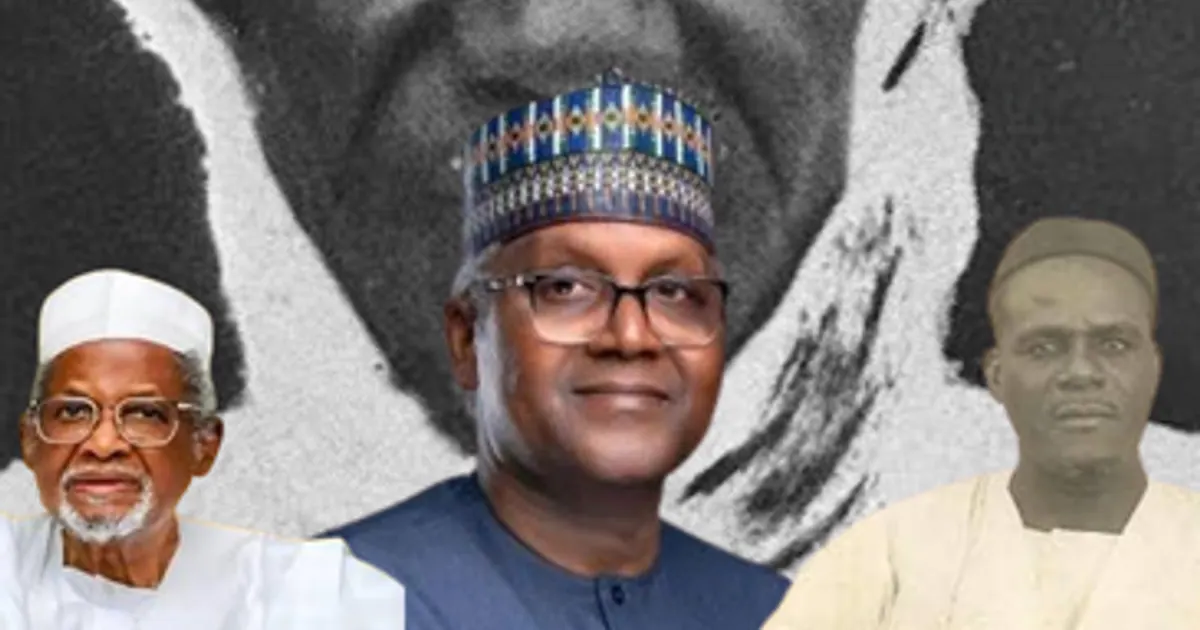
Alhassan Dantata was a renowned groundnut merchant and one of West Africa's most influential figures in the 1940s. Born in 1877 in Bebeji, Kano Emirate, he rose from a traditional trading background to become a successful merchant. Dantata built his fortune through trade in commodities such as groundnuts, kola nuts, grains, livestock, and imported goods. His business acumen and strategic relationships with farmers and traders enabled him to become a major supplier of groundnuts to large colonial trading firms.
Dantata's business journey began through traditional trans-Saharan trading networks that connected communities across West Africa. He expanded his operations by building relationships with farmers and traders across Northern Nigeria, buying agricultural produce in large quantities and supplying them to European trading companies. By the early 20th century, he had become a major supplier of groundnuts to large colonial trading firms, including the Royal Niger Company and later the United Africa Company.
During the groundnut boom, which made Nigeria one of the world's major exporters of the commodity, Dantata was among the leading figures driving the trade. He was also involved in other businesses, including textiles, cattle, kola nuts, grains, and real estate. One notable example of his wealth is that when the Bank of British West Africa opened a branch in Kano in 1929, Dantata became one of the first major Nigerian businessmen to open an account, depositing a large quantity of silver coins reportedly transported by camels.
Kano became famous for its groundnut pyramids — huge structures made from stacked bags of groundnuts waiting for export — during the colonial period. Merchants like Dantata played a major role in the industry that created them. Beyond business, Dantata was also known for supporting other traders and contributing to economic development in Kano. He became a respected figure in the Kano Emirate and served on the Emir's council, using his influence to support commerce and community development.
Alhassan Dantata died in 1955, but his business legacy continued through generations of his family. His great-grandson, Aliko Dangote, built the Dangote Group into one of Africa's largest industrial conglomerates, with interests in cement, sugar, salt, flour, fertiliser, and petroleum. Dangote has consistently ranked among Africa's wealthiest individuals and became the most prominent symbol of Nigeria's modern business success.
Other notable descendants of Alhassan Dantata include Aminu Alhassan Dantata, a businessman and politician who served as a member of the Northern House of Assembly and later became Kano State Commissioner for Economic Planning and Development. Sayyu Dantata, an oil and energy entrepreneur, founded MRS Group, an energy company involved in petroleum products, shipping, and related businesses. Abdulkadir Dantata, another member of the family, built a name in business through Dantata & Sawoe Construction Company, one of Nigeria's notable construction firms.
The Dantata family's legacy spans generations, from colonial-era commodity trading to modern industries such as cement, oil, and construction. Their influence on Nigeria's economy and business landscape is still evident today, with the name Dantata remaining connected to some of Nigeria's biggest companies, wealthiest individuals, and influential figures.
Key points
- Alhassan Dantata was a prominent groundnut merchant and one of West Africa's wealthiest men in the 1940s.
- He was the great-grandfather of Africa's richest man, Aliko Dangote.
- The Dantata family's business legacy continues to influence Nigeria's economy and business landscape.