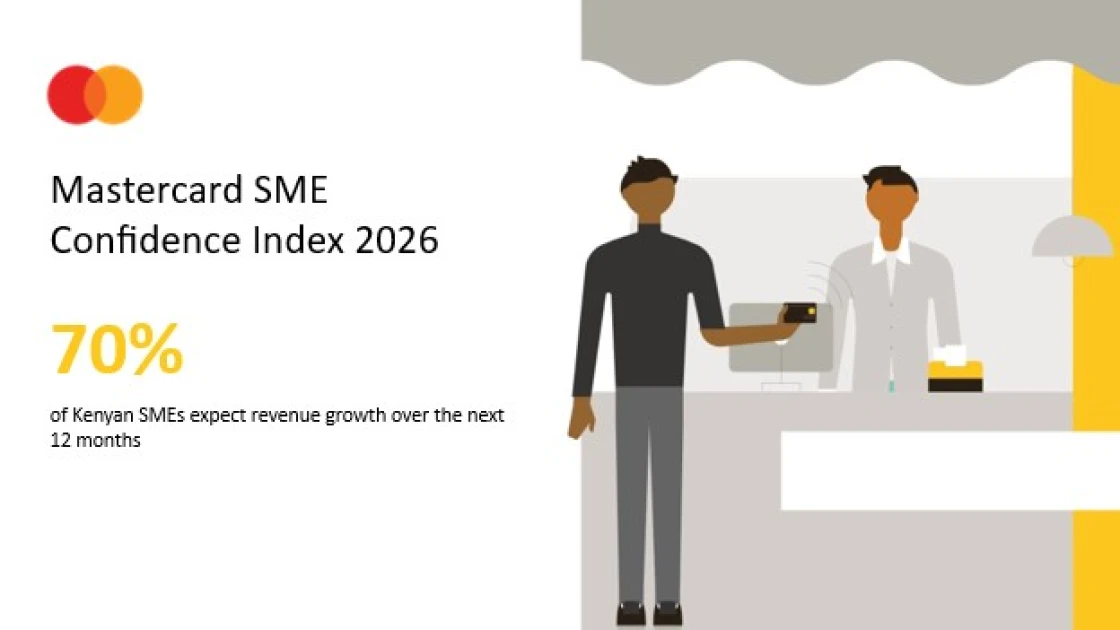
Kenya's small and medium-sized enterprises (SMEs) are showing remarkable adaptability and innovation, using technology to solve problems and propel growth. According to Mastercard's 2026 SME Confidence Index, 66% of Kenyan SMEs are confident about their business outlook, and 70% expect their revenues to grow over the next 12 months. This momentum is translating into one of the most digitally enabled SME ecosystems on the continent.
Kenyan SMEs are already making significant progress in adopting digital payments, with 95% accepting mobile payments and 39% accepting online payments. Mobile payments account for 41% of transaction volume, demonstrating the confidence SMEs feel about what digital tools can do for their businesses. These entrepreneurs are now asking questions that take their business to the next level, seeking better infrastructure, insights, and access to tools that can turn transactions into growth.
One of the biggest opportunities for SMEs is making payments easier and more affordable to accept. Traditional payment terminals have served larger merchants well, but the industry is moving toward more flexible forms of acceptance. Mastercard's Tap on Phone technology enables a smartphone to function as a payment acceptance device, allowing businesses to accept contactless cards and mobile wallets without a separate payment terminal. This technology is available in over 115 markets globally, with small businesses and micro-merchants among its core use cases.
In Kenya, Mastercard is working with Safaricom to expand payment acceptance across the M-PESA ecosystem, aiming to reach over 636,000 merchants. The collaboration brings together M-PESA's extensive merchant network and Mastercard's payment infrastructure to help businesses serve customers through more seamless and secure digital payment experiences. This move is expected to go beyond convenience, enabling SMEs to spend less time thinking about how to take a payment and more time thinking about how to grow the business.
The next competitive advantage for Kenyan SMEs will come from what they do with the information generated by digital payments. The 2026 SME Confidence Index found that 80% of Kenyan SMEs identify simple, seamless, and user-friendly payment methods as a top requirement for growth, while 70% want better data and insights. This shift in mindset recognizes the value of digital payments in helping businesses understand customer behavior and make informed decisions.
Digital adoption also plays a crucial role in access to finance, a structural challenge for Kenyan SMEs. According to the International Finance Corporation, the finance gap for Kenyan MSMEs is equivalent to nearly 21% of GDP. Mastercard is working with financial institutions to turn these needs into practical tools for day-to-day business growth, including collaborations with I&M Bank and NMB Bank to introduce business credit cards and debit cards designed to support SMEs with secure domestic and cross-border payments.
As Kenyan SMEs look to compete beyond the domestic market, they require stronger financial tools to facilitate cross-border trade. Mastercard Move is designed to support this growth, enabling seamless money movement across over 200 countries and territories and over 150 currencies, supporting business payments. With digital transactions, businesses can create a more visible record of their commercial activity, helping financial institutions better understand their cash flow and performance and develop more suitable financial products.
Key points
- Kenyan SMEs are digitally enabled and ambitious, with 66% confident about their business outlook and 70% expecting revenue growth.
- 95% of Kenyan SMEs accept mobile payments, which account for 41% of transaction volume.
- The finance gap for Kenyan MSMEs is equivalent to nearly 21% of GDP.