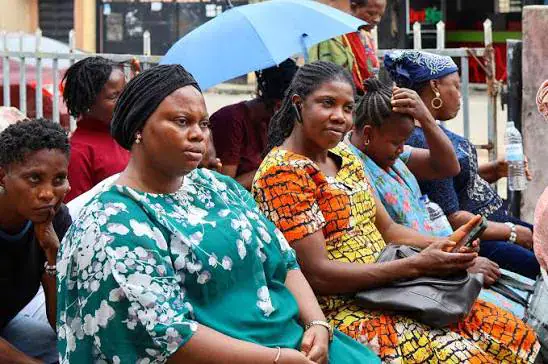
In Nigeria, women like Funke, a resident of Agege, Lagos, exemplify the enormous burden of unpaid and paid work that many women carry daily. Funke wakes up at 6am to sweep her small shop, prepare her three children for school, cook breakfast, fetch water, and fry akara for sale. Her day consists of 16 hours of work, while her husband's day has only eight hours. This story is replicated across the country, with women being the invisible engine of the economy yet owning almost nothing.
The statistics on women's participation in Nigeria's economy and decision-making processes are stark. According to the National Bureau of Statistics, women own only 20% of enterprises in the formal sector, despite constituting over 70% of traders in informal markets. Furthermore, the World Bank reports that only 10% of land in Nigeria is owned by women, despite women doing over 60% of farm work. In the National Assembly, women make up less than 5% of the members, with only 20 women out of 469 members.
The consequences of excluding women from development are far-reaching. In education, the girl child in Nigeria faces significant barriers, with school completion rates below 40% in states like Sokoto, Zamfara, and Jigawa. The World Bank estimates that Nigeria loses over $17 billion yearly due to girls not completing secondary school. This has a ripple effect, leading to early marriage, early pregnancy, and maternal death.
Economic exclusion is another significant challenge facing Nigerian women. Despite working hard, women's work is not counted, and they have limited access to credit. The Central Bank reports that women receive less than 15% of commercial bank loans due to lack of collateral, such as Certificates of Occupancy, which are typically registered in their husbands' names.
The issue of political exclusion is also critical. Nigeria's democracy is not representative when women are absent from decision-making processes. Politics in Nigeria is often violent, expensive, and structured to exclude women. However, countries that include women in governance tend to prioritize health, education, and water.
Gender-based violence is a painful aspect of gender inequality in Nigeria. One in three Nigerian women has experienced physical or sexual violence, with rape cases increasing and conviction rates below 2%. This culture of violence has significant economic costs, with women who are beaten unable to work and girls who are raped dropping out of school.
To address these challenges, Nigeria needs to move from tokenism to transformation. This requires fixing education for girls with urgency, providing a special fund for girl child education in states with low female enrollment, and making education free and compulsory for girls up to senior secondary school. The school environment must also be made safe for girls to learn.
Key points
- Nigerian women constitute 49% of the population but are systematically excluded from land, credit, education, and decision-making.
- Women own only 20% of enterprises in Nigeria's formal sector, despite constituting over 70% of traders in informal markets.
- Excluding women from development costs Nigeria over $17 billion yearly due to girls not completing secondary school.