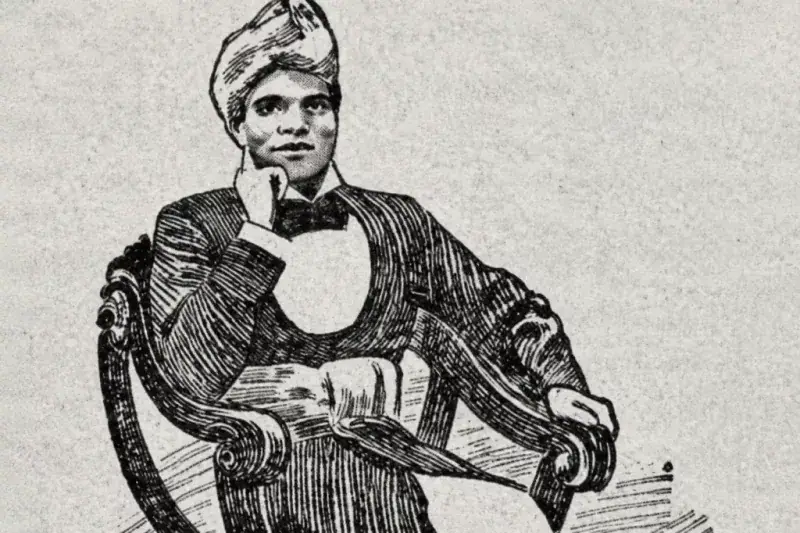
One hundred and twenty-five years ago, in 1901, an Indian chef opened what was almost certainly the first Indian restaurant in the US. Ranji Smile, a colourful and enigmatic figure, shaped the American food scene with his culinary skills and showmanship. Smile sailed from London to New York in the summer of 1899, and little is known about his origins and early life, not even his real name. "Ranji" was likely inspired by the Indian cricketing sensation KS Ranjitsinhji, while "Smile" could have been an anglicisation of "Ismail".
Smile worked at Sherry's Restaurant, a prominent establishment on Fifth Avenue in New York, where he was noticed by the owner, Louis Sherry, for his culinary skills. Sherry invited Smile to bring his expertise across the Atlantic, and he joined the restaurant's kitchen staff. At Sherry's, Smile thrived in the environment, and customers flocked to taste his preparations of Bombay duck and novel creations like "Lettuce Ceylon". Cooking and serving became a performance, with Smile dressed in a satin coat and blue silk turban, salaaming in front of customers and enquiring about their preferred curry.
Smile's fame grew, and he decided to leave Sherry's and set up his own establishment, exclusively devoted to Indian cuisine. With financial backing from Roland R Conklin, a prominent financier, Smile opened Omar Khayyam in late 1901 at 325 Fifth Avenue. The restaurant was adorned with Indian draperies and hanging lanterns, and staffed with Indian waiters and musicians. However, despite its prime location, Omar Khayyam shuttered within a year due to a lack of customers.
Smile's stardom began to dim, and his showmanship and flair for theatrics shaded into deceit and criminal activity. He began claiming to be a prince, the son of the emir of Baluchistan, and recruited a retinue of staff, including valets, a dancing girl, and mahouts, to work at his restaurant. Smile illegally trafficked this staff into the US, which led to a federal case against him. He evaded deportation but continued to evolve his invented persona.
Smile claimed that Indian food was a secret elixir for female beauty and wooed and married a series of impressionable young American women. He honed his performing skills at Indian cooking demonstrations across the country, preparing dishes and entertaining audiences with jugglers and dancing girls. However, his tall tales and outright fabrications soon caught up with him, and he retreated from the public gaze.
Smile's brushes with the law continued, ranging from forcible confinement of one of his dancing girls to refusing to pay a bill at an Italian restaurant in Manhattan. By the 1920s, he apparently abandoned cooking entirely, listing his occupation as a merchant. The final shred of evidence about Smile dates from 1937, when his fourth or fifth American wife approached the New York Supreme Court and filed for an annulment of her marriage to her now-absconded husband.
Despite his inglorious end, Smile and his Indian restaurant paved the way for the popularisation of Indian cuisine in America. Other immigrants soon tested the waters, and in 1909, Saint Nihal Singh introduced readers of the Chicago Daily Tribune to recipes for bhaj. Smile's legacy as a pioneer of Indian cuisine in the US remains, even if his personal story is one of deceit and reinvention.
Key points
- Ranji Smile opened America's first Indian restaurant in 1901 but his success was short-lived due to his deceitful activities.
- Smile's restaurant, Omar Khayyam, shuttered within a year due to a lack of customers.
- Smile's legacy as a pioneer of Indian cuisine in the US remains, despite his personal story of deceit and reinvention.