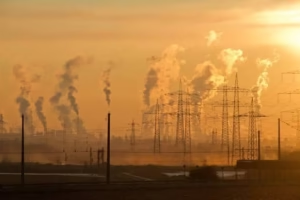
Greenhouse gases, largely invisible, play a significant role in climate change, affecting the conditions under which people, wildlife, and ecosystems survive. These gases trap heat, contributing to the Earth's natural greenhouse effect, essential for life. However, human activities have increased their concentration, strengthening the warming effect and contributing to global warming and climate change. The major greenhouse gases associated with human activities are carbon dioxide, methane, and nitrous oxide.
Human activities such as burning fossil fuels for electricity, transportation, and industrial activities release large amounts of carbon dioxide, a major greenhouse gas. Deforestation, agriculture, livestock production, industrial processes, and waste management also contribute to greenhouse gas emissions. These emissions are closely connected to modern economic activity, including energy production, transportation, food systems, manufacturing, and urban development. As a result, reducing emissions requires a comprehensive approach that considers both economic and environmental needs.
The effects of greenhouse gases are far-reaching, causing a rise in global temperatures and changing climate patterns. This can lead to more frequent and intense heat extremes, changes in rainfall patterns, rising sea levels, and increasing pressure on ecosystems and natural resources. In Nigeria, these changes can affect agriculture, water availability, food systems, human health, and livelihoods. Farmers, for example, depend on rainfall and temperature patterns to plan planting and harvesting, making them vulnerable to changes in these conditions.
Nigeria is particularly vulnerable to the effects of climate change, with millions of people depending directly or indirectly on natural resources and predictable environmental conditions. Changes in rainfall and temperature can affect water resources, ecosystems, and livelihoods across different parts of the country. Communities exposed to flooding may face greater risks from extreme rainfall, while periods of intense heat can create additional challenges for public health and vulnerable populations.
Reducing greenhouse gas emissions is a complex challenge that requires finding ways to develop while reducing environmental costs. This can involve improving energy efficiency, expanding cleaner energy sources, protecting forests and ecosystems, developing more sustainable transportation systems, improving waste management, and making industries more environmentally responsible. Effective policies, responsible environmental management, and development strategies that consider both economic and environmental needs are crucial to addressing the problem.
Climate change requires better decisions, and understanding greenhouse gases is an important step towards making informed choices about the future of the environment. The effects of greenhouse gas emissions may not always be immediately visible, but their consequences can become increasingly difficult to ignore. A changing climate can place pressure on communities, agriculture, water resources, ecosystems, and economies, making it essential to address the problem through research, policies, and responsible environmental management.
As Nigeria continues to grapple with the challenges of climate change, it is essential to consider the impact of greenhouse gas emissions on the country's environment, agriculture, water resources, and livelihoods. By understanding the causes and effects of climate change, Nigerians can work towards finding solutions that balance economic development with environmental protection. This requires a comprehensive approach that involves governments, industries, and individuals working together to reduce greenhouse gas emissions and mitigate the effects of climate change.
Key points
- Human activities have significantly increased the concentration of greenhouse gases in the atmosphere, contributing to global warming and climate change.
- Nigeria is particularly vulnerable to the effects of climate change, with millions of people depending directly or indirectly on natural resources and predictable environmental conditions.
- Reducing greenhouse gas emissions requires a comprehensive approach that considers both economic and environmental needs, including improving energy efficiency, expanding cleaner energy sources, and protecting forests and ecosystems.