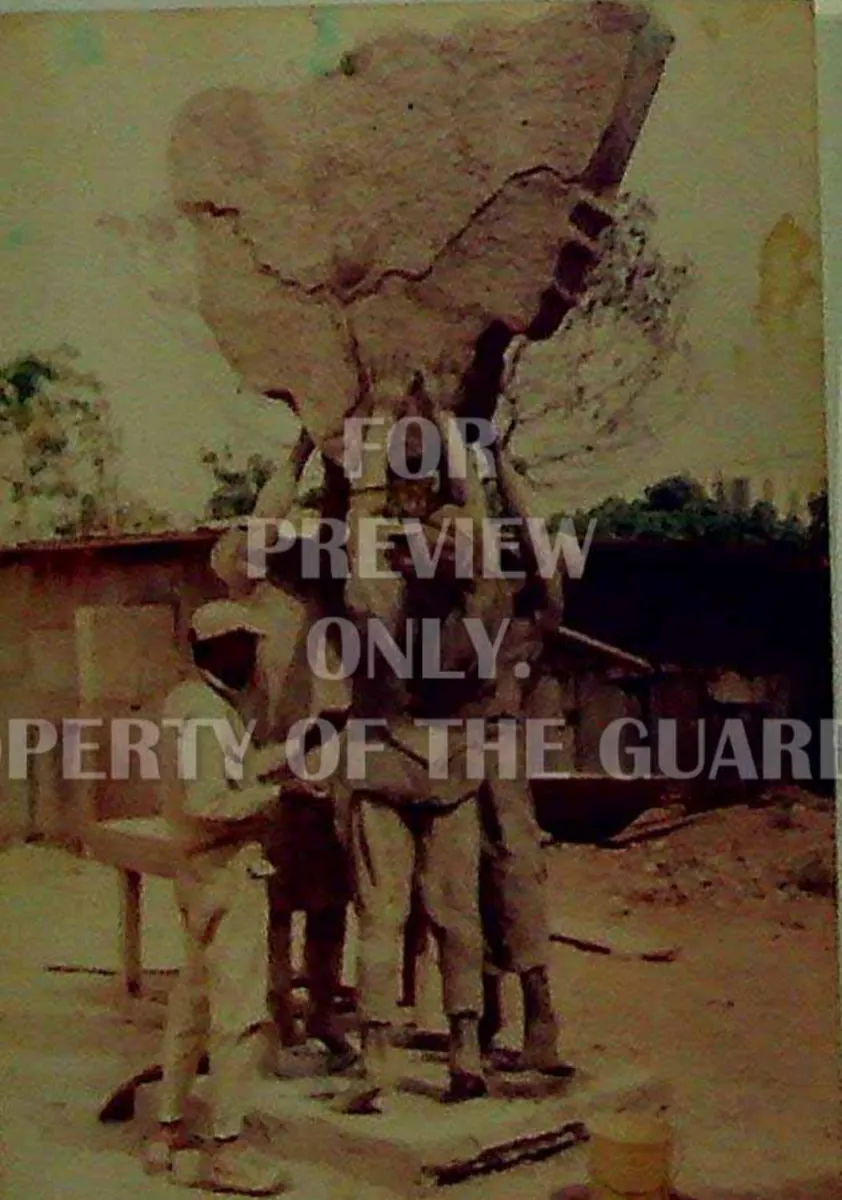
In the early 1990s, Nigeria's artistic landscape was marked by a powerful symbol of national unity. The "Salvaging Nigeria" sculpture, commissioned by then-Deputy Governor of Lagos State Alhaja Lateefa M. Okunu on November 22, 1991, stood at Maryland Junction in Ikeja. Designed by National Youth Service Corps members, it depicted three figures straining to hoist a massive map of Nigeria, representing inter-ethnic cooperation and national integration.
The sculpture's design and creation were a deliberate attempt to foster patriotism and civic duty. Photographed in January 1992, the image captures a moment when public art was used to promote national unity. The artwork's message was clear: the survival of the nation depended on the collective effort of its people. The three figures represented Nigeria's major regions and ethnic backgrounds working together in harmony.
The "Salvaging Nigeria" monument was more than just a work of art; it was a visual manifesto for a country striving for stability. Its removal due to urban redevelopment and road expansions may have erased it from public view, but its imagery remains preserved in media records. The sculpture's core power lies in its literal interpretation: a nation that requires the active, collective effort of its people to move forward.
The metaphor of the collective "lift" is a powerful commentary on governance, citizen responsibility, and the communal weight of nation-building. The sculpture positions the country as a heavy, unyielding physical mass that will collapse without the support of its people. The three figures represent the major regions and ethnic backgrounds working together, highlighting the need for synergy and collaboration in nation-building.
Today, Nigeria faces significant economic pressures, currency fluctuations, and institutional friction. While leadership accountability is crucial, the "Salvaging Nigeria" monument shifts the focus to the grassroots base, asking questions about the modern citizen's role in keeping the nation afloat. The sculpture implies that governance and citizen responsibility are two sides of the same coin, requiring collective action and local execution.
The monument's message is particularly relevant in contemporary Nigeria, where blame is often cast upward toward governance structures or outward toward global market forces. The sculpture encourages citizens to accept a shared civic burden, engage in local execution, and embrace collaboration across communities. By doing so, Nigerians can work together to move the nation forward, rather than relying solely on top-down institutional reform.
The "Salvaging Nigeria" sculpture serves as a reminder of the importance of collective action in nation-building. Its legacy continues to inspire reflection on the role of citizens in shaping their country's future. As Nigeria navigates its complex challenges, the sculpture's visual metaphor remains a powerful call to action, emphasizing the need for synergy, collaboration, and civic participation in building a virile nation.
Key points
- The "Salvaging Nigeria" sculpture symbolized the collective effort required to move the nation forward, representing inter-ethnic cooperation and national integration.
- The monument's removal due to urban redevelopment and road expansions erased it from public view, but its imagery remains preserved in media records.
- The sculpture's visual metaphor implies that governance and citizen responsibility are two sides of the same coin, requiring collective action and local execution.