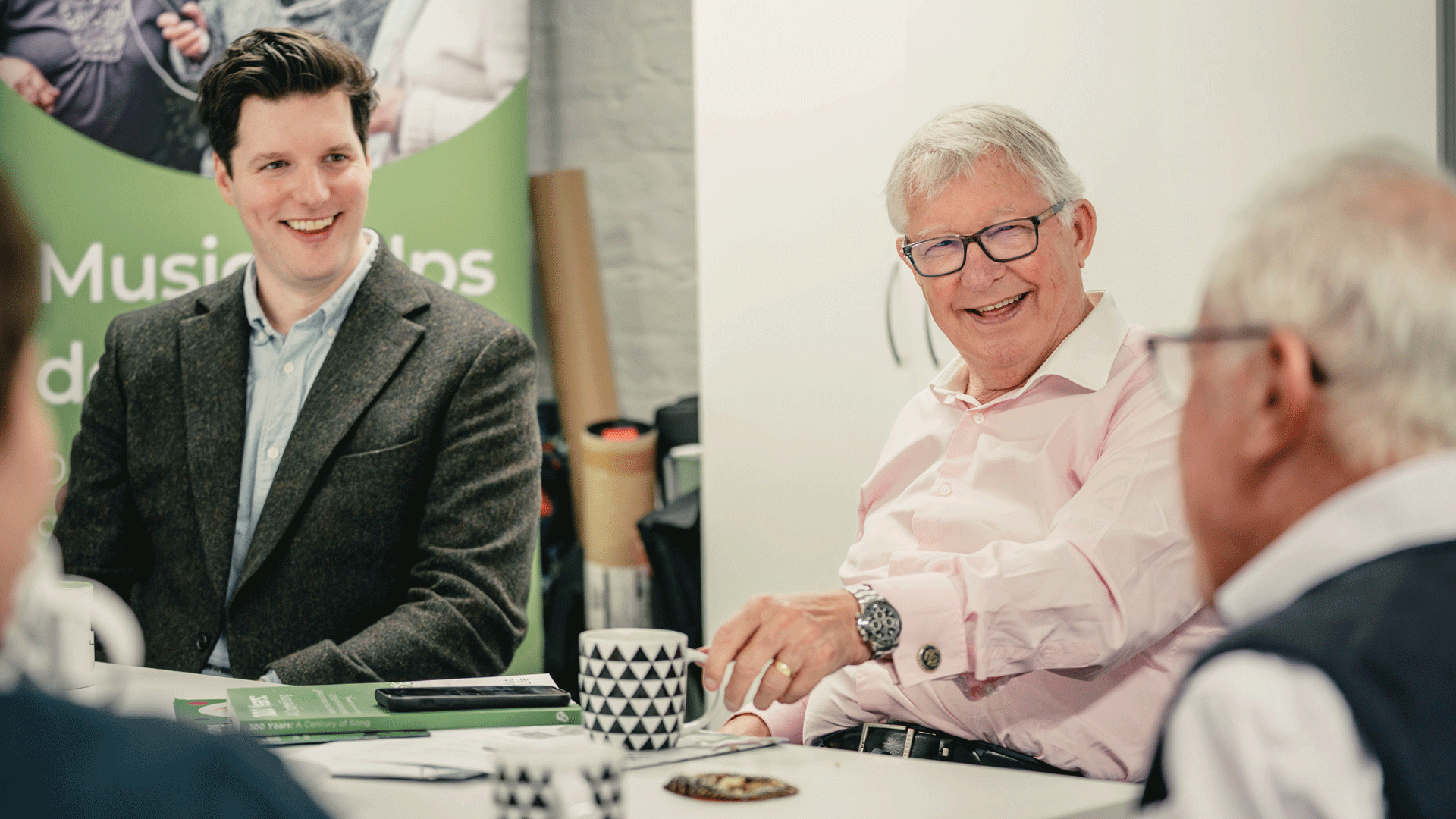
Sir Alex Ferguson, the former Manchester United manager, has made a significant contribution to the fight against dementia by donating £100,000 to Playlist for Life, a Scottish charity that uses music to support people living with the condition. Ferguson's donation comes from The Elizabeth Hardie Ferguson Charitable Trust Fund, which was established in memory of his mother. The charity, founded by broadcaster Sally Magnusson, aims to make music therapy a mainstream treatment option for dementia patients.
Ferguson's involvement with Playlist for Life is personal, as his brother is living with dementia. He believes that music has the power to transform the lives of people affected by the condition, allowing them to reconnect with memories and reduce symptoms. The charity's approach involves creating personalized playlists that evoke emotions and memories, providing a simple yet effective way to improve the lives of those living with dementia. Ferguson's donation will help support the charity's mission to make music therapy more accessible to those who need it.
The impact of music on dementia patients is well-documented, with studies showing that it can reduce stress and anxiety, and even decrease the need for medication. An NHS Fife team trained by Playlist for Life found that 80% of participants required less medication to manage stress and distress after using personal playlists. Additionally, an eight-week trial of 28 dementia patients on NHS Fife A&E wards showed that 96% of patients displaying stress and agitation became markedly less stressed during clinical procedures after using personal music systems.
Sally Magnusson, the founder of Playlist for Life, expressed her gratitude for Ferguson's donation, saying that it is a "marvellously generous gesture" that demonstrates his commitment to the charity's cause. Magnusson, who founded the charity 13 years ago after caring for her mother who lived with dementia, hopes that Ferguson's involvement will help raise awareness about the benefits of music therapy for dementia patients. She believes that music can be a powerful tool in the treatment of dementia, and that it should be used more widely in medical practice.
Ferguson's own playlist, which features songs such as "We Are The Champions" by Queen and "Moon River" by Henry Mancini, reflects his personal experiences and memories. The playlist includes songs that remind him of his time as a footballer, his childhood in Govan, and his late wife, Cathy. By sharing his playlist, Ferguson hopes to highlight the importance of music in his own life, and to encourage others to explore the benefits of music therapy for dementia.
The use of music as a therapy for dementia is gaining recognition, with many healthcare professionals and charities advocating for its inclusion in mainstream treatment. Magnusson hopes that Ferguson's donation will help to accelerate this process, and that music therapy will become a standard treatment option for dementia patients in the future. She cites examples of GPs prescribing music instead of sedatives, which has led to a significant reduction in the use of medication.
Ferguson's donation to Playlist for Life is a significant boost to the charity's efforts to make music therapy more accessible to those living with dementia. The charity's work has already shown promising results, and with Ferguson's support, it is hoped that more people will be able to benefit from this simple yet effective therapy. As Ferguson said, "Music is one of the best things available that can help" people living with dementia, and his donation will help to ensure that more people can access this lifeline.
Key points
- Sir Alex Ferguson donates £100,000 to Playlist for Life to support music therapy for dementia patients.
- Ferguson's brother is living with dementia, and he believes that music has the power to transform the lives of people affected by the condition.
- Studies have shown that music therapy can reduce stress and anxiety, and decrease the need for medication in dementia patients.