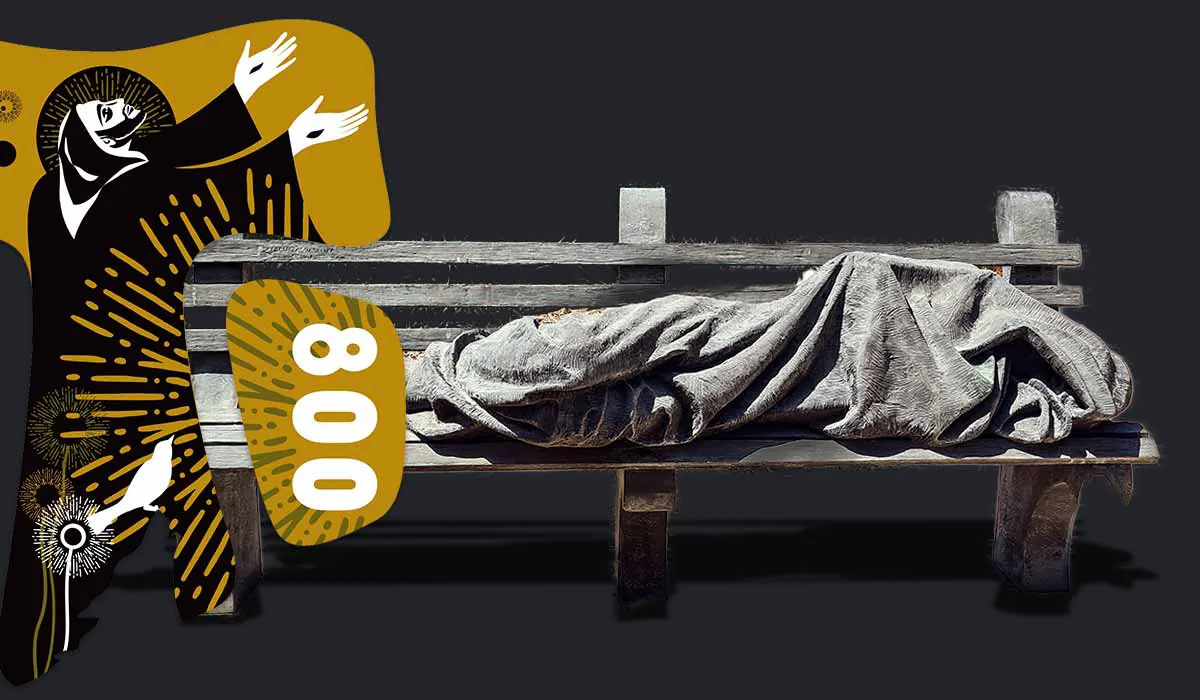
This year, the Church commemorates the 800th anniversary of the death of St Francis of Assisi, a pivotal figure in Christian history who embodied a radical approach to poverty. For Francis, poverty was not merely an economic state but a profoundly Christ-centred and evangelical way of life. His understanding of poverty was deeply rooted in his contemplation of Christ, who chose to meet humanity in vulnerability and dependence. This perspective was revolutionary in the context of the medieval Church, which had become entangled with wealth and power.
Francis' commitment to poverty was inspired by his literal reading of the Gospel, particularly the passages where Jesus sends out his disciples without money, staff, or sandals. He saw this as a personal summons to live a life of simplicity and dependence on God. Francis understood the Incarnation as a deliberate choice by God to enter the world in vulnerability, born in a borrowed shelter and laid in a feeding trough. This theological revelation shaped his approach to poverty, which was not about creating an image or impressing others but about living a life of divine love.
The Franciscan way of life, as envisioned by Francis, was characterised by a rejection of wealth and status. He and his followers, known as friars, were to own nothing, neither individually nor collectively, and were discouraged from accumulating property or storing wealth. Instead, they were to work, beg when necessary, and trust in providence. This approach to life was meant to be a public witness, proclaiming that God alone is enough. Francis' rough habits, bare feet, and itinerant lifestyle were a visible manifestation of his commitment to poverty.
A key aspect of Francis' vision was communal equality within the fraternity. He rejected distinctions of rank and insisted that all members were brothers, regardless of their ordination status or education. Authority was to be exercised as service, and titles were avoided. Even the superior was called "minister," emphasising their role as one who serves others. Francis himself resisted clerical advancement, choosing to remain a deacon to stay close to the margins of society.
Francis' response to the corruption and worldliness within the Church was prophetic but not confrontational. He modelled a radically non-possessive way of life, offering an alternative to the dominant culture. His approach was not about protesting against corrupted systems but about living a life that embodied a different way of being. This approach has continued to inspire generations, and his understanding of poverty remains relevant today.
As the Franciscan movement grew, practical demands arose, and tensions emerged over issues like property ownership and institutional security. Francis, however, remained committed to his original vision, warning against compromise and the dangers of possessions. In his final years, he withdrew from governance, handing responsibility to others while remaining a living reminder of the founding charism.
Francis' legacy continues to resonate, and his understanding of poverty remains a powerful challenge to contemporary society. His emphasis on compassion, empathy, and reverence for those in need offers a distinctive approach to living. Almost 800 years after his death, his message remains a call to soften the heart, not harden it, in the face of poverty and marginalisation.
Key points
- Francis' radical poverty was a reflection of his deep contemplation of Christ's life and teachings.
- The Franciscan way of life emphasised communal equality, simplicity, and dependence on God.
- Francis' legacy continues to inspire a different way of living, one that values compassion, empathy, and reverence for those in need.