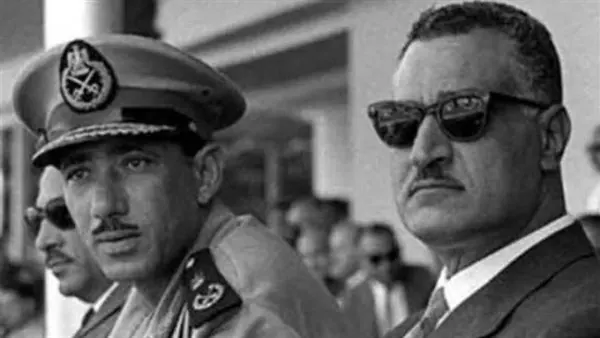
The United Arab Republic was formed on February 22, 1958, after a referendum in which 99.9% of Egyptians and 99.98% of Syrians voted in favor of the union. The union was led by Egyptian President Gamal Abdel Nasser, who became the president of the new state. The formation of the UAR was a result of the desire for unity among the Arab countries, particularly in the face of Western pressure and the rise of communism in the region.
The idea of unity between Egypt and Syria was first proposed by Syria, with a delegation of 14 Syrian officers secretly traveling to Cairo in January 1958 to meet with Nasser. The officers, led by the chief of staff of the Syrian army, asked Nasser to form a unified state with Syria. Nasser initially hesitated, suggesting a federal union over a period of five years, but the Syrian officers insisted on immediate unity.
During the three years of the union, Egypt invested heavily in Syria's infrastructure, including the construction of the Euphrates Dam, the expansion of the port of Latakia, and the development of a new transportation network. The Egyptian government also introduced a new education system, modeled on the Egyptian system, and established a television station in Syria. Additionally, the Egyptian government implemented an agrarian reform program, which redistributed land from large landowners to small farmers.
Despite these achievements, the union began to unravel due to a series of missteps, including the implementation of socialist policies in July 1961, which were seen as too radical by the Syrian population. The policies, which included the nationalization of banks and industries, were seen as a threat to the Syrian business class and led to growing resentment against the Egyptian leadership.
On September 28, 1961, a group of Syrian officers, led by Major Abd al-Karim al-Nahlawi, staged a coup in Damascus, surrounding the headquarters of the Syrian army and arresting the Egyptian military leadership. The coup leaders issued a statement announcing the dissolution of the UAR and the establishment of a new government in Syria.
The Egyptian government, led by Nasser, responded to the coup with caution, choosing not to use force to restore the union. Instead, Nasser delivered a speech on October 5, 1961, in which he acknowledged the end of the UAR and recognized Syria's independence. Nasser's decision was seen as a pragmatic one, as he realized that the Syrian people did not support the union.
In the aftermath of the separation, relations between Egypt and Syria were strained, with both countries engaging in a war of words and propaganda. However, in the years that followed, the two countries began to rebuild their relationship, particularly in the face of Israeli aggression. The two countries signed a defense treaty in 1966 and cooperated closely during the 1973 Arab-Israeli War.
Key points
- The United Arab Republic was dissolved on September 28, 1961, after a series of events that led to the separation of Egypt and Syria.
- The union was formed on February 22, 1958, with Egyptian President Gamal Abdel Nasser as its leader.
- The separation of Egypt and Syria was a result of growing resentment among the Syrian population against the Egyptian leadership and the implementation of socialist policies.