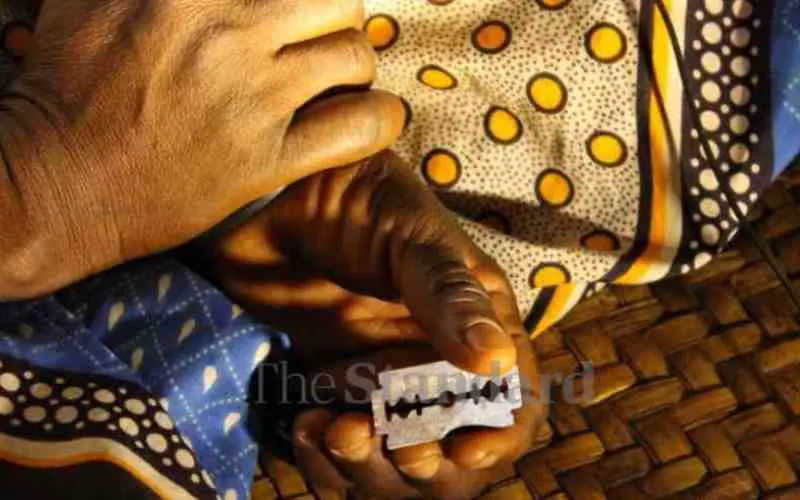
For generations, female circumcision has marked the passage from childhood to womanhood in some Kenyan communities. This practice, also known as female genital mutilation (FGM), has been celebrated as tradition and guarded as a cultural rite. However, for girls who fear the blade, it can mean pain, fear, stigma, and the possibility of being cast out for refusing to conform.
Campaigners against FGM argue that it violates the rights of girls and women, exposing them to serious health and psychological consequences. Despite laws and awareness campaigns, FGM persists, showing that it cannot be easily dislodged from a practice embedded in identity, family expectations, and community life. In some communities, the cut is not viewed simply as a medical procedure but as a ceremony through which a girl is welcomed into adulthood.
Steven Mutwiri Mungania, a Meru elder and member of Njuri Ncheke, has defended the practice while acknowledging the controversy surrounding it. Mungania argues that describing FGM only as a harmful practice can shut down conversations with communities that call it female circumcision. He also challenges the argument that the procedure is inherently unsafe, citing that it can be performed in a clean and hygienic environment by a trained surgeon in a hospital.
The World Health Organisation (WHO) describes FGM as a harmful practice with no health benefits. Depending on the type and circumstances, it can cause severe pain, bleeding, infection, and other complications. Some forms can result in long-term reproductive and childbirth difficulties. The most severe form, infibulation, involves narrowing the vaginal opening and can cause particularly serious complications.
Walter Odede Nyakwaka, director of Africa Alive-Kenya chapter, says the age of those subjected to FGM is a critical concern. When performed on young girls, they are denied the right to make choices and decisions about their own bodies. Mungania counters that age alone cannot settle the debate, citing male circumcision as an example. However, Odede argues that the comparison fails to address the social pressure surrounding girls in communities where refusal can lead to stigma or ostracism.
John Manyara, another Njuri Ncheke official, proposes allowing the practice in clean and hygienic conditions, setting a minimum age where possible, and encouraging less severe forms rather than infibulation. Manyara argues that communities must be allowed to discuss the practice without feeling that their culture is under attack. A woman from the Kuria community who supports female circumcision frames the issue as one of bodily autonomy, asking why she should not have the right to ask a doctor to alter her body the way she finds acceptable.
Anti-FGM campaigners argue that consent becomes complicated when the person undergoing the procedure is a child. Men must be part of the solution, as they occupy an influential position in many Kenyan households and communities. Campaigners increasingly argue that men can help eliminate FGM, as they are often the decision-makers in homes and executors of the practice.
Key points
- FGM remains a contentious issue in Kenya, with proponents citing cultural significance and opponents highlighting health risks and human rights abuses.
- The practice can cause severe pain, bleeding, infection, and other complications, with some forms resulting in long-term reproductive and childbirth difficulties.
- Campaigners argue that men must be part of the solution to eliminate FGM, as they often occupy influential positions in households and communities.