The cost of living in Kenya has been on the rise, with the price of basic commodities such as milk increasing significantly. A half-liter of milk has gone from about Sh54 to between Sh90 and Sh100, causing concern for many households. Officials attribute the shortage to drought and brokers, but experts argue that there are other factors at play. For instance, the country's reliance on trees for food, fuel, and other essential needs is often overlooked.
Trees play a crucial role in Kenya's economy and daily life. The country earns significant revenue from tea, tourism, and other forest-based industries. In 2025, tea earned Sh218.8 billion, and tourism about Sh500 billion, much of it resting on forests and savannah that shelter wildlife. Additionally, two in three homes in Kenya cook with wood, and forests keep power dams full. However, despite their importance, trees are often treated carelessly, with many being cut down without being replaced.
A new book, 'Come Back and Check', highlights the issue of tree conservation in Kenya. The book's author, Isaac Kalua, argues that the country's approach to tree planting is flawed, with many trees being planted but not cared for. Kalua notes that every country reports the trees it plants, but none reports the ones still alive. This lack of accountability has contributed to the decline of Kenya's forests and the loss of ecosystem services.
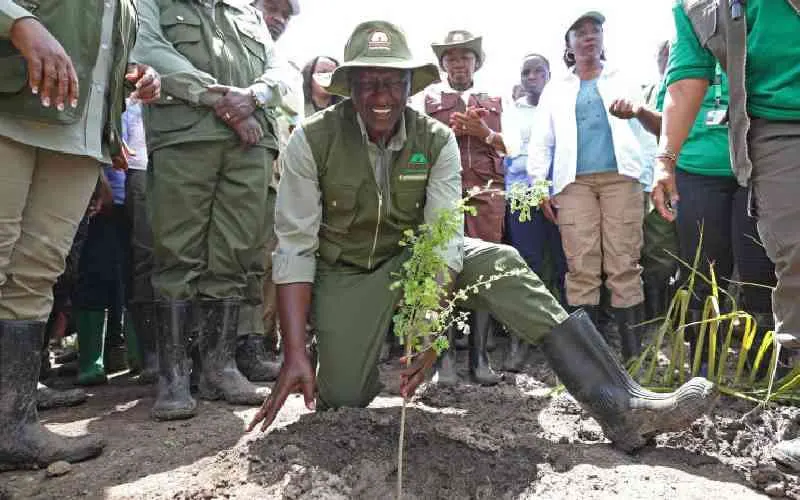
To address this issue, Kalua and others are promoting a new approach to tree planting and conservation. On September 14, Plant Your Age Day, thousands of people were encouraged to plant trees and care for them. A new app was also launched to help track tree planting and ensure that trees are cared for. The Kenya Forest Service has also unveiled a satellite tool that maps tree cover, providing a new way to monitor forest health.
However, experts argue that technology alone is not the solution. Ownership and accountability are key to ensuring that trees are cared for. Seedlings must never be free, as this can lead to a lack of investment in their care. In 2005, a project raised and sold 900,000 seedlings for Sh27 million, with every buyer paying for the trees and having a reason to return and check on them.
The importance of trees in Kenya's economy and daily life cannot be overstated. Trees provide food, fuel, and other essential needs, and their loss can have significant impacts on livelihoods and ecosystems. To address the cost of living crisis, Kenya must reconsider the value of trees and take steps to conserve and protect them. This includes promoting sustainable land use practices, supporting tree planting and conservation efforts, and ensuring that trees are cared for.
Ultimately, the cost of living crisis in Kenya is closely linked to the country's approach to natural resource management. By prioritizing tree conservation and promoting sustainable land use practices, Kenya can reduce its vulnerability to economic shocks and ensure a more sustainable future. As Kalua notes, "A tree is time turned into life; a young one survives only if someone keeps faith with it."
Key points
- The cost of living crisis in Kenya is linked to the country's approach to natural resource management, particularly tree conservation.
- Trees play a crucial role in Kenya's economy and daily life, providing food, fuel, and other essential needs.
- Ownership and accountability are key to ensuring that trees are cared for and that tree planting efforts are effective.