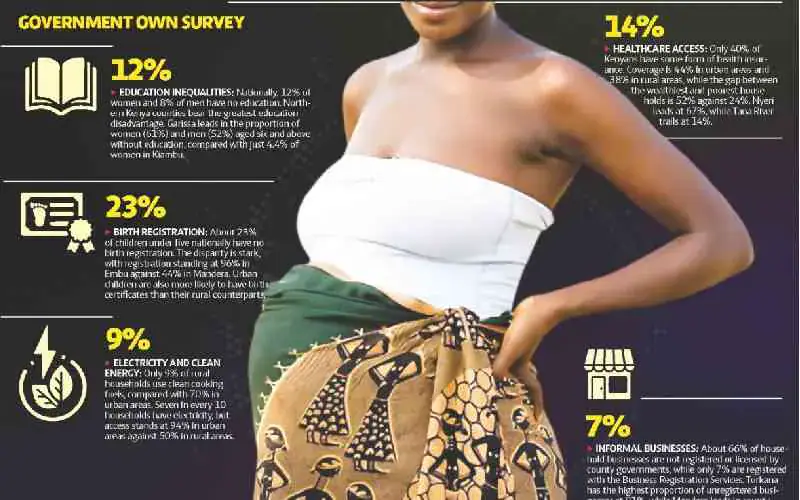
A recent report by the Kenya Bureau of Statistics has highlighted significant disparities in healthcare and family planning in Kenya. The Mini Demographic and Health Survey revealed that many Kenyans struggle with life decisions, including women delaying childbirth to prioritize education and financial security. The report also found that 60% of Kenyans rely on sources other than insurance funding for medical treatment.
The survey painted a concerning picture for planners, but also showed growth in the health sector. One of the key findings was that one in three sexually active unmarried women in Kenya lack access to family planning. This is a significant concern, as it can have far-reaching consequences for both the individual and society as a whole.
The report also highlighted the issue of maternal deaths, which remains a major challenge in Kenya. The country has made progress in reducing maternal mortality rates, but more needs to be done to address this issue. The survey found that many women are not receiving adequate healthcare during pregnancy and childbirth, which can lead to complications and even death.
In addition to healthcare, the survey also looked at issues related to education and financial security. Many Kenyans are struggling to make ends meet, and this is having a significant impact on their ability to access healthcare and other essential services. The report found that many people are relying on informal sources of income, such as small businesses or farming, to get by.
The survey also highlighted the issue of inequality in Kenya, particularly in terms of access to healthcare and education. The report found that those living in rural areas and poorer households are often at a disadvantage when it comes to accessing these essential services. This is perpetuating a cycle of poverty and inequality that is difficult to break.
The findings of the survey have significant implications for policymakers and healthcare professionals. They highlight the need for targeted interventions to address the disparities in healthcare and education, particularly among vulnerable populations. The report also emphasizes the importance of investing in healthcare infrastructure and services, particularly in rural areas.
Overall, the Mini Demographic and Health Survey provides a valuable insight into the challenges facing Kenya's healthcare sector. The report highlights the need for a comprehensive approach to addressing these challenges, one that takes into account the complex interplay between healthcare, education, and financial security. By working together, policymakers and healthcare professionals can help to create a more equitable and sustainable healthcare system for all Kenyans.
Key points
- Women in Kenya are delaying childbirth to prioritize education and financial security.
- 60% of Kenyans rely on sources other than insurance funding for medical treatment.
- One in three sexually active unmarried women in Kenya lack access to family planning.