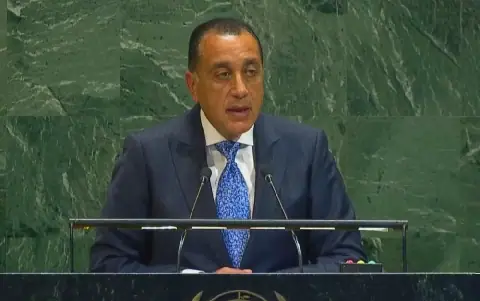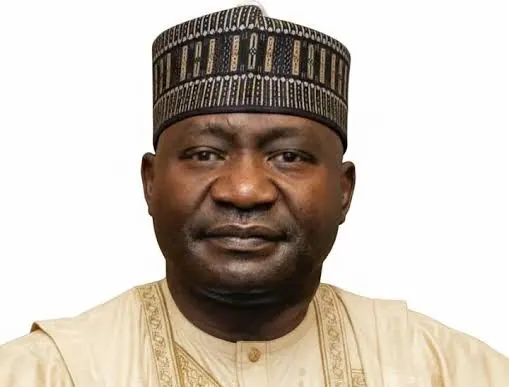
Nigeria's Minister of Defence, General Christopher Musa, has emphasized that terrorism, banditry, and other emerging security threats have far-reaching consequences, impacting not only the nation but also the region and the world at large. He made these remarks during a high-level discussion held on the sidelines of the 81st United Nations General Assembly High-Level Week in New York. The event was organized by the Ministry of Defence of the Federal Republic of Nigeria.
The high-level discussion brought together an international audience, including diplomats, security practitioners, and representatives from the United Nations, African Union, and ECOWAS. General Musa called for a global partnership and a comprehensive approach to addressing Nigeria's evolving security threats, as well as those facing the wider Sahel region. He stressed that sustainable security requires resilient communities, effective institutions, inclusive development, and good governance.
General Musa outlined several decisive measures being implemented under the leadership of President Bola Ahmed Tinubu to address the security challenges. These include the recruitment of an additional 22,000 personnel into the Armed Forces and the expansion and reorganization of the Nigerian Army's divisional structure. The government is also taking steps towards establishing state police and dedicated forest guard arrangements to secure rural and border communities.
The defence minister highlighted efforts to strengthen domestic defence production through support for the Defence Industries Corporation of Nigeria. The aim is to build self-reliance and reduce dependence on external sources of arms. Additionally, the government is implementing a unified intelligence and reconnaissance programme, designed to eliminate operational silos, enhance situational awareness, and strengthen interoperability across Ministries, Departments, and Agencies.
General Musa also noted the integration of advanced technological assets, including drones for real-time surveillance and Improvised Explosive Device detection. The government is also rolling out a comprehensive national criminal database and other major initiatives. These efforts are part of a broader strategy to address the complex security challenges facing the country.
The meeting featured a panel discussion moderated by former Chief of Staff to the President and former Minister of External Affairs, Professor Ibrahim Gambari. He recalled Nigeria's concentric-circles foreign policy and stressed the need for Africa to position itself as an active contributor to global frameworks, particularly in the field of Artificial Intelligence.
Major General Adeyinka Famadewa, Special Adviser on Homeland Security, also spoke on the importance of intelligence fusion, integrated response capabilities, and citizen-reporting protection systems. These, he argued, would enable authorities to anticipate emerging threats and take proactive measures to prevent them. The discussion underscored the need for a collaborative approach to addressing the complex security challenges facing Nigeria and the region.
Key points
- General Christopher Musa emphasizes the need for a global partnership to address Nigeria's evolving security threats.
- The Nigerian government is implementing several measures to address security challenges, including recruitment of additional personnel and expansion of the Nigerian Army's divisional structure.
- The defence minister highlights efforts to strengthen domestic defence production and integrate advanced technological assets to enhance security.