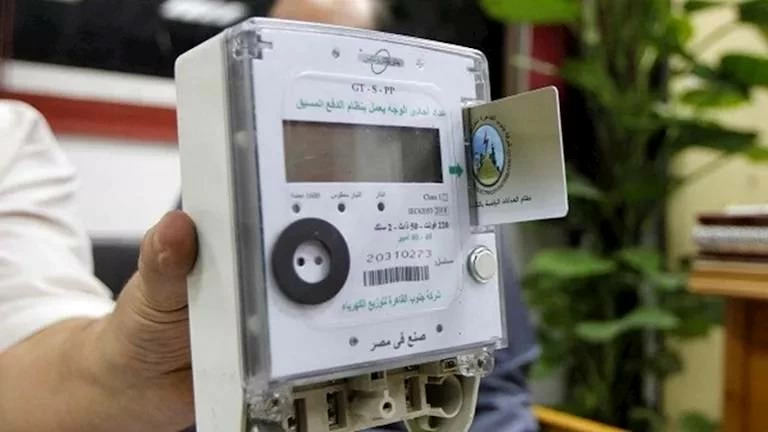
The Egyptian Holding Company for Electricity has clarified the reasons behind the appearance of "debt" when charging some prepaid meters and the rapid depletion of balances in commercial accounts. According to the company, these issues are related to the method of calculating consumption, applicable tiers, and fees, rather than any defects in the meters. The company emphasized that different types of meters, such as code meters and commercial meters, are subject to different accounting systems and pricing structures.
The company explained that the "debt" displayed on some code meters does not indicate a defect or penalty. Instead, it may result from adjustments made to account for differences between the previous and new accounting systems, including tiered pricing and applicable fees. Since April 1, 2026, code meters have been operating under a unified tiered system priced at 2.74 pounds per kilowatt-hour. When a code meter is recharged, an automatic adjustment is made to account for consumption since the beginning of the month, which may lead to deductions from the new charge.
The company noted that having a remaining balance from the previous month does not prevent the accounting adjustment when updating the meter data and recharging. This may lead to a deduction from the new charge and the appearance of a "debt" amount. The company stressed that this debt is a result of accounting differences, not a fine or penalty. It also advised code meter holders to recharge during the first five days of the month to minimize accumulated differences.
Commercial meter holders have reported rapid depletion of their balances. The company attributed this to the different accounting methods applied to commercial activities compared to household consumption. Commercial meters do not benefit from subsidized tiers and are charged from the first kilowatt-hour at commercial sector prices. Additionally, monthly customer service fees are deducted based on the consumption tier, ranging from 10 to 100 pounds.
Commercial establishments with monthly consumption exceeding 250 kilowatt-hours are subject to a 20% increase on electricity consumed during peak hours, which are from 7:30 pm to 11:30 pm. This increase applies only to the amount consumed during peak hours, not the total monthly consumption. The company also noted that moving to a higher consumption tier may result in retroactive price differences, which can lead to a sudden drop in balance after recharging.
To minimize deductions and rapid consumption, the company advised commercial establishments to operate high-consumption devices outside peak hours, turn off unnecessary appliances and signs after closing, and use energy-efficient LED lighting. These measures can help reduce consumption and lower electricity bills or deductions.
The company encouraged customers to understand the accounting systems and pricing structures applicable to their meters to avoid confusion and manage their consumption effectively. By taking these steps, customers can optimize their electricity usage and reduce their expenses.
Key points
- The Egyptian Holding Company for Electricity has clarified that deductions and rapid consumption in prepaid meters are primarily due to differences in accounting systems and pricing structures.
- Commercial meters are subject to different pricing and tiered systems than household meters, which can lead to rapid balance depletion.
- Customers can minimize deductions and consumption by adjusting their usage habits and taking advantage of energy-efficient measures.