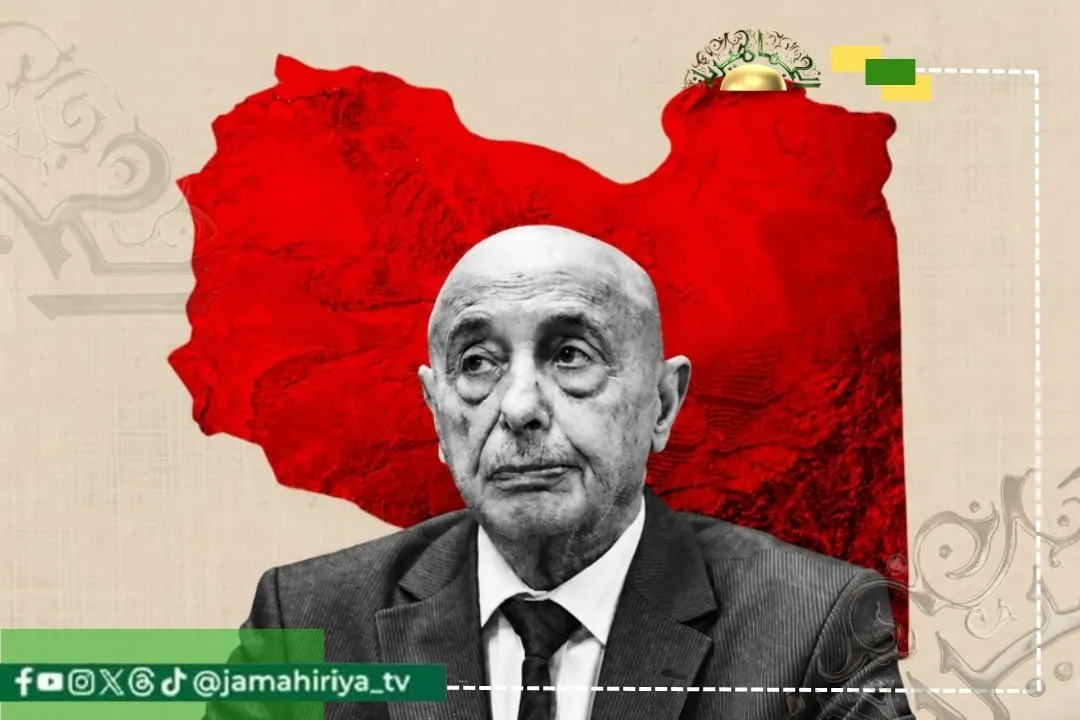
Libyan-American citizen Khalifa Haftar has drawn a clear political line in eastern Libya, backing the US initiative and the 4+4 agreement. This move has raised concerns about the future of Aguila Saleh, the current head of the Libyan parliament. According to geopolitical analysis platform "The Geopolitical Desk", Haftar's stance has narrowed the room for maneuver for opponents of the agreement within eastern Libya.
The 4+4 agreement aims to resolve the Libyan crisis through a comprehensive political process. Haftar's support for the initiative has put pressure on Aguila Saleh, who may be the first to be affected by this shift in the political landscape. The development comes as tensions rise within the Libyan parliament, with some lawmakers pushing for a change in leadership.
On October 5, 2026, Libyan MP and deputy head of the House of Representatives, Mashallah Duma, announced that he had secured the necessary quorum to amend the rules and procedures of the House. This move paves the way for a possible vote on replacing Aguila Saleh as head of the parliament. Duma stated that around 100 lawmakers participated in the vote.
The decision to suspend parliamentary sessions until next week was made in defiance of Aguila Saleh's call for a session on October 6. This escalation of tensions highlights the deep divisions within the Libyan parliament. Haftar's recent meeting with lawmakers, in which he reiterated his support for the US initiative and the 4+4 agreement, has added to the pressure on Saleh.
The meeting, which brought together around 70 lawmakers, was seen as an attempt by Haftar to unify the eastern Libyan political landscape behind the 4+4 agreement. While Haftar did not issue a direct order to remove Saleh, his message was clear: those who oppose the agreement will be viewed as opponents of his stance.
The implications of Haftar's stance extend beyond Libya's borders, with Egypt's role in the conflict also coming under scrutiny. The Egyptian government has been accused of having divergent positions on the Libyan crisis, which has complicated efforts to unify eastern Libya behind the 4+4 agreement.
As tensions continue to rise, it remains unclear whether Aguila Saleh will be replaced as head of the Libyan parliament. However, it is clear that Haftar's support for the US initiative and the 4+4 agreement has significantly altered the country's political landscape.
Key points
- Haftar's backing of the US initiative and 4+4 agreement has narrowed room for maneuver for opponents within eastern Libya.
- Tensions rise within Libyan parliament as lawmakers push for change in leadership.
- Egypt's role in the Libyan conflict comes under scrutiny amid divergent positions on the crisis.