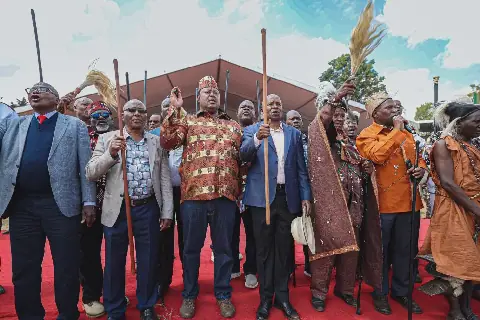
A recent disagreement between the autochthonous people and administrative authorities of Douala over the installation of a new traditional leader in the Grand-Moulin neighborhood of Deido has sparked widespread disinformation and manipulation of public opinion. The controversy began in early June 2026, when social media platforms in Cameroon erupted with messages such as "Le Littoral aux littoraliens" (The Littoral belongs to the Littoraliens) accompanied by hate speech and tribalist remarks.
The trigger for the tensions was a communiqué from the Sub-prefect of Douala 1st, Arnaud Heungap, dated May 22, 2026, announcing consultations for the designation of third-degree chiefs for the villages of Bonalembe and Grand Moulin. The same day, Sa Majesté Sylvain Ekabouma, traditional chief of Bonateki, acknowledged receipt of the communiqué and expressed his desire to withdraw the project to create a new village in his territory.
According to Ekabouma, the Grand Moulin area is an integral part of the existing third-degree chiefdom of Bonateki, and its inhabitants must integrate behind the local traditional power. He cited a letter from the Prefect of the Wouri department, dated July 8, 2004, which stated that there is no village called Grand Moulin in Douala, but rather a neighborhood of the Deido village. The area lacks a community with its own language, culture, and traditions.
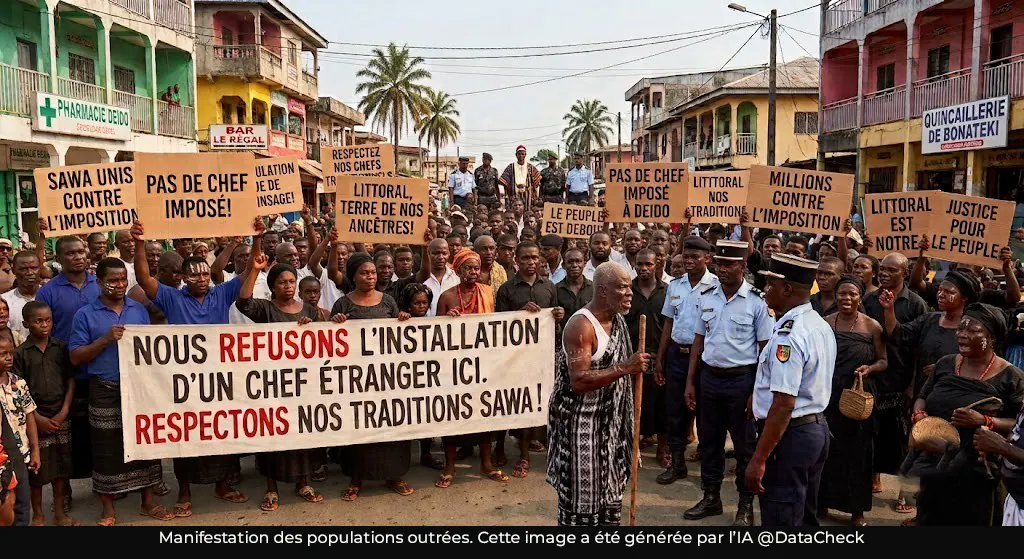
In response to the planned installation of a new traditional leader, the inhabitants of the area organized a "non-declared" protest march on June 5, 2026, to express their discontent. The protesters rejected the creation of a new chiefdom at Grand Moulin and the installation of an outsider, allegedly from the West region of Cameroon, as the neighborhood chief. Rumors circulated on social media about a possible candidate, Raymond Tchengang, a local businessman and music producer.
However, an investigation by DataCheck found no evidence to support the claims about Tchengang's candidacy or installation as the traditional leader. In fact, the Sub-prefect's communiqué only mentioned a consultation, not an installation. Tchengang himself denied any involvement in the controversy, stating that his friends and family members had spread false information about him.
Further investigation revealed that the Sub-prefecture had received only one application for the position of traditional leader, and it was not from Tchengang. The institution confirmed that they had heard about Tchengang's alleged installation through social media. Meanwhile, Ekabouma's chefferie claimed that they had invited Tchengang to a meeting, but it was not related to the succession of the traditional leader.
The controversy highlights the complexities of traditional leadership and administrative authority in Cameroon. According to Me Fenelon Mahop, an attorney at the Cameroon Bar, the traditional chief's role in the consultation process is limited to providing a consultative opinion, not a decisive one. The situation remains tense, with the local population demanding clarity on the issue.
Key points
- The dispute in Douala's Grand-Moulin neighborhood highlights the risks of disinformation and manipulation in the context of traditional leadership and administrative authority in Cameroon.