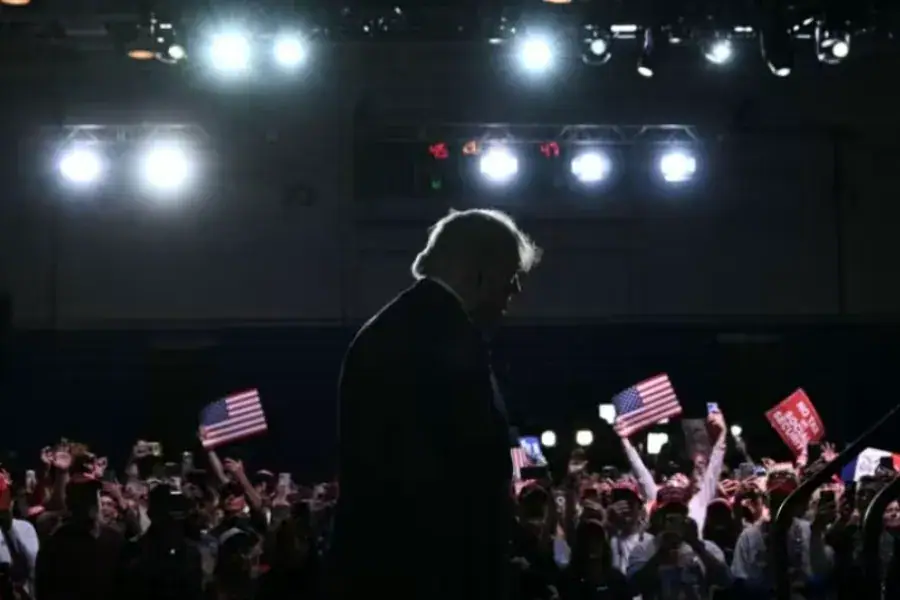
The United States and Israel have escalated their rhetoric against Iran in recent days, amid significant electoral events in both countries. US President Donald Trump, preparing to face challenging midterm elections, stated on Saturday that he still needs to "take care" of one or two Iranian nuclear sites. Iran denies seeking to develop atomic weapons, asserting its right to civilian nuclear energy.
Despite a relative calm on the military front since September, tensions have intensified. Trump's comments came after a phone conversation with Israeli Prime Minister Benjamin Netanyahu, a strong advocate for a more aggressive approach. According to Axios, citing US and Israeli sources, Trump currently prefers to let negotiations proceed. Analyst Arne Lohmann Rasmussen suggests that Trump's diplomatic signals may be tactical, aiming to appeal to voters before the midterm elections.
The analyst notes that war is unpopular in the US, particularly due to rising fuel prices, and Trump has a political interest in suggesting that a possible end to the conflict is feasible. Meanwhile, Iranian officials have issued stern warnings in response to increased threats. Esmaïl Baghaï stated on Monday that any act of aggression against Iran would be met with a strong, immediate, and comprehensive response.
The guide suprême and the Iranian army have also issued similar warnings. In this context, China has expressed its support for Iran's defense of its sovereignty and security, during a visit to Beijing by Ali Bagheri, deputy to the secretary of the National Security Council. Chinese diplomat Wang Yi emphasized that all parties should prioritize a political solution.
Russian President Vladimir Putin also spoke with the Iranian security official on Monday, discussing the current situation in the Middle East, according to the official Irna agency. The conversations come as international attention focuses on the potential for conflict in the region.
Iranian leaders insist that their nuclear program is for peaceful purposes only. The country has been subject to intense international scrutiny over its nuclear activities. Tehran's interactions with global powers, including the US, Israel, China, and Russia, will likely influence the trajectory of the situation.
The coming days will be crucial in determining the course of events. With elections in both the US and Israel, the international community is watching closely for any signs of escalation or de-escalation in tensions between the US, Israel, and Iran. The Iranian nuclear issue remains a contentious and complex challenge for global diplomacy.
Key points
- The US and Israel have increased their threats against Iran as elections approach in both countries.
- Iran has warned of a strong response to any act of aggression.
- China and Russia have expressed support for a political solution to the crisis.