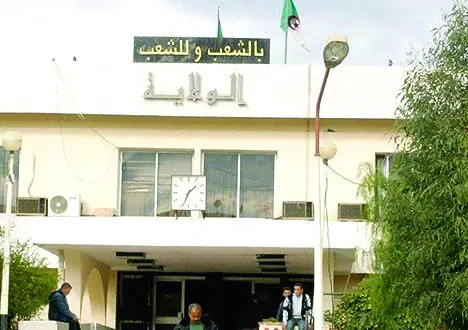
The third ordinary session of the Bouira Wilaya People's Assembly (APW) was marked by controversy and boycotts from opposition members. The Rally for Culture and Democracy (RCD) group announced their refusal to participate, labeling the session as "protocolar and without objectives." This move was followed by a protest gathering inside the meeting hall, where opposition members chanted slogans against the management of the APW president and the Bouira Wali.
Meziane Chaâbane, an RCD elected official and former mayor of Haïzer, openly criticized the APW's management, describing it as "administrative and non-democratic." He also expressed concerns over the delayed development projects in the wilaya, stating that Bouira, despite being a rich region, suffers from underdevelopment. Chaâbane highlighted the lack of transparency and communication within the APW, noting that elected officials are rarely informed about managed dossiers.
The RCD officials displayed banners with messages such as "No to administrative management of the APW," "No to sessions without objectives," and "No to arbitrary policies." Meanwhile, the other elected officials proceeded with the session, led by the RND-affiliated APW president. He acknowledged that several development objectives in the wilaya remain unmet, citing issues with access to potable water, road network degradation, and delays in healthcare projects.
The APW president also warned about alleged manipulations within the wilaya aimed at destabilizing the services working on development projects. Despite these challenges, he emphasized the ongoing efforts to pursue development goals. The session had five key points on its agenda, including the evaluation of implemented recommendations, the adoption of a new urban planning scheme for Lakhdaria, and assessments of the educational and professional training sectors.
The RCD's decision to boycott the session was based on their dissatisfaction with the lack of collaboration and transparency within the APW. They argued that local journalists were often marginalized and not provided with necessary documentation for the sessions, despite previous commitments from the APW president. This marginalization of the press was seen as a significant issue by the boycotting officials.
The clash between the majority and opposition during the APW session reflects deeper issues within the region's governance. The underdevelopment and project delays highlighted by Chaâbane indicate a need for more effective management and communication within the APW. The presence of protests and boycotts suggests a challenging path ahead for achieving consensus and progress in Bouira.
The situation in Bouira's APW underscores the complexities of regional governance in Algeria, where local issues can become highly politicized. The upcoming steps for the APW and the wilaya's administration will be crucial in addressing the concerns raised by both the opposition and the public. Ensuring transparency, addressing project delays, and improving communication will be essential for resolving the current tensions and fostering development in the region.
Key points
- The third ordinary session of Bouira's APW was boycotted by the RCD group due to alleged lack of transparency and objectives.
- Elected officials highlighted underdevelopment and project delays in Bouira, including issues with water access and healthcare.
- The session's agenda included evaluations of development projects and assessments of educational sectors.