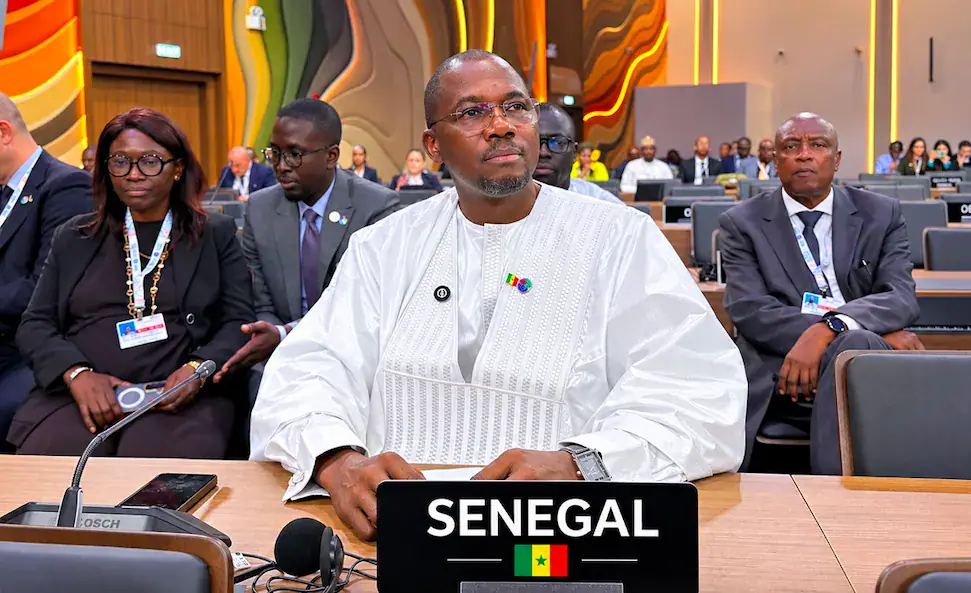
The recent COP31 conference in Antalya has brought to the forefront the issue of global environmental governance. For Senegal, this event marks a crucial moment for reflection on the continent's role in defining international environmental policies. Africa has long been involved in global efforts to combat climate change, preserve biodiversity, and protect natural resources. However, despite its relatively low contribution to greenhouse gas emissions, the continent is among the hardest hit by climate change consequences.
Senegal's representative emphasized the need for climate justice, calling for recognition of the continent's rights and respect for historical responsibilities. Africa requires predictable, accessible, and effectively mobilized financial commitments, adapted technology transfers, and sustained institutional and scientific capacity building. The representative stressed that the continent is not seeking special treatment but rather the means to pursue its own ecological transition. This transition should be a lever for structural transformation, economic sovereignty, innovation, and job creation.
The Senegalese representative highlighted the potential of the continent's natural resources, renewable energy, biodiversity, and human capacities as significant assets to be better utilized for the benefit of local populations. The Vision Sénégal 2050 aims to place sovereignty, sustainability, and natural capital valorization at the heart of the national development project. Senegal intends to make ecological transition a pillar of its economic and social transformation, balancing environmental protection, energy security, industrial development, and improved living conditions.
The representative emphasized that international climate policies must take into account the economic and social realities of developing countries. Requirements for emission reductions, energy transitions, and ecosystem protection must be accompanied by fair and adapted financing mechanisms. The excessive use of loans, which can exacerbate debt in beneficiary countries, is not a sustainable response to a crisis with historically unequal responsibilities.
The Senegalese representative also stressed the need for attention to new international commercial and environmental rules. Mechanisms for carbon regulation, production standards, and traceability requirements should not become additional obstacles to the competitiveness of African economies. The global ecological transition must open up opportunities for African producers, promote local resource transformation, and enable the continent to capture a greater share of created value.
Senegal's representative advocated for an independent, rigorous, and documented review of over thirty years of international environmental negotiations. This review, led by the African Union and the African Ministerial Conference on the Environment, would assess commitments made, financing mobilized, technology transferred, and economic costs borne by African countries. The goal is to establish a common African doctrine based on clearly defined priorities, shared red lines, and collective negotiation capacity.
The representative concluded by emphasizing three fundamental requirements: climate justice, ecological sovereignty, and value creation on the African continent. Climate justice requires respect for the principle of common but differentiated responsibilities and respective capacities. Ecological sovereignty demands that African states retain control over their development choices, natural resources, and transition paths. Value creation involves protecting natural heritage while promoting productive investments, skills transfers, technological innovations, and decent jobs for African youth.
Key points
- Senegal's representative urges Africa to take charge of its environmental destiny at COP31.
- The continent requires predictable, accessible, and effectively mobilized financial commitments to address climate change.
- Senegal advocates for an independent review of international environmental negotiations to assess commitments and financing.