Royal Media Services (RMS) has introduced a KES 350 monthly subscription fee for live streaming Citizen TV, Inooro TV, and Ramogi TV on YouTube. This move comes as Kenyans are increasingly turning away from paid television. The Communications Authority reports that active broadcasting subscriptions in Kenya stood at 1.55 million in June 2026, up 4.9% from the previous year but down 1.8% in the quarter. The decline is attributed to customers shifting to internet-based IPTV and pricier decoders due to rising global chipset costs.
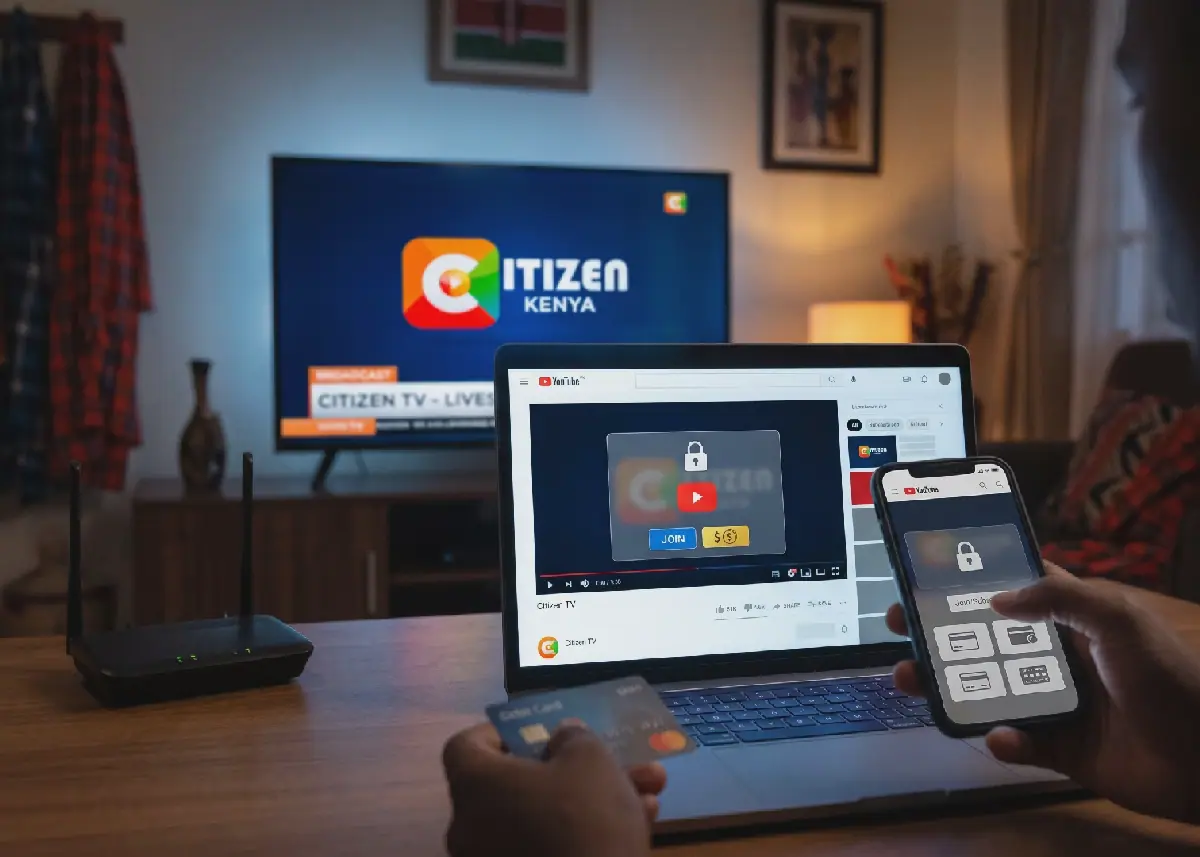
The new subscription package, activated through the Join button on YouTube, allows viewers to access all three live streams for KES 350 a month, paid by bank, debit, credit, or virtual card. RMS promotes this as a YouTube Premium package, although it appears to be a channel membership rather than the full YouTube Premium service. Spot checks revealed an uneven rollout, with Inooro and Ramogi channels still streaming without a prompt. The Communications Authority estimates that 24.3 million people, about 51% of Kenya's population, watch TV daily.
The target audience for this subscription service seems to be viewers who already split their time between TV and online platforms. Citizen TV, Inooro TV, and Ramogi TV dominate the mass market, with Citizen TV leading at 56% of total TV viewership, according to the Media Council of Kenya's 2025 survey. By charging for live streaming, RMS hopes to tap into its loyal audience, who may be willing to pay a small fee to watch their preferred channels on a phone or laptop.
The logic behind RMS's decision to charge for live streaming appears to be based on the potential for revenue generation. If 10,000 members subscribe to the service, it would bring in KES 3.5 million a month. A 1% adoption rate, equivalent to about 243,000 accounts, would translate to approximately KES 85 million a month, before YouTube's share, taxes, and support costs. However, the success of this venture depends on viewers' willingness to pay for content that was previously free.
Many viewers may be hesitant to pay KES 350 for live streaming, especially considering they already pay for internet connections or mobile data. The charge may feel like being asked to pay twice for the same content. Additionally, the sudden change could damage goodwill, particularly since Citizen TV has long been available free-to-air. Some viewers may also be excluded due to the card-based checkout system, which may not be compatible with M-Pesa.
The KES 350 membership unlocks all three stations, rather than allowing viewers to choose and pay for individual channels. This could be a drawback for viewers interested in only one channel, such as Citizen TV. Reaction on social media has been skeptical, with some users mocking the idea of paying for Wi-Fi, rent, and then again for television. Wider adoption of the service will be challenging if it only offers a livestream of content available free-to-air.
The most likely subscribers to this service are loyal RMS followers, Kenyans living abroad, people without reliable access to a television signal, and households that watch all three stations. To increase adoption, RMS may need to offer additional value, such as catch-up viewing, programme archives, exclusive interviews, or higher-quality streams. The company's decision to charge for live streaming may be a reasonable attempt to generate revenue, but its success remains uncertain.
Key points
- Royal Media Services introduces a KES 350 monthly fee for live streaming Citizen TV, Inooro TV, and Ramogi TV on YouTube.
- The subscription service targets loyal viewers who split their time between TV and online platforms.
- The success of the venture depends on viewers' willingness to pay for content that was previously free.
Reporting sources
- techweez.com · techweez.com