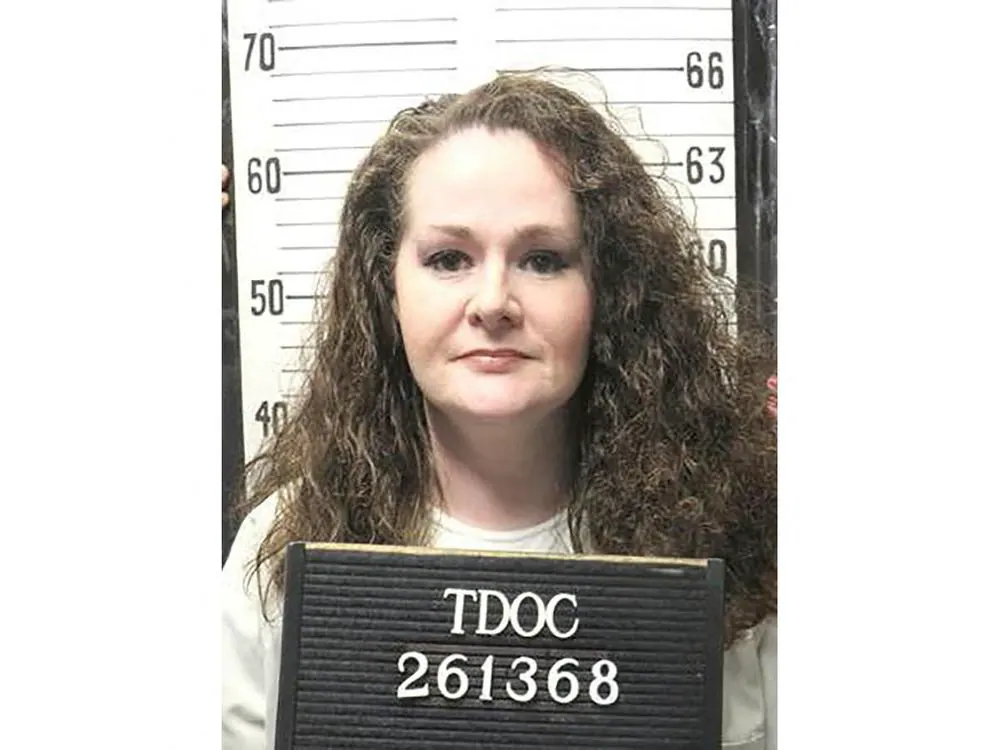
The prison chief of Tennessee, Frank Strada, has resigned following a botched execution that left a convicted murderer, Christa Pike, in critical condition. Governor Bill Lee announced Strada's resignation, effective this month. Pike, 50, was administered two lethal injections of pentobarbital but survived and was rushed to the hospital. Her lawyers reported that she was unconscious and on a ventilator.
Christa Pike was sentenced to death for a murder she committed at the age of 18. The execution, which took place at the Riverbend Maximum Security Institution in Nashville, was halted due to complications. Media witnesses reported hearing Pike snoring for about an hour after the lethal injection, and she was taken to the hospital where she received medical attention. Her lawyers had objected to the execution's IV protocol, citing concerns about her small veins and a blood condition.
Governor Bill Lee has halted further executions in Tennessee through the rest of the year, pending a comprehensive review. Lee thanked Strada for his willingness to prioritize the interests of Tennesseans during this difficult time. Strada, however, maintained that the Department of Correction carried out its responsibilities in accordance with the established protocol. The botched execution has sparked debate over capital punishment, particularly for young criminals.
Christa Pike's case has drawn attention due to her age at the time of the crime and her history of childhood trauma. Her lawyers argued for clemency, citing her youth, mental health issues, and a history of sexual assault. The case is one of high profile, as Pike would have been the first woman executed in Tennessee in over 200 years. The Death Penalty Information Center reported that Pike was the first inmate to survive after being injected with lethal doses of execution drugs.
The execution process was marred by complications, with media witnesses reporting that Pike's arm felt like it would "burst open" after the lethal injection. Her lawyers described pentobarbital as a caustic substance that burns skin, tissue, and veins. Upon arrival at the hospital, both of Pike's arms were swollen, burned, and blistered. Medical experts had warned of the risks associated with the IV protocol, including needles becoming dislodged or piercing through the vein.
The murder for which Pike was sentenced to death occurred in 1995, when she and her boyfriend beat and killed Colleen Slemmer, 19, at a job training camp. The case gained national attention due to the circumstances of the crime, including a pentagram carved into Slemmer's chest. Pike's lawyers had argued that her history of childhood trauma and mental health issues should be taken into account.
The botched execution has led to a renewed debate on capital punishment in the United States. The Death Penalty Information Center reported that only 18 women have been executed in the US since 1976. Governor Lee's decision to halt further executions pending a review has been seen as a step towards re-examining the state's capital punishment protocols.
Key points
- Tennessee prison chief Frank Strada resigns after botched execution of Christa Pike.
- Christa Pike survives lethal injection, first inmate to do so.
- Governor Bill Lee halts further executions in Tennessee pending a comprehensive review.