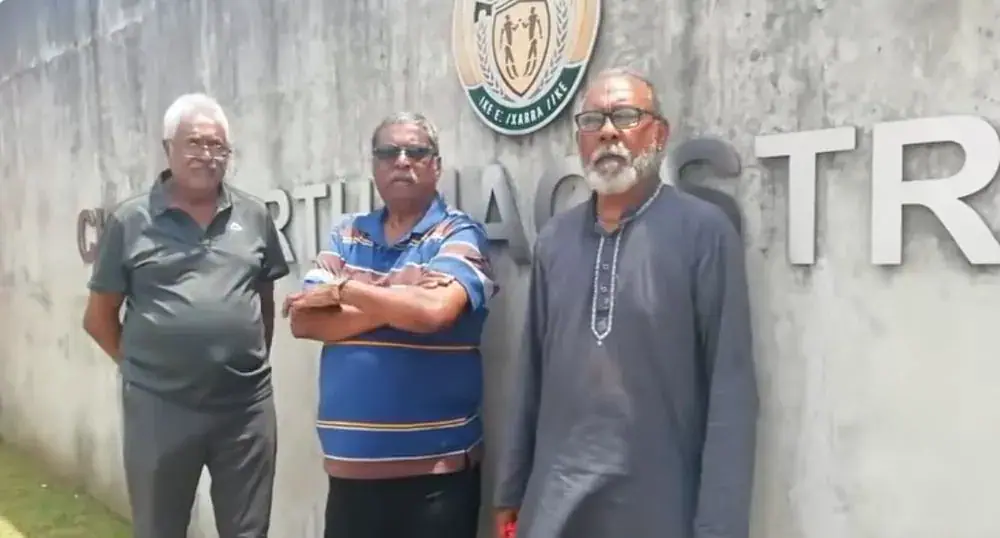
A longstanding land dispute between the Siva Sathi Alayam temple and the neighbouring New Bethesda Church in Westcliff, South Africa, has landed in court. The dispute centres on a piece of land leased by the church from the eThekwini Municipality, where the temple has erected a puthu and a wood-and-iron temple structure. Devotees of the Siva Sathie Alayam gathered outside the Chatsworth Magistrate's Court ahead of the case, which was due to be heard recently.
According to Johnny Naidoo, former president of the temple and an active member, the temple had sought permission from the eThekwini Municipality's Parks department in 2018 to adopt the space where the puthu appeared. Naidoo emphasized that the temple's actions are not about confrontation, but rather about coexisting peacefully with neighbouring communities. He stated that their issue is with the church's leadership, not with the Christian community at large.
The dispute escalated last week when the church's Pastor Danny Pillay allegedly removed the puthu and temple structure, causing anger among devotees and the Hindu community. However, an agreement was reached after mediation by the Inter-faith Forum. The temple's chairperson, Chris Govender, announced on Wednesday that they would be withdrawing from the agreement due to the church releasing a report from a geotechnical investigation, which claimed that the puthu was man-made.
The church is claiming to have a short-term lease from the municipality to adopt the area where the puthu formed. The temple is opposing two interim orders granted by the Civil Court last week, which ordered the removal of the puthu and temple structure. The case is expected to be heard in the afternoon, with the temple seeking to protect its sacred site.
The temple's devotees and members are adamant that the puthu is sacred and not man-made, as claimed by the church. They argue that their right to practice their faith and maintain the puthu and temple structure should be respected. The dispute has sparked tensions between the two communities, with both sides seeking a resolution.
The outcome of the court case could have significant implications for the relationship between the temple and the church, as well as for the broader community. The temple's leadership has expressed a desire for a peaceful resolution, but is prepared to take a stand on the issue. The church's actions have been seen as an attempt to assert its authority over the disputed land.
The case highlights the complexities of managing shared public spaces and the need for effective communication and cooperation between different faith communities. The court's decision will be closely watched by both communities, as it seeks to balance competing interests and rights.
Key points
- The dispute centres on a piece of land leased by the church from the eThekwini Municipality, where the temple has erected a puthu and a wood-and-iron temple structure.
- The temple is opposing two interim orders granted by the Civil Court last week, which ordered the removal of the puthu and temple structure.
- The church's report from a geotechnical investigation claims that the puthu was man-made, prompting the temple to withdraw from a mediation agreement.