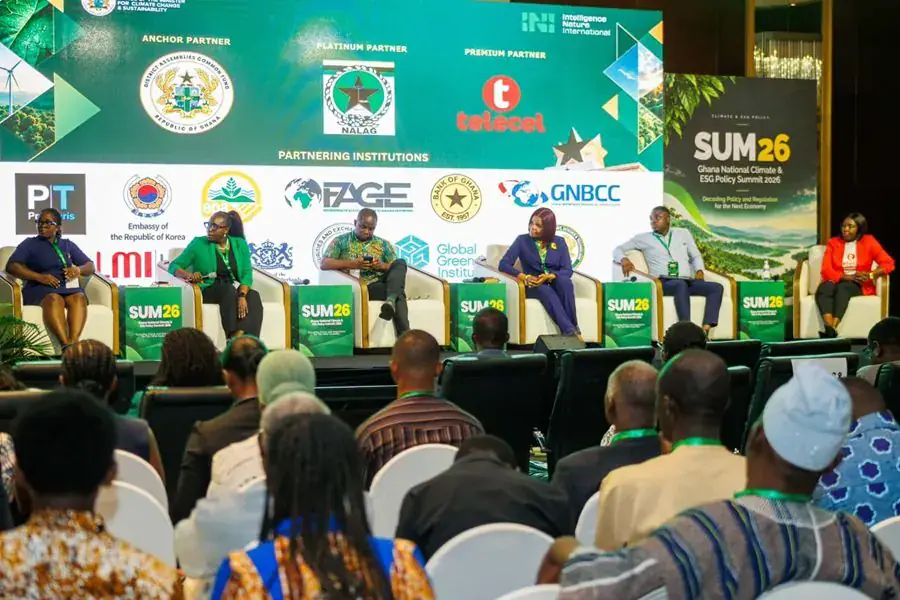
Telecel Ghana has reaffirmed its commitment to climate action, highlighting efforts to integrate sustainability into its network operations, products, workplace culture, and social impact initiatives. The company marked this year’s World Sustainability Day as a premium partner of the Ghana National Climate & ESG Policy Summit 2026. The summit brought together policymakers, regulators, development institutions, and private-sector leaders to discuss Ghana’s green transition and how businesses could accelerate climate action.
The Head of Sustainability, Foundation and External Communications at Telecel Ghana, Rita Agyeiwaa Rockson, called for sustainability to be translated from complex concepts and high-level commitments into practical actions that organisations, entrepreneurs, and individuals could understand and adopt. She made the call during a private-sector panel discussion at the summit. Ms Rockson urged organisations to start with achievable interventions, measure their results, and use credible data to build towards broader climate ambitions.
Ms Rockson emphasised the need to simplify the language of sustainability and connect it to everyday decisions of organisations and individuals. She noted that when people understand how sustainability reduces costs, strengthens resilience, and improves access to customers and investors, it becomes relevant to them. The approach is reflected in Telecel Ghana’s efforts to integrate sustainability across its operations, including measures to reduce its environmental footprint.
Telecel Ghana is transitioning portions of its network infrastructure to renewable energy, with 15 exchanges currently powered by solar energy. The investment is reducing reliance on the national grid and supporting more sustainable network operations. In August 2026, Telecel Ghana introduced its biodegradable Eco-SIM, which is manufactured with 90 per cent less plastic than standard SIM cards.
The company has also undertaken reforestation efforts, planting more than 40,000 trees across the Achimota, Chipa, and South Fomangso forest reserves to support ecosystem restoration. Its sustainability initiatives also cover digital and financial inclusion. Telecel Ghana’s services enable customers to complete essential transactions remotely, reducing the need to travel, as well as the associated costs and emissions.
Through its digital inclusion initiatives, Telecel Ghana equips entrepreneurs, including women-led businesses, with the skills and tools to improve efficiency, access new markets, and strengthen their enterprises. Ms Rockson said inclusion must remain central to Ghana’s transition to a greener economy. She emphasised that as communities and economies of the future are built, attention must be paid to who is being included.
Digital and financial inclusion are essential to ensuring that the benefits of sustainable development reach entrepreneurs, small businesses, and underserved communities. Telecel Ghana’s commitment to sustainability reflects the company’s recognition of its role in driving positive change and contributing to a more sustainable future. The company’s efforts aim to create a lasting impact on the environment, economy, and society.
Key points
- Telecel Ghana is transitioning 15 exchanges to renewable energy, reducing its environmental footprint.
- The company has planted over 40,000 trees to support reforestation and ecosystem restoration.
- Telecel Ghana’s sustainability initiatives cover digital and financial inclusion, enabling customers to access essential services remotely.