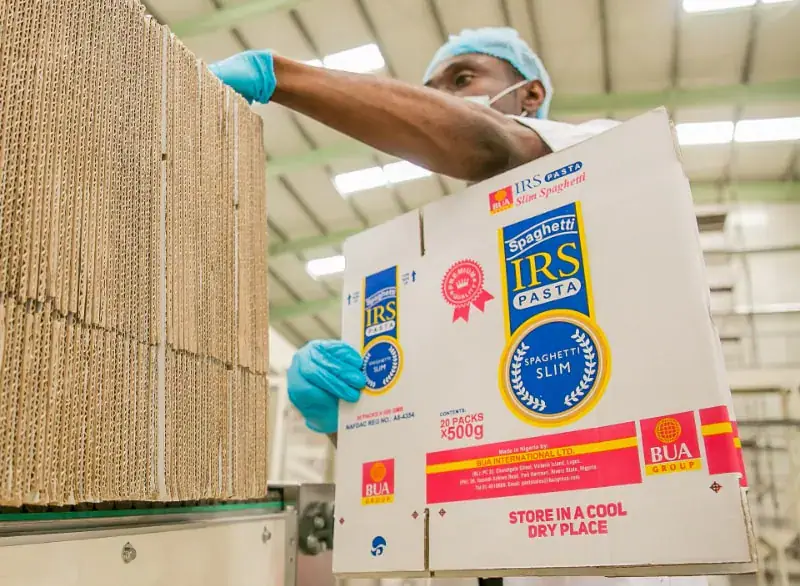
BUA Foods, a leading manufacturer of sugar, pasta, and edible oils in Nigeria, has reported an 11.2 per cent year-on-year increase in net profit for the first nine months of the year. The company's unaudited financials, published on Friday, showed a net profit of N450.5 billion, up from N405.3 billion in the same period last year. This growth was driven by effective cost management and improved productivity.
Despite a decline in revenue, BUA Foods' cost optimisation strategies contributed to its improved profitability. The company generated N1.1 trillion in turnover, down from N1.4 trillion in the same period last year. Weaker sales from its bakery flour and fortified sugar businesses contributed to the decline in revenue. However, the company reduced its spending on raw materials by 37.2 per cent, which helped lift gross profit by N32.2 billion to N552.9 billion.
BUA Foods' cost-management measures extended beyond raw materials. Administrative expenses dropped by more than one quarter to N22 billion, while selling and distribution expenses decreased by 15.4 per cent to N45 billion. These reductions eased cost pressures on operating profit and contributed to the company's improved financial performance. The company's EBITDA margin, a key performance indicator, jumped to 43.6 per cent from 31.3 per cent.
The company's majority owner, billionaire magnate Abdulsamad Rabiu, oversees a business with a market value of N13.7 trillion. In December 2021, BUA Foods announced the combination of its sugar, rice, oil, flour, and pasta divisions into a single entity. This move aimed to leverage economies of scale in its food processing business and improve efficiency.
BUA Foods' CEO, Ayodele Abioye, commented on the company's performance in an earnings release document. He stated that despite a 19 per cent decline in revenue to N1.15 trillion, driven by softer pricing conditions and subdued consumer demand, the company maintained a substantial improvement in profitability. Abioye attributed this improvement to effective cost optimisation, improved productivity, and rigorous execution across the business.
Looking ahead, BUA Foods remains focused on driving profitable growth and enhancing market penetration. The company aims to maintain operational efficiency and improve its financial performance. With a strong track record of cost management and productivity improvements, BUA Foods is well-positioned to achieve its goals.
Key financial highlights from BUA Foods' nine-month performance include a profit before tax of N480.5 billion, up 11.1 per cent from the same period last year. Profit after tax climbed to N450.5 billion from N405.3 billion. The company's financial performance demonstrates its resilience in a challenging business environment.
Key points
- BUA Foods' net profit increased by 11.2 per cent to N450.5 billion for the first nine months of the year.
- The company's revenue declined to N1.1 trillion, driven by weaker sales from its bakery flour and fortified sugar businesses.
- BUA Foods' EBITDA margin jumped to 43.6 per cent from 31.3 per cent, driven by effective cost management and improved productivity.