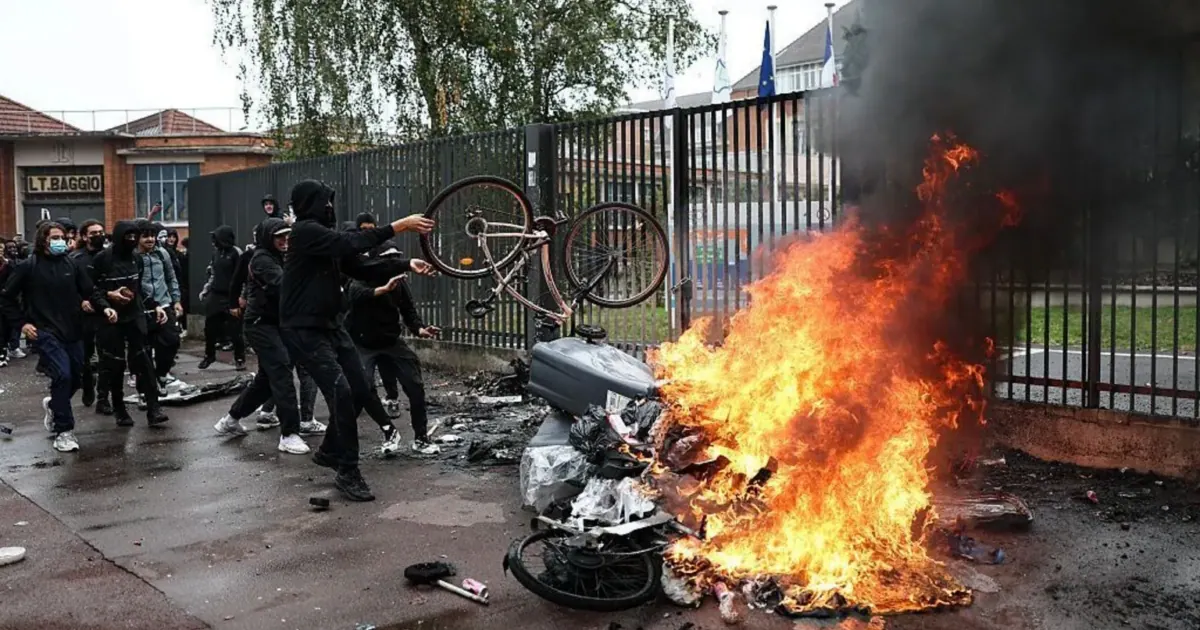
Hundreds of thousands of people have taken to the streets across France as a wave of protests by high-school pupils spreads to their parents, university students, and unions. The protests, which began in the northern Paris suburb of Seine-Saint-Denis in mid-September over overcrowded classrooms, a lack of teaching staff, and dilapidated school buildings, have now extended to some universities and across the country.
Police clashed with demonstrators in Lyon, used tear gas in Paris and Marseille, and water cannon in Rennes, but there was little of the serious trouble that marred previous protests. In Marseille, thousands of demonstrators moved around the city, stopping momentarily to chant before moving on as police changed direction. A group of masked protesters grabbed bollards and bins and tried to barricade themselves off from police.
Prime Minister Sébastien Lecornu condemned the earlier violence and said since the protests had begun, 215 students and 85 staff had been hurt, as well as 715 police officers. The government said there had been disruptions in 891 high schools on Tuesday, almost a quarter of all lycées, and that more than 250,000 demonstrators had taken to the streets during the day. Students' unions put the number at 450,000 and said the number of high schools blockaded was 1,800.
In parliament, the prime minister accused the radical-left France Unbowed (LFI) party of seeking to "sow chaos" ahead of presidential elections in seven months' time. President Emmanuel Macron is nearing the end of his second and final term in office, and LFI leader Jean-Luc Mélenchon is currently runner-up in the opinion polls behind Marine Le Pen of the hard-right National Rally.
Education Minister Édouard Geffray said that from the start, he had appealed for dialogue rather than school blockades and complained that "ultra-violent elements infiltrated the high-school student movements". He is now under pressure to respond to the students' demands. What has been offered, including a website for students to express their grievances and an afternoon of internal discussion in schools on Friday, has made little impression so far.
There seems little chance of the protests coming to an end just yet. France's biggest union, the CGT, has said that further protests involving school and university students are being planned for Thursday. There is widespread concern over allegations of "disproportionate force" by police, and France's IGPN police inspectorate has been investigating a number of cases.
One police officer who fired a tear-gas grenade at a high school student at Saint-Ouen-l'Aumône, north-west of Paris, last week has now been charged by prosecutors with "violence... resulting in mutilation or permanent disability". A 15-year-old's hand was torn off after a so-called anti-encirclement grenade was fired in unclear circumstances near a school in the northern city of Lens.
Key points
- Over 250,000 demonstrators took to the streets during the day, with students' unions putting the number at 450,000.
- The protests began in the northern Paris suburb of Seine-Saint-Denis in mid-September over overcrowded classrooms, a lack of teaching staff, and dilapidated school buildings.
- One police officer has been charged with "violence... resulting in mutilation or permanent disability" after firing a tear-gas grenade at a high school student.