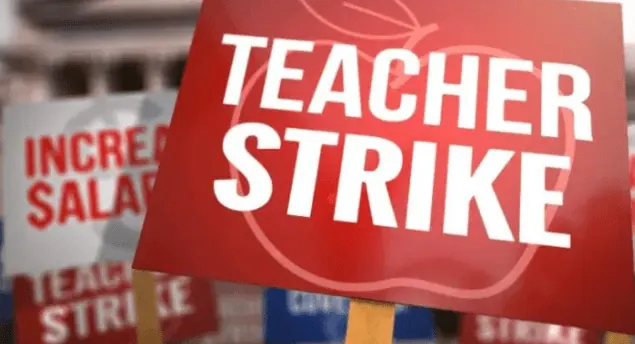
The Secretary-General of the Ghana Federation of Labour (GFL), Abraham Koomson, has cautioned that declaring a strike is relatively easy, but calling it off can be a much more difficult task. According to him, strikes are powerful tools workers use to compel employers to address their grievances. His comments come amid the nationwide strike by pre-tertiary teachers, which remained in force after renewed negotiations between the Fair Wages and Salaries Commission (FWSC), the Ghana Education Service (GES), and the teacher unions ended without an agreement.
One of the key issues under discussion is the processing of outstanding data for promoted teachers, necessary to facilitate the payment of their promotion arrears. Mr. Koomson described a strike as a powerful weapon in the hands of organised labour, explaining that while declaring one may be relatively easy, bringing it to an end often requires considerable effort. He explained that industrial action usually stems from existing grievances and that even when employers agree to address the concerns that triggered a strike, workers may identify additional issues requiring attention.
Mr. Koomson criticised the government for what he considered inadequate communication with teachers over the delay in fulfilling its commitments. He argued that the government should have engaged the affected teachers earlier and informed them about the possibility of delays, rather than allowing the situation to escalate into industrial action. According to him, some workers could raise fresh grievances even after management has made concessions, further complicating efforts to reach a settlement and call off the strike.
The ongoing strike has disrupted pre-tertiary education, with the failure of negotiations highlighting the need for further engagement between the government and teacher unions to resolve the outstanding issues and restore normal academic activities. The strike, which started recently, has seen teachers withholding their services, demanding that the government address their concerns. The government has been urged to take a more proactive approach to resolving the issues to prevent further disruptions to the academic calendar.
Mr. Koomson attributed some of the challenges confronting the current administration to the state of the economy inherited from the previous New Patriotic Party (NPP) government. He argued that this context should have been communicated to teachers to help manage their expectations. The government has been criticised for its handling of the situation, with many calling for a more transparent and responsive approach to addressing the concerns of teachers.
The Ghana Federation of Labour has expressed its support for the striking teachers, emphasising the need for the government to engage in meaningful dialogue to resolve the issues. The Federation has urged the government to take the concerns of teachers seriously and work towards a speedy resolution. The strike has sparked a national debate on the need for the government to prioritise the welfare of teachers and address the systemic issues affecting the education sector.
As the strike continues, there is growing concern about the impact on the academic calendar and the future of pre-tertiary education in Ghana. The government and teacher unions will need to engage in further negotiations to resolve the outstanding issues and restore normal academic activities. The situation remains a pressing concern for stakeholders in the education sector, who are calling for a swift resolution to the impasse.
Key points
- The Ghanaian government's inadequate communication with teachers over delays in fulfilling commitments has exacerbated the ongoing strike.
- The strike has disrupted pre-tertiary education, highlighting the need for further engagement between the government and teacher unions.
- The government has been urged to take a more proactive approach to resolving the issues to prevent further disruptions to the academic calendar.