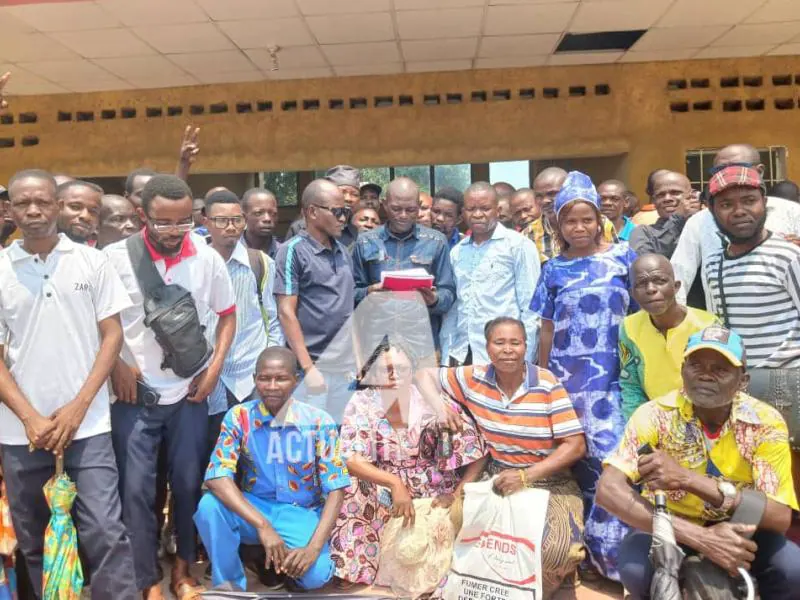
Teachers in Popokabaka, a territory in the Kwango province of the Democratic Republic of the Congo, have officially declared an indefinite strike. The decision was made during a general assembly held at the territory's headquarters to assess their working conditions. This move comes after more than 20 days of work stoppage due to unpaid salaries. The strike began on September 1, the official start of the school year.
At the beginning of September, teachers in Popokabaka were owed three months of salary. Following intervention by Caritas, responsible for salary payments, two months of arrears were paid. However, the salary for June 2026 had not been disbursed by the central government. Despite partial payment, teachers decided to maintain their action and declared an indefinite strike.
In their final communiqué, the teachers stated that they would remain at home until they received the outstanding months. They demanded payment of two months of arrears, specifically for June and September, as the latter was nearing its end. The teachers vowed that no school would open its doors until further notice, effectively proclaiming a dry strike in Popokabaka.
The teachers' demands go beyond salary arrears. They also called for the decentralization of salary payments from Caritas to another bank and regular payment of salaries. This highlights broader issues with the management of teacher remuneration in the region. The situation reflects challenges in ensuring consistent and reliable compensation for educators.
The strike by Popokabaka teachers underscores the difficulties faced by educational institutions in the DRC. It highlights the impact of delayed salary payments on the provision of education. With the academic year already disrupted, the indefinite strike threatens to further jeopardize the education of students in the region.
Local authorities and education stakeholders are likely to face pressure to address the teachers' concerns. The situation may require intervention from provincial or national authorities to resolve the salary disputes and ensure the resumption of educational activities. The strike also raises questions about the sustainability of the current salary payment system.
As the strike continues, students and parents in Popokabaka are likely to bear the brunt of the disruptions. Efforts to find a resolution are crucial to mitigate the impact on the academic calendar and the future of education in the region. The teachers' union and local government officials may need to engage in negotiations to find a solution.
Key points
- The strike was declared due to unpaid salaries and other demands.
- Teachers are demanding payment of two months of arrears.
- The strike has disrupted the academic year in Popokabaka.